IuC94LQ03M5

7 Mistakes You’re Making with Ginger Exports to Dubai (and How to Fix Them with Verified Buyers)

The UAE market, specifically Dubai, represents one of the most lucrative hubs for global food trade. For ginger exporters, the demand is constant, driven by a diverse population and a robust hospitality sector. However, entering the Dubai market is not a guaranteed success. Many international shippers face significant losses, rejections, and payment delays because they underestimate the complexities of the local supply chain.

If you are looking for a ginger buyer in Dubai, you must understand that the difference between a profitable shipment and a total loss often comes down to operational discipline. At Mayil Global, we see these mistakes daily in the Aweer Market. By identifying these pitfalls and leveraging our 3% commission model, you can secure your margins and build a sustainable export business.


1. Treating Dubai Like a Generic "One-Size-Fits-All" Market

The most common mistake exporters make is shipping ginger without understanding the specific variety and form the Dubai market demands. Dubai is a sophisticated market with segmented needs for fresh ginger and dried split ginger.

The Mistake: Shipping generic "ginger" without defining the variety (e.g., Cochin, African, or Chinese), moisture content, or size.
The Reality: If your cargo arrives and doesn’t match the specific requirements of the buyer: whether it’s a retail chain like Lulu or a wholesale distributor: it will be discounted or rejected entirely. Fresh ginger that is too fibrous or dried ginger with inconsistent coloring leads to immediate price disputes.
The Fix: Work with verified buyers to get a written specification sheet before you load. Define the size range, acceptable defect percentage, and packaging requirements (typically 10 kg cartons for fresh ginger in reefers).

2. Inadequate Sorting and Origin-Level Quality Control (QC)

Dubai buyers have zero tolerance for "farm-gate" quality. If you are loading everything that comes from the field into your export cartons, you are inviting trouble.

The Mistake: Mixing damaged, over-mature, or pest-affected roots with high-quality ginger to "fill the volume."
The Reality: High rejection rates at the point of distribution in Dubai. When a wholesaler finds 10% rot in a shipment, they may use that as leverage to push the price down on the remaining 90% of the good cargo.
The Fix: Implement packhouse-level sorting. Every piece must be manually inspected. Remove roots with physical damage, sprouts, or soft spots. At Mayil Global, we emphasize that transparency starts at the origin. Providing photos or videos of your QC process to your buyer builds the trust necessary for long-term trade.

Professional quality control inspection of fresh ginger roots for export to Dubai market.

3. Breaking the Cold Chain for Fresh Ginger

Fresh ginger is a living commodity. It respires and produces heat. If you treat it like a dry commodity, it will not survive the journey to Jebel Ali.

The Mistake: Using non-refrigerated trucks for inland transport or failing to pre-cool the product before loading into the container.
The Reality: Heat and humidity accelerate decay. By the time the container reaches Dubai: usually a 7 to 15-day journey depending on the origin: the ginger will have developed mold, shriveled, or lost significant weight.
The Fix: Maintain a strict cold chain. Pre-cool the ginger immediately after sorting to remove field heat. Ensure the reefer container is set between 12–14°C with optimized airflow. Always monitor and record temperature logs to protect yourself in case of a logistics dispute.

4. Moisture Management Issues in Dried Ginger

For those exporting dried split ginger, moisture is your greatest enemy. Dubai’s climate is harsh, and the transition from sea to shore can cause condensation issues if the product isn't dried correctly.

The Mistake: Drying "by eye" rather than using objective moisture meters, or drying ginger on bare ground where it can pick up contaminants.
The Reality: If the moisture content exceeds 12%, you risk mold and off-odors during transit. This leads to health department rejections at the port, which are costly and difficult to appeal.
The Fix: Target a moisture specification of 10–12%. Use controlled drying surfaces and moisture-protective, export-grade packaging. Align your drying process with the standards we maintain at Mayil Global’s sourcing and logistics divisions.

High-quality dried split ginger undergoing industrial moisture control for UAE exporters.

5. Documentation Discrepancies and Compliance Failures

Dubai’s customs and health authorities are highly efficient but strictly procedural. A single typo on a Phytosanitary Certificate can hold up a container for weeks, racking up massive demurrage charges.

The Mistake: Assuming the freight forwarder will handle all the details without your oversight.
The Reality: Containers are often held at Jebel Ali because of a mismatch between the Invoice, Packing List, and Certificate of Origin. Missing fumigation certificates for dried products is another frequent cause of delay.
The Fix: Create a standardized document checklist. Ensure the HS codes are correct and the wording on your certificates matches the UAE requirements exactly. Always ask your buyer for a sample set of documents they have successfully cleared in the past to use as a template.

Refrigerated shipping containers at Jebel Ali Port ready for Dubai import and logistics.

6. Underestimating Logistics Lead Times

The Dubai market moves fast. Buyers, especially those supplying the HORECA (Hotel, Restaurant, and Cafe) sector, work on tight schedules.

The Mistake: Making unrealistic promises about arrival dates or booking containers at the last minute.
The Reality: Missing a vessel cut-off means your ginger sits at the port for another week, losing shelf life and missing market price peaks. If a buyer runs out of stock because of your delay, they will likely replace you with a more reliable supplier.
The Fix: Map out your lead time realistically: Harvest → Sorting → Pre-cooling → Packing → Transport → Customs → Sea Transit. Always build in a 3-day buffer. Use real-time tracking and communicate ETAs proactively to your buyer so they can plan their distribution.

7. Not Vetting Buyers (and Falling for Scams)

This is perhaps the most dangerous mistake. The allure of "high prices" often blinds exporters to the risks of unverified buyers.

The Mistake: Shipping to anyone who sends a WhatsApp message or a professional-looking email without doing a background check.
The Reality: Many "buyers" in the market act as middlemen without capital. They may take your cargo, sell it, and then vanish or offer "short payments" claiming quality issues that don't exist.
The Fix: Only work with established entities. Run background checks, ask for trade references, and verify their physical presence in the Aweer Market. This is where partnering with a company like Mayil Global provides an immediate safety net.


How Mayil Global Fixes the Export Gap

At Mayil Global, we operate differently from traditional brokers. We are a professional food distribution and wholesale powerhouse designed to protect the interests of the exporter while ensuring a steady supply for the UAE market. If you are searching for a ginger buyer in Dubai, our models offer the transparency you need.

The 3% Commission Strategy: Total Transparency

Most exporters lose money to hidden fees, "market adjustments," and opaque pricing. Our 3% Commission Model is designed for maximum clarity.

  • We handle the sales and distribution in the Dubai market.
  • You receive the full market price achieved.
  • We take a flat 3% commission for our services.
  • All expenses: from customs to local transport: are documented and transparent.

This model ensures that our interests are perfectly aligned with yours: the higher the price we get for your ginger, the better it is for both of us. Learn more about how this secures daily liquidity for our partners.

Cash & Carry: Immediate Liquidity

For exporters who cannot afford to wait for sales cycles, our Cash & Carry model is the solution. We buy container-loads of ginger outright.

  • Speed: No waiting for retail sales.
  • Security: Immediate payment once the quality is verified at our facility.
  • Scale: We have the infrastructure to move bulk volumes of ginger, garlic, onions, and other staples daily.

Modern wholesale food distribution warehouse in Dubai showing bulk export ginger inventory.

Partner with Mayil Global Today

Exporting ginger to Dubai doesn't have to be a gamble. By avoiding the common mistakes of poor quality control, broken cold chains, and unverified buyers, you can build a highly profitable export house.

Mayil Global provides the bridge between your farm and the Dubai dinner table. Whether you prefer the high-margin potential of our 3% commission distribution or the immediate cash flow of our Cash & Carry wholesale model, we have the professional infrastructure to support your growth.

Are you ready to secure your ginger exports?
Visit our products page to see what we are currently sourcing, or contact us today to discuss your next shipment. Let's build a reliable, transparent, and profitable supply chain together.
cyNiqnIwVO8

7 Mistakes You’re Making with Fresh Pear Exports to Dubai (and How to Fix Them)

Dubai is the primary gateway for fresh produce in the Middle East. For international pear exporters: whether you are based in South Africa, Belgium, China, or Argentina: the Dubai market offers high-volume potential and premium pricing. However, the path from the orchard to the Aweer Fruit & Vegetable Market is fraught with operational risks that can quickly evaporate your profit margins.

At Mayil Global, we see many exporters struggle with the same recurring issues. These mistakes aren't just minor inconveniences; they are "margin killers." In this guide, we break down the seven most common mistakes made in the pear export trade to Dubai and provide concrete solutions to ensure your next shipment is a financial success.


1. Treating Dubai as a Generic "Middle East" Market

One of the most frequent errors is failing to recognize Dubai’s unique position as both a high-end consumption hub and a massive re-export center. Dubai is not just another GCC destination. It has its own sophisticated infrastructure, strict port inspections at Jebel Ali, and a diverse buyer profile ranging from luxury hotels to budget-conscious wholesale traders.

The Fix: Segment Your Strategy

You cannot send a "one-size-fits-all" container. You must profile your buyers before the fruit leaves your packhouse.

  • Wholesale (Aweer Market): Requires high-volume, standard-sized pears with fast turnover.
  • Retail/Supermarkets: Requires high-consistency, premium packaging, and strict adherence to aesthetic standards.
  • HORECA: Requires specific ripeness levels and flavor profiles.

By understanding the sourcing and logistics requirements of each segment, you can tailor your cargo for maximum profitability.

2. Neglecting UAE-Specific Labeling and Documentation

The UAE Ministry of Climate Change and Environment (MOCCAE) and Dubai Municipality have non-negotiable standards for food safety and traceability. We often see containers held at the port because of a simple clerical error or a missing Arabic sticker.

The Fix: Pre-Clearance and Standardization

Before you pack your pears, ensure your documentation matches your physical labels exactly. Every carton must include:

  • Product name and variety (e.g., Packham’s Triumph, Forelle, Conference).
  • Country of origin.
  • Production and expiry/pack dates.
  • Net weight and grade.
  • Arabic translations for all essential information.

At Mayil Global, we recommend sending draft documents to your local partner in Dubai for a pre-check before the vessel sails. This simple step prevents thousands of dollars in demurrage fees.

Professional wooden crate of fresh green pears with an export label in a Dubai logistics warehouse.

3. Cold Chain Disruptions and Temperature Mismanagement

Pears are climacteric fruits, meaning they continue to ripen after harvest. They are incredibly sensitive to temperature fluctuations. A brief break in the cold chain: at the loading dock, during transshipment, or while waiting for clearance: can lead to mealy flesh, internal browning, or core breakdown.

The Fix: End-to-End Thermal Discipline

Ensure your pears are pre-cooled immediately after harvest to the specific variety’s required temperature (usually near 0°C).

  • Reefer Settings: Double-check ventilation and humidity settings.
  • Data Loggers: Never ship a container without multiple calibrated data loggers.
  • Real-Time Monitoring: Use IoT-enabled tracking to monitor the shipment’s vitals across the ocean.

If you are looking for a pear buyer in Dubai, your reputation depends on the fruit arriving "hard-green" and ready for a long shelf life.

4. Ignoring Maximum Residue Limits (MRLs)

Dubai has become increasingly rigorous regarding food safety. Random testing for pesticide residues is common. If a sample exceeds the UAE’s Maximum Residue Limits (MRLs), the entire shipment can be rejected or destroyed at the exporter's expense.

The Fix: Rigorous Lab Testing

Do not rely on your general export standards. You must ensure your spray programs align with UAE and Codex Alimentarius standards.

  • Conduct independent lab tests for every lot.
  • Maintain GlobalG.A.P. or equivalent certifications.
  • Provide a clear "Certificate of Analysis" with your shipping documents.

Ensuring quality control at the source is the only way to protect your investment from a total loss at the border.

5. Shipping the Wrong Varieties at the Wrong Time

The Dubai market is highly seasonal. We often see exporters ship massive volumes of Conference pears right when the market is already flooded with local or European surpluses. Alternatively, shipping Forelle pears during a period of low demand can force you to sell at a loss just to clear the stock.

The Fix: Market Intelligence and Timing

Timing is everything. You must synchronize your shipments with UAE demand cycles, including:

  • Ramadan: Changes in consumption patterns.
  • Tourist Season: Higher demand for premium and exotic varieties.
  • Competing Origins: Knowing when South African pears end and European seasons begin.

Mayil Global provides real-time market insights to our partners, helping them decide whether to ship now or wait for a better price window.

Various export-grade pear varieties like Forelle and Packham for the international fruit trade.

6. Relying on Opaque, High-Commission Middlemen

This is perhaps the most significant mistake. Many exporters send their fruit to "commission agents" in the Aweer market who charge 10%, 15%, or even more once "hidden expenses" are factored in. Exporters often wait weeks for sales reports and months for payment, with very little transparency on the actual selling price.

The Fix: Mayil Global’s 3% Commission Model

We have disrupted the traditional wholesale model to put more money back in the exporter's pocket. Our 3% Commission Strategy is built on three pillars:

  1. Fixed 3% Fee: We charge a flat, transparent commission. No hidden "market fees."
  2. Daily Liquidity: Through our Cash & Carry model, we focus on moving inventory fast and securing payments quickly.
  3. Full Transparency: You get detailed reports on exactly who bought your pears and at what price.

If you are tired of the "black box" of traditional trading, switching to a 3% commission model will immediately improve your bottom line. This model is designed specifically for exporters who want to secure their margins while maintaining a presence in the Aweer market.

7. Skipping the Relationship-Building Phase

Dubai is a market built on trust. Shipping a full container to a buyer you’ve never met: without sending samples first: is a recipe for disputes. If the fruit arrives and doesn’t meet the buyer’s subjective "quality expectation," they will demand heavy discounts.

The Fix: Samples and Site Visits

Start small. Send trial pallets or air-freight samples to establish a quality benchmark.

  • Define Specifications: Clearly document size, color, and brix levels in your contract.
  • In-Person Meetings: If possible, visit the Aweer Fruit & Vegetable Market. Meet the Mayil Global team. See how the distribution works.
  • Long-Term B2B Partnerships: Focus on building a consistent supply chain rather than chasing one-off "spot price" wins.

B2B partnership handshake between an international fruit exporter and a Dubai food distributor.


Why Choose Mayil Global for Your Pear Exports?

At Mayil Global, we are more than just a distributor; we are your strategic partner in the UAE. We specialize in helping international exporters navigate the complexities of the Dubai market with professional, B2B-focused services.

Our 3% Commission Advantage

Most traders in Dubai operate on high margins that eat into your profits. We believe in a high-volume, low-margin approach. By charging only a 3% commission, we align our success with yours. The more profit you make, the more you ship, and the stronger our partnership becomes. This model is particularly effective for bulk vegetable and fruit exporters looking to scale.

Immediate Cash & Carry Model

Liquidity is king in the food distribution business. Our Cash & Carry model allows us to buy containers directly or facilitate rapid sales to local wholesalers, restaurants, and retailers. This ensures you aren't left waiting for your money while your capital is tied up in transit. Whether you are exporting onions or premium pears, speed of payment is our priority.

Comprehensive Logistics Support

From the moment your container hits Jebel Ali, we take over. Our team handles:

  • Customs clearance and municipality inspections.
  • Transport to temperature-controlled warehouses.
  • Direct distribution to the Aweer market and beyond.

Secure Your Profits Today

The Dubai pear market is growing, but it only rewards those who prioritize quality, compliance, and transparent partnerships. If you are searching for a reliable fruit buyer in Dubai, look no further.

Avoid the 10% commission traps and the "hidden costs" of traditional trading. Join the network of global exporters who are maximizing their ROI with Mayil Global.

Ready to ship your next container of fresh pears?
Contact the Mayil Global team today to discuss our 3% commission model and how we can help you dominate the Dubai wholesale market.


For more insights on maximizing your export margins, read our guide on The 3% Commission Strategy Explained.

fVC-4UNk2Xh

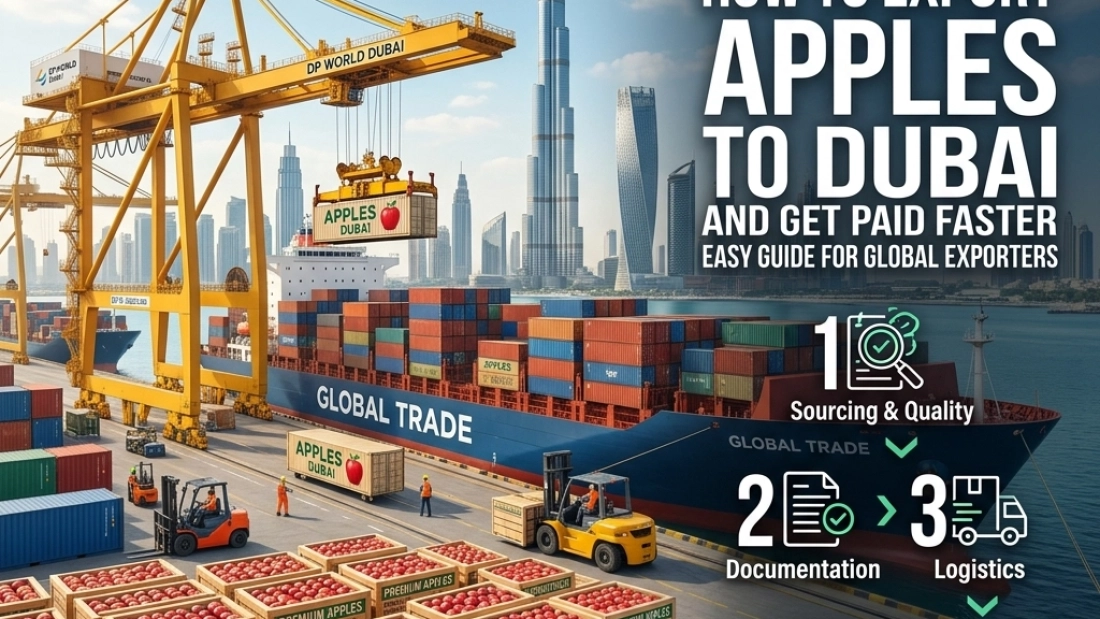
5 Steps How to Export Apples to Dubai and Get Paid Faster (Easy Guide for Global Exporters)

Dubai represents one of the most lucrative hubs for the global fruit trade, particularly for high-demand commodities like apples. As a major re-export center and a growing domestic market, the UAE demands a consistent supply of premium-grade produce. However, for international exporters, the challenge often lies not in growing the fruit, but in navigating the complexities of the supply chain and securing timely payments.

If you are an international grower or trader looking for an apple buyer in Dubai, understanding the local market dynamics is essential. At Mayil Global, we specialize in streamlining this process through our transparent 3% commission model and robust Cash & Carry infrastructure.

This guide outlines the five critical steps to successfully exporting apples to Dubai while maximizing your profit margins and ensuring rapid liquidity.


Step 1: Selecting the Right Apple Varieties and Quality Standards

The UAE market is diverse, catering to a multicultural population with varying preferences. To succeed, you must align your harvest with local demand. The most popular varieties in the Dubai market include:

  • Red Delicious and Gala: Preferred for their sweetness and vibrant color.
  • Granny Smith: High demand for both direct consumption and the culinary sector.
  • Fuji and Pink Lady: Valued for their crisp texture and premium positioning.

Quality is non-negotiable. Only Class I or Extra Class apples should be considered for export to Dubai. This means the fruit must be free from bruising, uniform in size (count per carton), and possess the skin finish expected by high-end retailers and wholesalers.

By focusing on high-quality sourcing, exporters can avoid the most common cause of payment delays: quality disputes upon arrival.

Premium export-quality Red Delicious and Granny Smith apples ready for the Dubai market.


Step 2: Navigating UAE Regulatory Compliance and Documentation

To get paid faster, your paperwork must be flawless. Any discrepancy in documentation can lead to customs holds at Jebel Ali Port or Al Aweer, resulting in demurrage charges and deteriorating fruit quality.

Key documentation requirements include:

  1. Phytosanitary Certificate: Issued by your national plant protection authority, confirming the shipment is free from pests.
  2. Certificate of Origin: Authenticated by the relevant Chamber of Commerce.
  3. Commercial Invoice and Detailed Packing List: Must include the variety, grade, and net weight.
  4. Labeling Requirements: UAE law requires labels in both English and Arabic. Labels must specify the product name, country of origin, weight, and the exporter/packer details.

Compliance with the Ministry of Climate Change & Environment (MOCCAE) regulations is mandatory. Ensuring your documents match your physical shipment exactly is the first step toward securing your margins and avoiding the 7 mistakes often made with apple exports.


Step 3: Optimizing Packaging and Cold Chain Integrity

Apples are resilient compared to berries, but they still require a rigorous cold chain to maintain "crunch" and shelf life. In the heat of Dubai, a breakdown in the cold chain for even a few hours can lead to mealy fruit and rejected shipments.

  • Packaging: Use ventilated, export-grade corrugated cartons (standard 18–20 kg). Internal trays or separators are recommended to prevent friction during transit.
  • Temperature Control: Maintain a steady temperature of 0°C to 2°C. For sea freight, the use of refrigerated (reefer) containers with Controlled Atmosphere (CA) technology is the industry standard for long-haul routes.
  • Logistics Partnering: Choose a logistics provider that understands the urgency of the Aweer Market.

At Mayil Global, we emphasize that the sourcing and logistics process is the backbone of your export success. A well-maintained cold chain ensures that the product delivered matches the proforma invoice, leaving no room for price renegotiations.

Refrigerated reefer container at a shipping terminal maintaining the apple export cold chain.


Step 4: Finding the Right Partner – Why Look for an Apple Buyer in Dubai?

Many exporters struggle with the traditional "consignment" model, where prices are opaque and payments are delayed. If you are searching for a reliable apple buyer in Dubai, you need a partner that offers transparency and operational excellence.

The Mayil Global 3% Commission Advantage

Unlike traditional distributors who may hide their actual selling prices, Mayil Global operates on a transparent 3% commission model.

How it works for the exporter:

  1. You ship your container of apples to us.
  2. We handle the distribution and sales within the UAE market (Aweer Market, supermarkets, and B2B sectors).
  3. We charge a flat 3% commission on the gross sales value.
  4. The remaining 97% of the revenue belongs to you.

This model is designed to build long-term trust. It ensures that the exporter benefits directly from market price spikes while maintaining a clear, predictable cost of distribution. This strategy has already proven successful for exporters of other commodities, such as those exporting onions to Dubai.

International trade partners overlooking the Dubai skyline during a food distribution meeting.


Step 5: Securing Faster Payments via the Cash & Carry Model

Liquidity is the biggest hurdle for global exporters. Waiting 60 or 90 days for payment can stifle your ability to fund the next harvest. Mayil Global solves this through our Cash & Carry wholesale model.

By positioning your products in our wholesale infrastructure, we facilitate rapid turnover. For high-volume exporters, we also offer the option of immediate container purchases. This means that instead of waiting for individual retail sales, you can secure liquidity much faster, allowing you to reinvest in your operations immediately.

This focus on daily liquidity is why Mayil Global is becoming the preferred partner for international shippers looking to scale their presence in the Middle East.


Why Choose Mayil Global for Your Apple Exports?

Operating within the heart of the Dubai food trade, Mayil Global is more than just a distributor; we are your operational arm in the UAE. Our brand is built on the pillars of professional integrity and B2B excellence.

  • Professionalism: We maintain a neutral, authoritative approach to trade, ensuring all international standards are met.
  • Reliability: Our about-us page highlights our commitment to building dependable supply chains.
  • Variety: Beyond apples, we manage a wide portfolio of products, including ginger, tomatoes, and lemons.

Summary Checklist for Exporters:

  1. Product: High-grade Gala, Red Delicious, or Fuji apples.
  2. Compliance: 100% accurate documentation and bilingual labeling.
  3. Logistics: Verified cold chain and reefer container monitoring.
  4. Partner: Engage Mayil Global to utilize the 3% commission model.
  5. Payment: Opt for the Cash & Carry model to ensure rapid cash flow.

Pallets of red apples being moved in a modern Dubai wholesale food distribution warehouse.

Conclusion: Scale Your Export Business Today

The Dubai market offers immense opportunities for apple exporters who prioritize quality and partner with transparent distributors. By moving away from high-margin middlemen and adopting Mayil Global's 3% commission and Cash & Carry models, you retain control over your profits and ensure your business remains liquid.

Are you ready to secure a reliable buyer for your next container? Explore our products list or contact us today to discuss how we can facilitate your entry into the Dubai market.

At Mayil Global, we don't just move produce; we build sustainable, profitable trade relationships for the global market.


For more insights into the UAE food trade, read our detailed explanation of the 3% commission strategy for Aweer Market exporters.

JFwQ4TQOE81

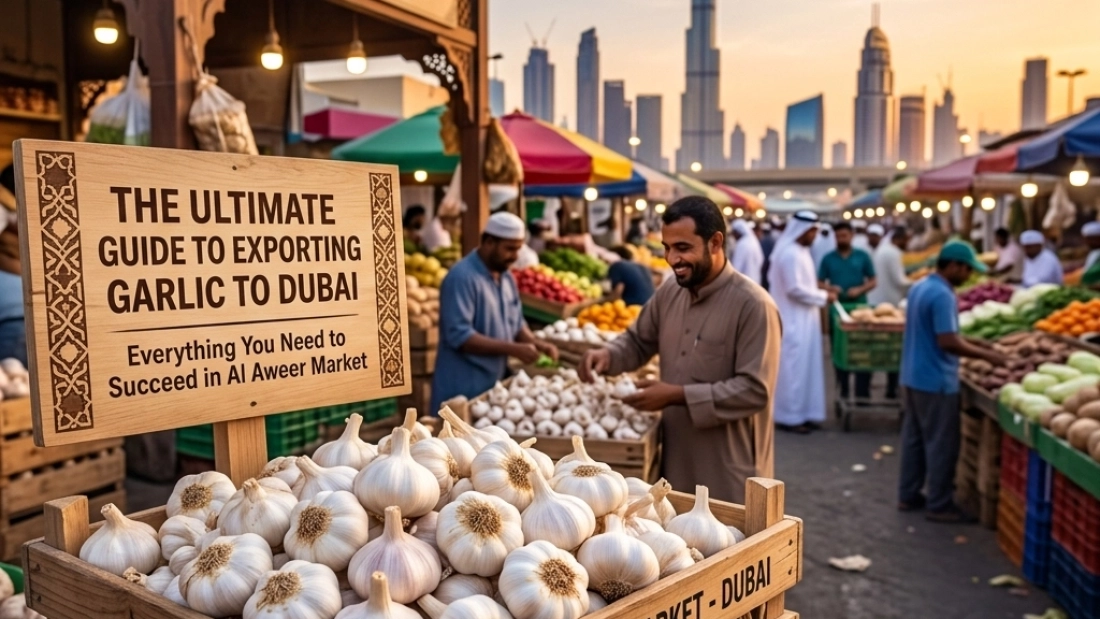
The Ultimate Guide to Exporting Garlic to Dubai: Everything You Need to Succeed in Al Aweer Market

Dubai serves as the primary gateway for the global food trade in the Middle East. For garlic exporters in India, China, Egypt, and Spain, the Al Aweer Central Fruit & Vegetable Market is the most critical destination. Navigating this high-volume environment requires more than just a quality crop; it requires a strategic partnership with a distributor that understands market volatility and liquidity.

At Mayil Global, we bridge the gap between international farms and the UAE’s wholesale demand. By utilizing our specialized 3% commission model and robust Cash & Carry infrastructure, exporters can maximize their margins while maintaining full transparency in their transactions.

Looking for a Garlic Buyer in Dubai?

If you are currently searching for a reliable garlic buyer in Dubai, you are likely facing the challenge of finding a partner who offers fair pricing and prompt payments. The Al Aweer market operates at a rapid pace, handling thousands of tonnes of produce daily. Without a transparent agreement, exporters often lose significant portions of their profit to hidden fees and excessive brokerage charges.

Mayil Global operates as a premier food distribution and wholesale partner. We do not just act as a buyer; we act as your operational arm in the UAE. Our focus is on providing a secure platform where exporters can place their containers and receive immediate access to the regional market.

Premium white garlic bulbs for international export to Dubai's Al Aweer market.

Understanding the Al Aweer Central Market Ecosystem

The Al Aweer Central Fruit & Vegetable Market is the largest hub of its kind in the Gulf Cooperation Council (GCC). It functions as a B2B ecosystem where wholesalers, retailers, and hospitality suppliers source their inventory. To succeed here, exporters must understand that the market is driven by "spot prices": real-time valuations based on daily supply and demand.

As an international exporter, you cannot legally trade directly within Al Aweer without a local trade license and a physical presence. This is where Mayil Global provides a critical service. We facilitate the entry of your garlic containers into the market, ensuring they are sold to the highest bidders among local wholesalers and supermarket chains.

The Mayil Global 3% Commission Advantage

The standard commission in many international markets can fluctuate, often leaving the exporter in the dark about the final sale price. Mayil Global has standardized the process with a 3% Commission Strategy. This model is designed specifically for high-volume garlic and ginger exporters who prioritize transparency and long-term growth.

How the 3% Model Works for You:

  1. Full Transparency: We provide detailed sales reports. You know exactly what price your garlic was sold for in the Al Aweer market.
  2. Profit Maximization: By capping our commission at 3%, we ensure that the vast majority of the revenue returns to the exporter.
  3. Incentivized Sales: Because our earnings are a percentage of the sale, we are directly motivated to secure the highest possible market price for your shipment.

You can read more about how this strategy secures daily liquidity for our partners across various produce categories.

Cash & Carry: Solving the Liquidity Gap

One of the greatest risks in international trade is the delay between shipment and payment. For many exporters, waiting weeks for a remittance can stifle their ability to purchase the next harvest. Mayil Global addresses this through our Cash & Carry model.

This model allows for the rapid movement of goods. When your garlic arrives at our facility, it is made available to a massive network of local B2B buyers who purchase in bulk and pay immediately. This creates a cycle of constant liquidity, allowing you to reinvest in your operations without the standard 30-to-60-day credit wait times common in the industry. For a deeper look at this, explore our insights on how Cash & Carry changes inventory management.

Wholesale garlic distribution in a Dubai warehouse using the Cash and Carry model.

Garlic Quality Standards and Requirements for Dubai

The Dubai market is highly competitive. Buyers at Al Aweer compare shipments from different origins side-by-side. To ensure your garlic fetches the top tier of the price bracket, you must adhere to strict quality and sizing standards.

1. Sizing and Grading

The most sought-after garlic in the UAE typically follows these specifications:

  • Premium Grade: 50mm to 60mm+ diameter bulbs.
  • Standard Grade: 40mm to 45mm diameter bulbs.
    Anything below 40mm is generally considered lower grade and will face significant price reductions in the wholesale market.

2. Physical Characteristics

Garlic must be well-cured and dry. The outer skins should be intact, clean, and free from soil or mold. We recommend a strict inspection process before loading to ensure there is no evidence of sprouting or soft cloves, as the heat in transit can exacerbate these issues.

3. Packaging

  • Small Nets: 200g, 250g, or 500g nets packed into 10kg or 20kg cartons or mesh sacks.
  • Bulk: 10kg or 20kg mesh bags are the industry standard for wholesale trade at Al Aweer.
  • Labelling: All packaging must include the country of origin, net weight, and exporter details to pass Dubai Municipality inspections.

Documentation and Compliance for UAE Imports

To avoid delays at Jebel Ali Port, exporters must ensure their documentation is flawless. Errors in paperwork lead to demurrage charges that can quickly evaporate your profits.

Reviewing UAE garlic import documents and phytosanitary certificates for customs clearance.

Required documents include:

  • Commercial Invoice: Detailing the value, quantity, and HS code (typically 0703.20).
  • Packing List: Accurate breakdown of the container contents.
  • Bill of Lading: Issued by the shipping line.
  • Certificate of Origin: Attested by the relevant Chamber of Commerce.
  • Phytosanitary Certificate: This is the most important document for garlic. It must be issued by the national plant protection organization in your country, confirming the product is free from pests and diseases.

Mayil Global’s sourcing and logistics team assists our partners in reviewing these documents before the vessel departs, ensuring a smooth transition through Dubai Customs.

Sourcing and Logistics: Moving Your Cargo

Most garlic enters Dubai via sea freight through Jebel Ali Port. Because garlic is a semi-perishable item, we recommend using ventilated containers or refrigerated containers (reefers) set at 0°C to 2°C with 65% humidity.

The transit time varies significantly by origin:

  • India to Dubai: 4 to 7 days.
  • China to Dubai: 20 to 30 days.
  • Egypt to Dubai: 10 to 15 days.

Once the cargo arrives at the port, Mayil Global manages the inland logistics to transport the containers to our facility or directly to Al Aweer. Our efficient handling reduces the time your product spends in the heat, preserving the "shelf-life" and market value of the garlic.

Refrigerated shipping container maintaining the cold chain for garlic exports to Dubai.

Scaling Your Export Business with Mayil Global

Success in the Dubai garlic market is built on consistency. Shipping a single container is a start, but building a brand within the Al Aweer market requires a steady supply. By partnering with Mayil Global, you gain access to a reliable distribution network that operates year-round.

Whether you are exporting garlic, ginger, or onions, our model remains the same: 3% commission, high transparency, and rapid liquidity. This professional approach allows you to focus on what you do best: farming and sourcing: while we handle the complexities of the UAE market.

Conclusion: Take the Next Step

The Dubai market offers immense opportunities for garlic exporters who can meet quality standards and partner with the right distributor. If you are ready to secure your margins and eliminate the guesswork of selling in the Al Aweer market, Mayil Global is your trusted partner.

To discuss your upcoming harvest or to get a quote on our current market requirements, contact us today. Our team is ready to help you navigate the logistics, documentation, and sales process to ensure your garlic export venture is a success. Reach out to Mayil Global and experience the professional standard of UAE food distribution.

6BDWW06Ba3C

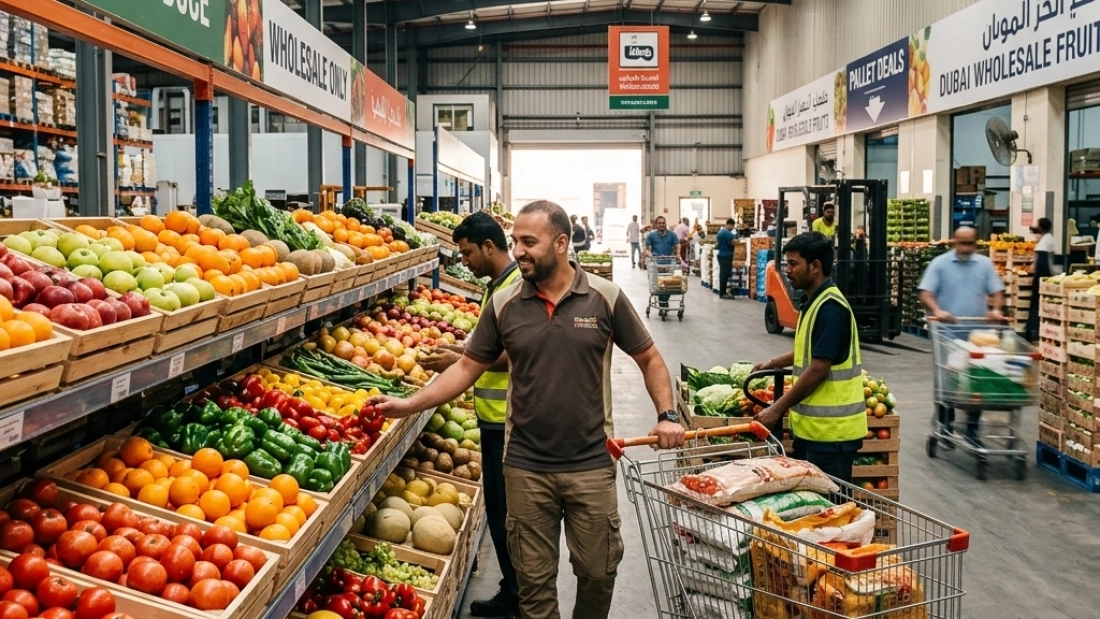
Looking For Wholesale Fruits and Vegetables Dubai? Here Are 10 Things You Should Know About the Cash & Carry Model

The fresh produce landscape in the UAE is undergoing a significant transformation. For years, the trade was defined by long credit cycles and opaque pricing structures that often left exporters and local retailers at a disadvantage. However, the rise of the Cash & Carry food wholesale Dubai model, championed by industry leaders like Mayil Global, is redefining how business is done.

Navigating the world of wholesale fruits and vegetables Dubai requires more than just a list of suppliers; it requires a strategic understanding of how liquidity, logistics, and commissions intersect. Whether you are a container owner exporting to the Aweer Market or a local supermarket manager looking for consistent supply, here are the 10 essential things you must know about the Cash & Carry model.


1. What "Cash & Carry" Truly Represents in the UAE Context

In the traditional distribution model, goods are delivered on credit, often with 30-to-90-day payment terms. In contrast, the Cash & Carry model is built on immediate settlement. For a B2B buyer, this means visiting a warehouse, selecting the highest quality produce, and paying at the point of sale.

For the supplier and exporter, this model is a lifeline for liquidity. Instead of waiting months to realize profits from a shipment of onions or tomatoes, the Cash & Carry system allows for rapid inventory turnover. This ensures that food distribution companies in UAE can maintain a steady flow of fresh stock without the burden of accumulated debt.

2. The 3% Commission Strategy for Exporters

One of the most critical components of Mayil Global’s operations in the Aweer Market is the 3 percent commission distributor UAE model. For international exporters and container owners, the biggest risk is the uncertainty of the final sale price and the high fees charged by middlemen.

By capping commissions at just 3%, Mayil Global provides a transparent, low-cost gateway into the Dubai market. This fixed-rate structure allows exporters to calculate their margins with precision, ensuring that the lion's share of the profit stays with the producer and the shipper rather than being diluted by excessive brokerage fees.

Workers unloading shipping containers at Aweer Market for wholesale fruits and vegetables Dubai distribution.

3. Immediate Liquidity: Solving the Cash Flow Gap

Cash flow is the heartbeat of any wholesale business. In the fresh produce trade, where items are highly perishable, the speed of payment is directly linked to the health of the business. The Cash & Carry model facilitates "Daily Liquidity."

When a container arrives at the Aweer Market, the goal is to convert that inventory into cash as quickly as possible. Through our cash and carry food wholesale dubai solutions, we help exporters bypass the traditional "wait-and-see" approach. This immediate capital injection allows exporters to reinvest in their next shipment immediately, creating a continuous cycle of trade that benefits the entire supply chain.

4. Understanding Daily Market Volatility

Prices for wholesale fruits and vegetables in Dubai are not static. They are influenced by global shipping rates, seasonal harvests in exporting countries (like India, Egypt, or the Netherlands), and local demand spikes during periods like Ramadan.

A professional Cash & Carry partner provides real-time pricing data. Buyers need to understand that a price quoted for ginger or tomatoes in the morning may shift by the afternoon based on arrival volumes at the port. Mayil Global prioritizes pricing transparency, ensuring that our B2B clients receive fair, market-reflective rates every single day.

5. Beyond Produce: The Full-Spectrum B2B Supply

While fresh fruits and vegetables are the primary focus, a robust Cash & Carry model offers a diversified portfolio. For restaurants and supermarkets, sourcing from a single reliable distributor reduces administrative overhead.

At Mayil Global, our product range extends beyond perishables to include:

  • Premium Spices: Sourced globally for consistent potency and flavor.
  • Bulk Rice: Essential long-grain and basmati varieties for the UAE’s diverse culinary sector.
  • Fresh Eggs: Reliable daily supply chains ensuring kitchen stability for large-scale caterers.

Bulk rice and premium spices on pallets in a Dubai food distribution warehouse for B2B supply.

6. Quality Control and Grading Standards

In a self-service or direct-purchase model, what you see is what you get. However, for bulk orders, you must rely on the wholesaler’s grading rigor. "Class 1" produce is destined for premium retail displays, while "Class 2" may be more suited for industrial kitchens or food processing where aesthetics are secondary to taste and nutritional value.

Mayil Global maintains strict sourcing and logistics protocols. Every container is inspected upon arrival to ensure that the cold chain was never broken and that the produce meets the high standards required by UAE regulatory bodies and our discerning B2B clientele.

7. Strategic Location and Aweer Market Dynamics

The Aweer Fruit and Vegetable Market is the epicenter of the UAE’s food trade. Understanding how to navigate this hub is essential. The Cash & Carry model works best when the wholesaler has a physical presence that allows for rapid loading and unloading.

For exporters, having a partner like Mayil Global inside the Aweer Market means their goods are positioned exactly where the highest concentration of buyers congregates. This proximity, combined with our 3% commission model, ensures that containers are cleared faster, reducing demurrage risks and maintaining product freshness.

8. Minimum Order Quantities (MOQs) vs. Pallet Pricing

One of the advantages of the Cash & Carry model is the flexibility it offers to different sizes of businesses. While we primarily deal in bulk container volumes for exporters, our local distribution wing caters to:

  • Supermarkets: Buying by the pallet to ensure shelf variety.
  • Restaurants/Hotels: Buying by the crate to manage daily inventory without excessive wastage.
  • Retailers: Accessing wholesale prices that are typically reserved for much larger players.

Understanding the unit of sale: whether it is a 5kg box of ginger or a 20kg bag of onions: is vital for accurate food costing and inventory management.

Modern cash and carry food wholesale Dubai warehouse with pallets of fresh vegetables for B2B retailers.

9. Documentation and Compliance

In the professional B2B landscape of Dubai, compliance is non-negotiable. Operating within the Cash & Carry framework requires:

  • Valid Trade Licenses: Ensuring all transactions are between legitimate business entities.
  • VAT Transparency: Proper Tax Invoices are essential for businesses to reclaim input VAT, a crucial component of bottom-line management in the UAE.
  • Health and Safety Certifications: Ensuring that all food items handled meet the municipal standards of Dubai.

Mayil Global prides itself on being a professional and reliable partner, handling all necessary documentation to ensure that our clients’ supply chains remain uninterrupted by regulatory hurdles.

10. Building Long-Term Reliability

The final and perhaps most important thing to know is that the Cash & Carry model is not just a series of one-off transactions; it is a partnership. In a market where supply can be erratic, having a dependable distributor is a competitive advantage.

For exporters, Mayil Global offers a consistent "home" for their containers with the guaranteed 3% commission. For local buyers, we offer the assurance that the fruits, vegetables, and spices they need will be available, fresh, and fairly priced.

Why Mayil Global is Your Strategic Partner in Dubai

Mayil Global is not just another name among food distribution companies in UAE. We are a specialized entity focused on high-velocity trade and liquidity. Our model is specifically designed to solve the two biggest pain points in the industry: low margins for exporters and supply inconsistency for buyers.

By integrating the 3% commission structure with a robust Cash & Carry operational heart, we ensure that:

  1. Exporters get paid faster.
  2. Container owners maximize their ROI.
  3. Local businesses access premium global produce at wholesale rates.

Conclusion: Streamlining Your Supply Chain

Whether you are looking for wholesale fruits and vegetables Dubai to stock your supermarket shelves or you are an international shipper seeking a transparent distributor in the Aweer Market, the Cash & Carry model is the most efficient path forward.

In the fast-moving economy of the UAE, speed, transparency, and liquidity are the pillars of success. Mayil Global delivers on all three, providing a professional gateway for global produce to reach local tables through a disciplined, 3% commission-based distribution network.

For more information on our current arrivals or to discuss how our 3% commission model can benefit your export business, visit our About Us page or reach out to our sourcing team today. Let’s build a more transparent and profitable food supply chain together.

7llh9edfLrC

The Ultimate Guide to Exporting Food to Dubai: Everything You Need to Succeed in Al Aweer

Dubai has established itself as the premier global gateway for the food trade, serving not only the growing domestic demand of the United Arab Emirates but also acting as a re-export powerhouse for the GCC, Africa, and the Indian subcontinent. For international exporters, the Al Aweer Fruits and Vegetables Market (also known as the Ras Al Khor Market) is the epicentre of this trade. Navigating this landscape requires more than just high-quality produce; it demands a deep understanding of local regulations, logistics, and, most importantly, a strategic partnership with a reliable distributor.

At Mayil Global, we specialize in bridging the gap between global suppliers and the Dubai market. By leveraging our innovative 3% commission model and our robust Cash & Carry wholesale infrastructure, we provide exporters with the transparency and liquidity needed to scale operations in the UAE.

Navigating the Dubai Food Market: A Strategic Overview

The UAE imports approximately 80% to 90% of its food requirements. This dependency creates a massive opportunity for global exporters. However, the market is highly competitive and quality-sensitive. Understanding how to export food to dubai begins with recognizing that the market is segmented into high-end retail, HORECA (Hotels, Restaurants, and Catering), and the massive wholesale volume handled through Al Aweer.

Al Aweer is designed for high turnover. It is a fast-moving environment where price discovery happens daily based on supply arrival and product quality. To succeed here, exporters must move beyond the traditional "ship and pray" mentality and adopt a data-driven approach to sourcing and logistics.

Cargo ships and shipping containers at Jebel Ali Port, a hub for food export to Dubai.

Understanding Regulatory Requirements for UAE Imports

Compliance is the foundation of a successful export business. The Dubai Municipality (DM) and the Ministry of Climate Change and Environment (MOCCAE) maintain rigorous standards to ensure food safety and security.

1. Product Registration and Labeling

Every packaged food item must be registered through the Dubai Municipality’s "FIRS" (Food Import and Re-export System). Labels must be clear, providing essential information in Arabic (mandatory) and English. This includes:

  • Product name and brand.
  • Country of origin.
  • Ingredients list in descending order.
  • Production and expiry dates.
  • Net weight and storage conditions.

2. Health and Phytosanitary Certificates

For fresh produce, a Phytosanitary Certificate issued by the competent authority in the exporting country is mandatory. This document certifies that the shipment is free from regulated pests and conforms to the UAE's health standards. For animal-origin products, Halal certification from recognized bodies is non-negotiable.

3. Customs Clearance

Dubai Customs operates with high efficiency. Utilizing a partner who understands sourcing and logistics ensures that your documentation: including the Bill of Lading, Commercial Invoice, Packing List, and Certificate of Origin: is processed without delays that could compromise the shelf life of perishable goods.

The Al Aweer Market: The Pulse of Wholesale Fruits and Vegetables

The Al Aweer market is where the majority of wholesale fruits and vegetables in Dubai are traded. It is a hub characterized by its refrigerated warehouses, auction halls, and specialized loading docks.

Success in Al Aweer depends on two factors: Timing and Quality. The market operates on a 24-hour cycle, with peak trading occurring in the early morning hours. Exporters who can consistently deliver graded, well-packaged produce that survives the journey through the Jebel Ali port or Dubai World Central (DWC) airport will always find a buyer.

Wholesale fruits and vegetables stored in a cold-chain warehouse at Dubai's Al Aweer market.

Maximizing Profits: The Mayil Global 3% Commission Advantage

The traditional distribution model in Dubai often involves hidden costs, high margins, and delayed payment cycles that stifle an exporter's growth. Mayil Global was founded to disrupt this lack of transparency.

Our 3% commission-based distribution model is designed specifically for high-volume exporters. Instead of taking a large, opaque cut of the sales price, we charge a flat 3% commission on the gross sales value. This ensures:

  • Total Transparency: You know exactly what your goods sold for and exactly what our fee is.
  • Higher Margins: By reducing intermediary costs, more profit returns to the exporter.
  • Aligned Interests: Our goal is to sell your produce at the highest possible market price, as our success is tied directly to yours.

For a detailed breakdown of how this benefits you, read our guide on the 3% commission strategy for daily liquidity.

Liquidity and Scaling: The Cash & Carry Model

One of the biggest hurdles for exporters is the "liquidity gap": the time between shipping the container and receiving payment. In a volatile market like Al Aweer, waiting 30 or 60 days for payment can prevent you from purchasing the next harvest.

Mayil Global addresses this through our Cash & Carry wholesale model. We are active buyers of full container loads. For verified suppliers who meet our quality standards, we offer immediate purchase options. This provides the exporter with instant cash flow to reinvest in their next shipment.

Whether you are importing onions to dubai or shipping bulk rice, our ability to buy and distribute through our own network provides a level of security rarely found in the open market. Learn more about how our Cash & Carry model solves liquidity gaps.

Refrigerated trucks and shipping containers facilitating cash and carry food wholesale in Dubai.

Key Commodities: Exporting Onions, Ginger, and Potatoes

While Dubai imports a vast variety of food, certain commodities drive the bulk of the wholesale volume. At Mayil Global, we have specialized desks for these high-demand items.

1. Onions

The demand for onions in the UAE is constant. Exporters from India, Egypt, and Pakistan find a ready market in Al Aweer. We help exporters manage the price fluctuations common in this commodity while ensuring their margins are protected through our 3% model. For more, see our specific guide on exporting onions to Dubai.

2. Ginger and Garlic

Sourced primarily from China and Africa, ginger is a staple in the UAE. Navigating the quality requirements for ginger: ensuring it is dry and free from mold: is critical. We assist ginger exporters in securing profits by providing direct access to wholesale buyers. Read more about securing ginger export profits.

3. Potatoes and Tomatoes

These are high-turnover items where shelf life is the primary concern. Our logistics network ensures that containers are moved from the port to our cold storage facilities in Al Aweer with minimal exposure to heat. Explore our strategies for potato exports and tomato distribution.

Fresh wholesale onions, potatoes, and ginger for bulk export to the Dubai food market.

Documentation and Shipping: Ensuring Seamless Logistics

To succeed in the UAE, your logistics must be as robust as your product. The cold chain must never be broken.

  • Sea Freight: Most bulk commodities arrive via Jebel Ali Port in refrigerated containers (reefers). It is essential to monitor temperature settings (typically 2-4°C for most vegetables) and humidity levels.
  • Air Freight: For high-value perishables like berries or exotic herbs, air freight via DXB is the standard.
  • Packaging: Cartons must be export-grade and stackable. Ventilation holes are critical for fresh produce to prevent ethylene buildup.

Mayil Global provides guidance on the best shipping routes and packaging standards to ensure your goods arrive in "Market Ready" condition. You can view our full range of logistics services here.

Why Partner with Mayil Global?

Exporting to a new market is a significant investment of time and capital. Reducing risk is paramount. Mayil Global acts as your "boots on the ground" in Dubai. Our professional approach to food distribution and wholesale is built on three pillars:

  1. Reliability: We maintain strict adherence to international food safety standards.
  2. Efficiency: Our distribution network in Al Aweer ensures your products are sold quickly to the right buyers.
  3. Profitability: Our 3% commission model is the most competitive in the UAE market, ensuring you retain the lion's share of your hard-earned revenue.

If you are a global exporter looking for a verified buyer or a transparent distribution partner in the UAE, the path to success leads through Al Aweer with Mayil Global.

Take the Next Step

The Dubai market waits for no one. Whether you have a container ready to ship or are just beginning to explore the UAE market, our team is ready to assist.

By aligning with Mayil Global, you are not just finding a distributor; you are securing a strategic advantage in one of the world's most lucrative food hubs. Let us help you turn the challenges of exporting into a streamlined, profitable reality.

V7rdAv-9j9i

3 Percent Commission Distributor UAE Secrets Revealed: What Experts Don’t Want You to Know

Navigating the Al Aweer Fruit and Vegetable Market in Dubai can be a high-stakes endeavor for global exporters and container owners. For decades, the traditional commission-based distribution model has been the standard, often characterized by opaque pricing, delayed payments, and hidden costs that erode the profit margins of suppliers. However, a significant shift is occurring in the UAE food wholesale landscape.

The emergence of the 3 percent commission distributor UAE model is disrupting old-school practices. While industry veterans might prefer to keep these mechanics under wraps, understanding how this structure works is essential for any business looking to secure a foothold in the competitive Dubai market. At Mayil Global, we are at the forefront of this movement, prioritizing transparency and liquidity to empower our global partners.

The Traditional Commission Trap: Why Your Margins Are Shrinking

In a standard distribution setup in Dubai, exporters are often quoted a commission rate that seems reasonable at first glance: anywhere from 8% to 15%. However, the reality of the final settlement often tells a different story.

Traditional food distribution companies in uae frequently apply "extra" charges that are not clearly defined at the start of the contract. These can include:

  • Unspecified Handling Fees: Costs associated with offloading that fluctuate without notice.
  • Storage and Cooling surcharges: Charges for temperature-controlled warehousing that are often higher than market rates.
  • Market Loss Adjustments: Credits given to buyers that are pushed back onto the exporter without sufficient evidence.
  • Information Asymmetry: The distributor holds the real-time data on market demand, while the exporter waits days or weeks to understand why their product sold at a specific price point.

This lack of transparency means the distributor often takes the upside while the exporter carries 100% of the risk. Transitioning to a flat 3% model removes these variables, creating a predictable cost structure.

Digital tablet showing market data for a 3 percent commission distributor in UAE Al Aweer Market.

Secret #1: The 3% Model is About Volume, Not Just Margin

Experts often hide the fact that a low commission rate like 3% is only sustainable through high-efficiency, high-volume operations. When a distributor like Mayil Global commits to a 3% commission, the incentive structure shifts entirely.

In high-commission models, the distributor can profit from a single container even if it moves slowly. In a 3 percent commission distributor UAE model, the distributor only thrives if your goods move quickly and at the best possible price. Our profitability is directly tied to your volume and sales success. This alignment ensures that we are aggressively marketing your wholesale fruits and vegetables dubai to our network of B2B buyers, supermarkets, and hospitality clients.

Secret #2: Daily Liquidity and the "Cash & Carry" Advantage

One of the most guarded secrets in the UAE wholesale trade is how much capital is lost through "lazy" cash cycles. Traditional distributors often provide credit to local buyers using the exporter’s inventory as collateral. This results in payment delays that can last 15 to 30 days.

The Mayil Global strategy utilizes a Cash & Carry food wholesale Dubai model. By focusing on immediate or near-immediate settlements with local buyers, we generate what we call "Daily Liquidity." For an exporter, this means:

  1. Daily Sales Reports: Knowing exactly how many units of your ginger, tomatoes, or apples were sold today.
  2. Fast Settlements: Reducing the gap between shipping and receiving funds, allowing you to reinvest in your next container immediately.
  3. Risk Mitigation: Cash transactions minimize the risk of buyer defaults, which are a common cause of loss in the Al Aweer market.

To understand more about how this impacts specific commodities, you can read our detailed guide on how exporters can secure daily liquidity.

Secret #3: Real-Time Market Intelligence is the New Currency

In the traditional model, if a price drops in the Aweer market, the exporter is often the last to know: usually after the product has already been sold at a loss. Transparent 3% distributors leverage technology and direct market access to provide real-time data.

At Mayil Global, we believe that information is a non-negotiable pillar of sourcing and logistics. We provide our partners with:

  • Pricing Trends: Is the demand for bulk rice increasing or decreasing this week?
  • Competitor Volume: How many containers of lemons are currently sitting in the market?
  • Quality Feedback: Immediate reports on how the cargo arrived and how it compares to other arrivals from the same region.

Exporters who utilize this data can make strategic decisions, such as delaying a shipment or switching to a different grade of product to maximize returns. For example, exporters focusing on apple exports to the UAE often lose money due to poor timing: a risk that real-time reporting eliminates.

High-speed supply chain of wholesale fruits and vegetables in Dubai illustrating daily cash flow liquidity.

Scaling Beyond Produce: Rice, Spices, and Eggs

The 3% commission structure isn't limited to fresh produce. The UAE is a major hub for the redistribution of dry goods and staples. For container owners dealing in bulk rice in Dubai or premium spices, the same transparency rules apply.

Mayil Global’s infrastructure supports a wide range of products including:

  • Premium Rice & Spices: Sourcing from India, Pakistan, and Vietnam.
  • Fresh Eggs: Managing the cold chain requirements for bulk distribution to supermarkets.
  • Bulk Onions and Potatoes: Utilizing the 3% model to move high-tonnage containers efficiently. (See our guide on exporting onions to Dubai).

Why B2B Buyers are Switching to Cash & Carry

While exporters benefit from the 3% commission, local B2B buyers: such as restaurant owners and supermarket procurement managers: benefit from the Cash & Carry model’s inherent quality control.

When a distributor operates on a high-velocity, low-margin model, they cannot afford for stock to sit and perish. This ensures that the inventory available at Mayil Global is always fresh. Buyers looking for wholesale vegetables in dubai know that our stock moves daily, reducing their own waste and ensuring consistent quality for their end customers.

Professional chef inspecting fresh produce from a cash and carry food wholesale warehouse in Dubai.

How to Vet a 3% Commission Distributor in the UAE

If a distributor offers you a 3% rate, you must perform due diligence to ensure they have the operational capacity to deliver. Use the following checklist:

  1. Infrastructure: Do they have their own space in the Al Aweer market or a dedicated temperature-controlled warehouse?
  2. Reporting: Ask to see a sample of their daily sales and settlement reports. Are they detailed and transparent?
  3. Payment Terms: Do they offer daily or near-daily settlements? If they ask for 30-day terms, they are likely not a true Cash & Carry operator.
  4. Client Base: Do they have direct relationships with major retailers and wholesale food suppliers?
  5. Direct Leadership: Is the company owner involved in the operations? Leaders like Suresh Venkat at Mayil Global ensure that the company’s mission of transparency is upheld at every level.

The Mayil Global Commitment

Under the leadership of Suresh Venkat, Mayil Global is redefining what it means to be a food distributor in the UAE. We move beyond the role of a middleman to become a strategic partner for container owners and exporters worldwide. Our 3% commission model is built on the foundation of operational excellence, rigorous quality control, and a deep understanding of the Dubai market dynamics.

Whether you are looking for a ginger buyer in Dubai or need a reliable partner to distribute a container of tomatoes, our systems are designed to maximize your profit and minimize your stress.

Global cargo ship transporting containers for food distribution companies in UAE representing reliable sourcing.

Building Long-Term Value

The secret that the "experts" don't want you to know is that the old way of doing business in Al Aweer is no longer the most profitable. The future belongs to transparent, data-driven, and high-efficiency models. By choosing a 3 percent commission distributor UAE that prioritizes your liquidity, you are not just saving on fees; you are building a scalable, sustainable export business.

If you are ready to experience a more professional, reliable, and transparent way to sell your products in the UAE, we invite you to explore our about us page or contact us today to discuss your next container.

Mayil Global: Delivering Transparency, Sourcing Excellence.

ZJpGBFYeEa5

5 Steps How to Export Food to Dubai and Find a Verified Buyer (Easy Guide for Global Shippers)

The United Arab Emirates, and Dubai specifically, represents one of the most lucrative food import hubs in the world. As a nation that imports over 80% of its food requirements, the demand for high-quality produce and processed goods is perpetual. However, for global shippers, the challenge is not just "how to export food to dubai," but how to do so while securing a verified buyer who ensures transparent pricing and consistent liquidity.

At Mayil Global, we have restructured the traditional import-export model. By moving away from opaque trading practices and implementing a transparent 3% commission-based distribution and a robust Cash & Carry model, we provide international exporters with a reliable gateway into the Al Aweer market and beyond.

This guide outlines the five critical steps to successfully navigating the Dubai food export landscape while protecting your margins.

Step 1: Market Analysis and Product Selection

Before initiating any shipment, it is imperative to align your inventory with the specific demands of the UAE market. Dubai’s food sector is segmented into retail, hospitality (HoReCa), and re-export.

Understanding Demand in Wholesale Fruits and Vegetables Dubai

The wholesale fruits and vegetables dubai market is dominated by staples like onions, potatoes, citrus, and ginger. For instance, if you are considering importing onions dubai, you must account for the seasonality of supply from competing regions like India, Egypt, and Pakistan.

Exporters must evaluate:

  • HS Codes: Identify the specific Harmonized System code for your product to determine customs duties.
  • Shelf Life: Dubai’s climate requires a sophisticated cold chain. Ensure your product can withstand the transit time to Jebel Ali Port while retaining peak quality.
  • Pricing Trends: Monitor Al Aweer market daily price fluctuations to ensure your landed cost (CIF Dubai) allows for a competitive markup.

Fresh red onions and potatoes in crates at a wholesale vegetables distribution center in Dubai.

Step 2: Navigating Regulatory Compliance and Documentation

Compliance is a non-negotiable pillar of the Dubai food trade. The UAE has stringent standards managed by the Ministry of Climate Change and Environment (MOCCAE) and Dubai Municipality.

Essential Documentation for Global Shippers

To ensure your cargo is not detained at the port, the following documents are mandatory:

  1. Commercial Invoice & Packing List: Detailed breakdown of the shipment.
  2. Certificate of Origin: Attested by the Chamber of Commerce in the exporting country.
  3. Health/Phytosanitary Certificate: Confirming the food is fit for human consumption and free from pests.
  4. Halal Certification: Mandatory for all meat and poultry products, issued by an accredited body.
  5. Labeling Requirements: Labels must be in Arabic (or English/Arabic) and include production/expiry dates, country of origin, and nutritional information.

Failure to adhere to these standards often results in costly delays or total rejection of the container. Working with a partner like Mayil Global ensures that your documentation is reviewed before the vessel leaves its port of origin, mitigating risk.

Step 3: Optimizing Logistics and Supply Chain Efficiency

Strategic logistics management is the difference between profit and loss in the perishable goods sector. Most food exports to Dubai arrive via Jebel Ali Port or Dubai International Airport (DXB).

Cold Chain and Al Aweer Integration

For exporters of wholesale fruits and vegetables dubai, the destination is usually the Al Aweer Fruit and Vegetable Market. This hub serves as the primary distribution point for the entire Gulf region.

Exporters should focus on:

  • Incoterms: Most professional shippers operate on CIF (Cost, Insurance, and Freight) terms to maintain control over the cargo until it reaches Dubai.
  • Transit Speed: Choosing the right shipping line is critical for products with short shelf lives, such as leafy greens or berries.
  • Port Clearance: Having a pre-registered importer of record in Dubai accelerates the clearance process.

Stacked refrigerated shipping containers at Jebel Ali Port for food export logistics in Dubai.

Step 4: Identifying and Verifying a Buyer in Dubai

The most significant risk for global shippers is the "Grey Market" trader: middlemen who offer high promises but provide low transparency and delayed payments. Finding a verified buyer requires due diligence.

The Mayil Global 3% Commission Advantage

Traditional distributors often buy at low fixed prices or hide their actual selling margins. Mayil Global operates on a 3% commission model. This means:

  • Total Transparency: We sell your produce at the prevailing market rates in Al Aweer.
  • Fixed Fee: We only take 3% of the gross sale as our service fee.
  • Direct Reporting: You receive clear data on what your goods sold for, allowing you to track market trends accurately.

This model is designed to attract high-volume exporters who want to maximize their returns. You can learn more about how this strategy secures daily liquidity for exporters here.

How to Verify a Buyer

If you are not working with an established partner like Mayil Global, always verify:

  • Trade License: Ensure they are licensed for "Foodstuff Trading."
  • Warehouse Facilities: Confirm they have the physical infrastructure to store your goods.
  • Payment History: Ask for references from other global shippers.

Step 5: Managing Liquidity and Scaling Operations

Once the first container is cleared and sold, the focus shifts to capital rotation. In the food business, "Cash is King." Many exporters struggle because their capital is locked in unpaid invoices for 30, 60, or 90 days.

The Cash & Carry Wholesale Model

Mayil Global’s Cash & Carry model is a game-changer for international shippers. By positioning products in our wholesale facilities, we cater to B2B buyers: restaurants, catering companies, and small grocers: who pay immediately.

For the exporter, this translates to:

  • Faster Re-investment: Get your capital back quickly to fund the next shipment.
  • Reduced Credit Risk: Minimizing the "payment wait time" reduces the risk of bad debt.
  • Market Stability: Consistent sales volume helps stabilize your production cycle back home.

Professional buyers inspecting bulk food pallets at a Cash and Carry wholesale facility in Dubai.

Conclusion: Building a Long-Term UAE Export Strategy

Exporting food to Dubai is a structured process that rewards those who prioritize compliance, transparency, and operational excellence. Whether you are searching for a ginger buyer or looking to scale your potato exports, the principles remain the same.

At Mayil Global, we act as your professional arm in the UAE. Our 3% commission model ensures that our interests are perfectly aligned with yours: the higher the price we get for your goods, the better it is for both parties.

By following these five steps and partnering with a verified, transparent distributor, global shippers can navigate the complexities of the Dubai market with confidence and secure long-term profitability.

Summary Checklist for Global Shippers:

  • Validate HS Codes and UAE Market Demand.
  • Ensure all labels are Arabic-compliant and documents are attested.
  • Coordinate with a freight forwarder experienced in Jebel Ali port operations.
  • Partner with a 3% commission distributor to ensure transparent market pricing.
  • Utilize a Cash & Carry model to maintain high liquidity and fast capital rotation.

For exporters ready to enter the Dubai market with a reliable partner, Mayil Global provides the infrastructure, the expertise, and the transparency required for sustainable growth. Visit our products page to see the categories we currently manage or contact us to discuss your next container.

EccsV1ZLecM

Looking For Wholesale Fruits and Vegetables Dubai? Here Are 10 Things You Should Know About the 3% Commission Strategy

Navigating the landscape of wholesale fruits and vegetables Dubai requires a deep understanding of market dynamics, especially within the high-velocity Al Aweer Central Market. For global exporters and local B2B buyers alike, the primary challenge has always been price transparency and liquidity. Traditional models often hide profit margins within inflated unit costs, leaving stakeholders uncertain about the actual value of their transactions.

At Mayil Global, we have pioneered a transparent 3% commission strategy coupled with a robust cash and carry food wholesale Dubai model. This approach is designed to eliminate ambiguity, providing a clear path for exporters to secure their margins while ensuring retailers and restaurants receive competitive pricing.

Here are the 10 critical things you should know about the 3% commission strategy and how it is redefining food distribution in the UAE.


1. Transparency Over Hidden Margins

In a traditional wholesale environment, distributors often purchase produce at a low rate and resell it with an undisclosed markup. This markup can fluctuate between 10% and 20%, depending on market demand and supply gaps. When you engage with a 3 percent commission distributor UAE like Mayil Global, that hidden margin is eliminated.

Instead, the transaction is based on the actual market price of the produce, with a flat, transparent 3% fee applied for the distribution service. This allows buyers to see exactly what they are paying for the product versus the service. For high-volume buyers, this transparency is essential for accurate budgeting and financial forecasting.

2. Immediate Liquidity via the Cash & Carry Model

One of the greatest risks for exporters sending containers to the UAE is the delay in payment. The Al Aweer market has historically operated on credit terms that can stretch for weeks, creating significant cash flow gaps for producers.

Our strategy integrates the 3% commission with a Cash & Carry philosophy. We prioritize liquidity, offering immediate or rapid payment solutions for container owners and exporters. By reducing the payment cycle, we enable exporters to reinvest in their next shipment faster, increasing their annual turnover and profitability. You can learn more about how we facilitate this in our guide on securing daily liquidity for Aweer market exporters.

Loading wholesale fruits and vegetables at Al Aweer market in Dubai.

3. Understanding What the 3% Commission Covers

It is vital to distinguish between a simple brokerage fee and a comprehensive distribution service. At Mayil Global, our 3% commission is not just a fee for "finding a buyer." It covers a rigorous operational suite, including:

  • Sourcing and Procurement: Identifying the highest quality batches from global origins.
  • Quality Control: Stringent inspections to ensure produce meets UAE import standards.
  • Logistics Management: Coordinating the movement from the port to our distribution hubs.
  • Cold Chain Maintenance: Ensuring the integrity of temperature-sensitive items like berries, leafy greens, and exotic fruits.

By bundling these services into a single 3% fee, we provide a turnkey solution that reduces the operational burden on the exporter.

4. Market-Linked Dynamic Pricing

The prices of staples: such as onions, tomatoes, and potatoes: are highly volatile in the UAE. Global supply chain disruptions or seasonal shifts in India, Egypt, or Pakistan can cause daily price fluctuations.

A fixed commission model allows you to ride these market waves without the distributor "padding" the price during high-demand periods. Whether you are a tomato buyer in Dubai or sourcing wholesale potatoes, the 3% remains constant. This ensures that when market prices drop, the savings are passed directly to the buyer, and when they rise, the exporter captures the full upside.

5. Volume as a Lever for Profitability

In a percentage-based model, your absolute costs are directly tied to your volume. However, as a professional food distribution company in UAE, Mayil Global uses this volume to negotiate better freight rates, port handling fees, and storage costs.

For B2B buyers like supermarkets and catering companies, consistency in volume allows us to stabilize the supply chain. While the commission remains 3%, the base price of the product often becomes more competitive as shipping and handling efficiencies are realized at scale. This makes the 3% model the most cost-effective choice for long-term, high-volume partnerships.

Organized warehouse for food distribution companies in UAE with bulk spices and rice.

6. Diversified Sourcing Beyond Fresh Produce

While fresh fruits and vegetables are the core of our operations, the 3% commission strategy extends to our broader portfolio. Mayil Global is a comprehensive partner for:

  • Premium Spices: Sourced directly from origin to maintain potency.
  • Bulk Rice: Offering price stability in a volatile market.
  • Fresh Eggs and Poultry: Maintaining strict hygiene and cold chain standards.

By applying the same transparent commission structure to items like bulk rice, we provide B2B clients with a one-stop-shop for their dry and fresh inventory needs, all under a single, fair pricing philosophy.

7. Mitigating Export Risks

Exporting to the Middle East involves significant risks, including quality rejections and documentation errors. Our team at Mayil Global acts as the "boots on the ground" for international shippers. By taking a 3% stake in the transaction value, our incentives are perfectly aligned with the exporter's. We only succeed when the product is sold successfully at the best possible price.

We help exporters avoid common pitfalls, such as those detailed in our report on 7 mistakes made with apple exports to the UAE. Our expertise in sourcing and logistics ensures that your cargo meets all regulatory requirements before it even reaches the Dubai port.

8. Digital-First Operational Efficiency

In 2026, the wholesale trade can no longer rely on manual ledgers and verbal agreements. Mayil Global utilizes advanced digital tracking for every shipment. From the moment a container is dispatched until it is sold via our cash and carry food wholesale Dubai network, every data point is recorded.

This digital transparency means:

  • Real-time Inventory Tracking: Know exactly how much of your stock has been moved.
  • Automated Invoicing: Clear breakdowns of base price, 3% commission, and VAT.
  • Historical Data: Analyze seasonal trends to plan your next export cycle more effectively.

Digital inventory tracking for wholesale fruits and vegetables Dubai supply chains.

9. Strengthening the Supply Chain for Restaurants and Retailers

For local B2B buyers, the 3% commission model offers a "landed cost" advantage. Restaurants and retailers often struggle with middlemen who add unnecessary layers of cost. By purchasing from a distributor that works on a fixed 3% margin from the source, these businesses can significantly lower their COGS (Cost of Goods Sold).

This reliability is why many in the hospitality sector are switching to Mayil Global. We provide the stability of a contract supplier with the price benefits of a market-direct agent. Our About Us page details our commitment to building these long-term, dependable B2B relationships.

10. Rigorous Standards and Hygiene

In the food distribution industry, price is secondary to safety. Mayil Global adheres to international hygiene standards, ensuring that every fruit, vegetable, and spice we handle is stored and transported in optimal conditions. Our facilities are designed to prevent cross-contamination and maintain the peak freshness of perishables.

Whether we are handling bulk lemons or fresh ginger, our commitment to quality control is non-negotiable. The 3% commission reflects a service that prioritizes the health of the end consumer and the reputation of our B2B partners.

Quality inspection for fresh produce at a cash and carry food wholesale facility in Dubai.


Partner With Mayil Global Today

The landscape of wholesale fruits and vegetables Dubai is evolving. The move toward transparency, liquidity, and professional logistics is no longer a luxury: it is a business necessity. At Mayil Global, we are proud to lead this shift with our 3% commission strategy and Cash & Carry model.

Whether you are an exporter looking for a reliable partner in the Al Aweer market or a local business seeking a consistent supply of premium food products, Mayil Global offers the operational excellence you require.

Take the next step in your supply chain strategy:

By choosing a partner that values transparency as much as you do, you secure not just your margins, but the future growth of your business in the UAE's thriving food sector.

tuYMRZfU9vQ

The Ultimate Guide to Finding a Verified Buyer for Exporters in the UAE: Everything You Need to Succeed

The UAE, and specifically Dubai, serves as the primary gateway for the global food trade. For international exporters, the promise of the Middle Eastern market is significant, yet the path to a successful transaction is often cluttered with uncertainty. Finding a "verified buyer" is not just about finding someone who wants your product; it is about finding a partner who offers transparency, financial stability, and operational efficiency.

At Mayil Global, we understand that the biggest hurdle for exporters isn't just logistics: it’s trust. Whether you are importing onions to Dubai or looking to move containers of wholesale fruits and vegetables in Dubai, your success depends on the reliability of your local partner. This guide outlines the systematic approach required to verify buyers and explains how our unique 3% commission and Cash & Carry models are redefining the standard for UAE food distribution.

Understanding the UAE Import Landscape

The UAE imports approximately 80% to 90% of its food requirements. This creates a high-demand environment, but it also attracts a vast number of intermediaries, brokers, and "ghost buyers." For an exporter in India, Africa, or Europe, the distance makes due diligence difficult.

When you are researching how to export food to Dubai, you will encounter two main types of buyers:

  1. Direct Retailers/Supermarkets: High volume but often require long credit periods (60–90 days).
  2. Wholesale Distributors (Al Aweer Market): The heartbeat of the trade. These buyers move volume quickly but often operate on opaque commission structures that eat into exporter margins.

Fresh onions and vegetables at Jebel Ali Port, a hub for food export to Dubai.

What Defines a "Verified Buyer" in Dubai?

A verified buyer is more than just a company with a website. In the professional B2B landscape of the UAE, verification requires a checklist of legal and operational markers.

1. Legal Registration and Trade License

Every legitimate business in the UAE must hold a valid trade license issued by the Department of Economy and Tourism (DET) or a relevant Free Zone authority. A verified buyer will never hesitate to provide a copy of their license. You should verify that the "Business Activity" listed on the license matches the products they are buying (e.g., "Fruit & Vegetable Trading").

2. Physical Infrastructure

Dubai is a hub of "laptop brokers." While some are legitimate, a verified buyer for perishables must have access to cold storage and logistics infrastructure. If you are dealing with wholesale fruits and vegetables in Dubai, ensure your buyer has a presence in or near the Al Aweer Central Fruit and Vegetable Market.

3. Financial Transparency

Reliable buyers use standard financial instruments. While open account trading is common, new exporters should look for buyers willing to work with Letters of Credit (LC) or those who offer immediate liquidity through Cash & Carry models.

Where to Find Reliable Buyers for Wholesale Fruits and Vegetables

Finding leads is easy; finding verified buyers is hard. Most exporters start with online B2B marketplaces, but these should only be the first step.

  • B2B Portals: Alibaba and Global Sources are good for initial contact, but you must look for "Gold" or "Verified" status.
  • Trade Fairs: Events like Gulfood are essential for face-to-face verification. Meeting a buyer at their stand in the Dubai World Trade Centre provides immediate credibility.
  • Government Directories: The Dubai Chamber of Commerce offers directories of registered companies categorized by HS code.
  • Specialized Distributors: Companies like Mayil Global act as a bridge, offering a 3% commission model that prioritizes the exporter’s profit over the middleman’s markup.

Partners shaking hands at Gulfood Dubai to secure a verified buyer agreement.

The Al Aweer Market: The Hub of UAE Food Trade

If you are importing onions to Dubai or dealing in bulk potatoes, your goods will likely pass through the Al Aweer Market. This is the central nervous system of food distribution in the UAE. However, for many exporters, Al Aweer can feel like a "black box" where pricing is inconsistent and payments are delayed.

The traditional model in Al Aweer often involves high commissions (up to 10% or more) and "hidden costs" for storage and handling. To succeed, you need a partner who understands the daily price fluctuations of the market but operates with corporate transparency. This is where understanding the 3% commission strategy becomes vital for maintaining your liquidity.

The Mayil Global 3% Commission Model: A Transparent Alternative

Most exporters struggle with the standard brokerage model in Dubai. Often, the broker takes a large cut, and the exporter is left waiting for weeks to see the final accounts. Mayil Global has disrupted this by offering a flat 3% commission structure.

How it works:

  • Direct Access: We connect your containers directly to the market demand.
  • Fixed Fee: We charge a transparent 3% commission on the gross sales value.
  • No Hidden Margins: Unlike traditional buyers who might "buy low and sell high" without telling the exporter, our model is based on pure distribution.

This model is particularly effective for those exporting onions to Dubai, where volume is high and margins are tight. By capping the commission at 3%, we ensure that the bulk of the profit stays where it belongs: with the producer.

Cash & Carry: The Solution for Immediate Liquidity

For many global exporters, the biggest risk isn't the price: it’s the wait. Shipping a container takes weeks, and waiting another 30 days for payment can kill a small business's cash flow.

Mayil Global’s Cash & Carry wholesale model is designed to solve this. Instead of waiting for a distributor to slowly sell your stock to retailers, we provide the option for immediate liquidity for containers in Al Aweer.

  • Fast Turnover: We move the product through our established B2B network.
  • Immediate Settlement: Exporters get paid faster, allowing them to reinvest in their next shipment immediately.
  • Reduced Risk: By moving stock quickly, you reduce the risk of spoilage and market price drops.

Dubai cold storage warehouse managing wholesale fruits and vegetables for rapid distribution.

How to Export Food to Dubai: Key Compliance Steps

Finding a verified buyer is only half the battle. You must also ensure your goods meet UAE standards to avoid rejection at the port.

  1. Registration: The importing company in Dubai must be registered with the FIRS (Food Import and Re-export System).
  2. Labeling: All food items must have labels in Arabic (or English and Arabic). They must state the product name, brand, ingredients, origin, and expiry dates.
  3. Documentation: You will need a Commercial Invoice, Packing List, Certificate of Origin, and a Health Certificate issued by the competent authority in the country of origin.
  4. Quality Standards: Dubai Municipality has strict standards for pesticide residues and microbial limits.

Failure to follow these steps often leads to "distressed containers": shipments stuck at the port that need to be sold quickly at a loss. Our team helps exporters navigate these hurdles to ensure that wholesale vegetables arrive in optimal condition and pass inspection smoothly.

Due Diligence Checklist for Exporters

Before you ship your next container, run through this checklist to ensure you are dealing with a professional entity:

  • Request the Trade License: Cross-reference the number with the Dubai DET portal.
  • Check the Physical Address: Use Google Maps to verify they have a legitimate office or warehouse in an industrial area like Al Quoz, Jebel Ali, or Al Aweer.
  • Verify Bank Details: Ensure the bank account is a corporate account in the company name, not a personal account.
  • Test Communication: Professional buyers use corporate email domains. Be wary of companies using only WhatsApp or Gmail for official trade.
  • Check References: Ask for contact details of other global suppliers they work with.

Professional supply chain map for exporting food to Dubai on an executive desk.

Building Long-Term Success in the UAE Market

Success in the UAE food trade is built on consistency. A verified buyer isn't just someone who pays for one container; they are a partner who helps you grow your brand in the region.

By leveraging Mayil Global’s expertise and our unique 3% commission advantage, exporters can stop "guessing" and start growing. Our focus on Cash & Carry food wholesale means you can focus on sourcing and production while we handle the complexities of the Dubai market.

If you are ready to secure your margins and partner with a verified distributor that prioritizes your profit, contact Mayil Global today. We are committed to transparency, reliability, and the long-term success of our global partners. Explore our product range to see how we can help you dominate the UAE market.