

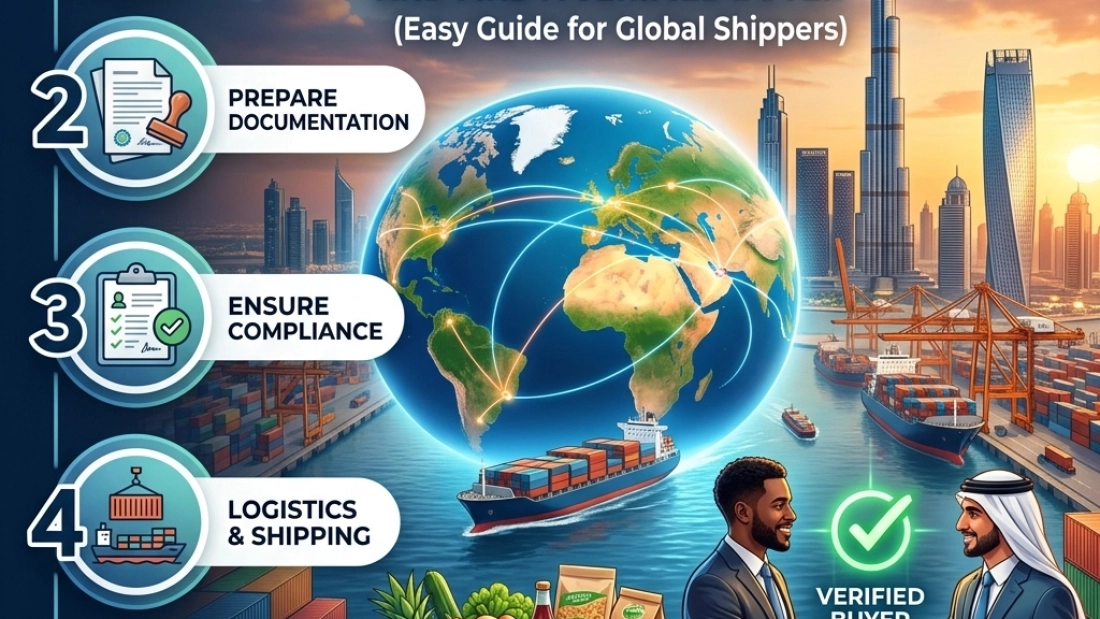
The United Arab Emirates, and Dubai specifically, represents one of the most lucrative food import hubs in the world. As a nation that imports over 80% of its food requirements, the demand for high-quality produce and processed goods is perpetual. However, for global shippers, the challenge is not just "how to export food to dubai," but how to do so while securing a verified buyer who ensures transparent pricing and consistent liquidity.
At Mayil Global, we have restructured the traditional import-export model. By moving away from opaque trading practices and implementing a transparent 3% commission-based distribution and a robust Cash & Carry model, we provide international exporters with a reliable gateway into the Al Aweer market and beyond.
This guide outlines the five critical steps to successfully navigating the Dubai food export landscape while protecting your margins.
Step 1: Market Analysis and Product Selection
Before initiating any shipment, it is imperative to align your inventory with the specific demands of the UAE market. Dubai’s food sector is segmented into retail, hospitality (HoReCa), and re-export.
Understanding Demand in Wholesale Fruits and Vegetables Dubai
The wholesale fruits and vegetables dubai market is dominated by staples like onions, potatoes, citrus, and ginger. For instance, if you are considering importing onions dubai, you must account for the seasonality of supply from competing regions like India, Egypt, and Pakistan.
Exporters must evaluate:
- HS Codes: Identify the specific Harmonized System code for your product to determine customs duties.
- Shelf Life: Dubai’s climate requires a sophisticated cold chain. Ensure your product can withstand the transit time to Jebel Ali Port while retaining peak quality.
- Pricing Trends: Monitor Al Aweer market daily price fluctuations to ensure your landed cost (CIF Dubai) allows for a competitive markup.

Step 2: Navigating Regulatory Compliance and Documentation
Compliance is a non-negotiable pillar of the Dubai food trade. The UAE has stringent standards managed by the Ministry of Climate Change and Environment (MOCCAE) and Dubai Municipality.
Essential Documentation for Global Shippers
To ensure your cargo is not detained at the port, the following documents are mandatory:
- Commercial Invoice & Packing List: Detailed breakdown of the shipment.
- Certificate of Origin: Attested by the Chamber of Commerce in the exporting country.
- Health/Phytosanitary Certificate: Confirming the food is fit for human consumption and free from pests.
- Halal Certification: Mandatory for all meat and poultry products, issued by an accredited body.
- Labeling Requirements: Labels must be in Arabic (or English/Arabic) and include production/expiry dates, country of origin, and nutritional information.
Failure to adhere to these standards often results in costly delays or total rejection of the container. Working with a partner like Mayil Global ensures that your documentation is reviewed before the vessel leaves its port of origin, mitigating risk.
Step 3: Optimizing Logistics and Supply Chain Efficiency
Strategic logistics management is the difference between profit and loss in the perishable goods sector. Most food exports to Dubai arrive via Jebel Ali Port or Dubai International Airport (DXB).
Cold Chain and Al Aweer Integration
For exporters of wholesale fruits and vegetables dubai, the destination is usually the Al Aweer Fruit and Vegetable Market. This hub serves as the primary distribution point for the entire Gulf region.
Exporters should focus on:
- Incoterms: Most professional shippers operate on CIF (Cost, Insurance, and Freight) terms to maintain control over the cargo until it reaches Dubai.
- Transit Speed: Choosing the right shipping line is critical for products with short shelf lives, such as leafy greens or berries.
- Port Clearance: Having a pre-registered importer of record in Dubai accelerates the clearance process.

Step 4: Identifying and Verifying a Buyer in Dubai
The most significant risk for global shippers is the "Grey Market" trader: middlemen who offer high promises but provide low transparency and delayed payments. Finding a verified buyer requires due diligence.
The Mayil Global 3% Commission Advantage
Traditional distributors often buy at low fixed prices or hide their actual selling margins. Mayil Global operates on a 3% commission model. This means:
- Total Transparency: We sell your produce at the prevailing market rates in Al Aweer.
- Fixed Fee: We only take 3% of the gross sale as our service fee.
- Direct Reporting: You receive clear data on what your goods sold for, allowing you to track market trends accurately.
This model is designed to attract high-volume exporters who want to maximize their returns. You can learn more about how this strategy secures daily liquidity for exporters here.
How to Verify a Buyer
If you are not working with an established partner like Mayil Global, always verify:
- Trade License: Ensure they are licensed for "Foodstuff Trading."
- Warehouse Facilities: Confirm they have the physical infrastructure to store your goods.
- Payment History: Ask for references from other global shippers.
Step 5: Managing Liquidity and Scaling Operations
Once the first container is cleared and sold, the focus shifts to capital rotation. In the food business, "Cash is King." Many exporters struggle because their capital is locked in unpaid invoices for 30, 60, or 90 days.
The Cash & Carry Wholesale Model
Mayil Global’s Cash & Carry model is a game-changer for international shippers. By positioning products in our wholesale facilities, we cater to B2B buyers: restaurants, catering companies, and small grocers: who pay immediately.
For the exporter, this translates to:
- Faster Re-investment: Get your capital back quickly to fund the next shipment.
- Reduced Credit Risk: Minimizing the "payment wait time" reduces the risk of bad debt.
- Market Stability: Consistent sales volume helps stabilize your production cycle back home.

Conclusion: Building a Long-Term UAE Export Strategy
Exporting food to Dubai is a structured process that rewards those who prioritize compliance, transparency, and operational excellence. Whether you are searching for a ginger buyer or looking to scale your potato exports, the principles remain the same.
At Mayil Global, we act as your professional arm in the UAE. Our 3% commission model ensures that our interests are perfectly aligned with yours: the higher the price we get for your goods, the better it is for both parties.
By following these five steps and partnering with a verified, transparent distributor, global shippers can navigate the complexities of the Dubai market with confidence and secure long-term profitability.
Summary Checklist for Global Shippers:
- Validate HS Codes and UAE Market Demand.
- Ensure all labels are Arabic-compliant and documents are attested.
- Coordinate with a freight forwarder experienced in Jebel Ali port operations.
- Partner with a 3% commission distributor to ensure transparent market pricing.
- Utilize a Cash & Carry model to maintain high liquidity and fast capital rotation.
For exporters ready to enter the Dubai market with a reliable partner, Mayil Global provides the infrastructure, the expertise, and the transparency required for sustainable growth. Visit our products page to see the categories we currently manage or contact us to discuss your next container.