

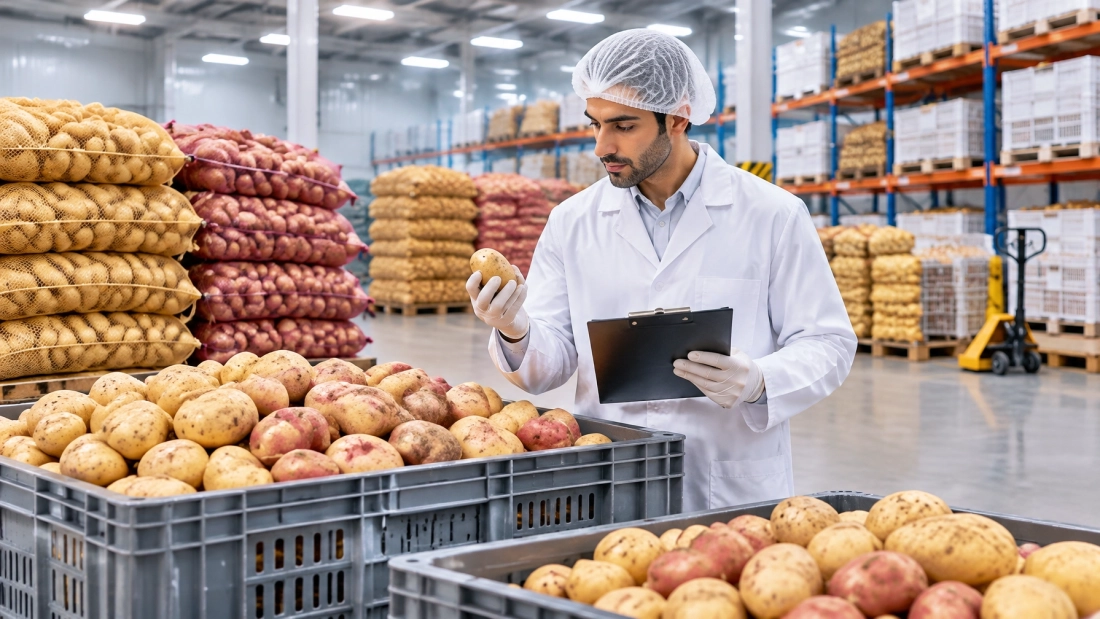
Potatoes are a high-volume staple import in the UAE, supplying supermarkets, restaurants, retailers and wholesale distributors. For exporters, that demand creates a substantial route to market, but it does not guarantee a margin. Origin, variety, grade, handling and the price achieved after arrival all affect the result.
This guide explains the practical steps for importing potatoes to Dubai, with Al Aweer Central Market price references from 22 October 2026. It also outlines two ways to work with Mayil Global: consignment distribution at a flat 3% commission or an outright Cash & Carry container purchase on arrival.
This is the third produce walkthrough in our exporter series, following guides to exporting onions to Dubai and finding a tomato buyer in Dubai.
Why potato imports matter to UAE exporters
Potatoes move through several buyer channels. Supermarkets look for dependable supply and consistent grading. Restaurants and food-service buyers value functional specifications and reliable delivery. Wholesale distributors need product that can be sold at current market levels without avoidable losses in storage or handling.
As one of the UAE’s highest-volume staple imports, potatoes can give exporters access to recurring demand. The same scale also makes the market competitive. A shipment that misses buyer specifications, arrives with quality issues or is priced without reference to current trading conditions can quickly lose its advantage.
The commercial priority is therefore twofold: match origin and grade to the intended buyer, then work with a distribution partner who understands actual Al Aweer market conditions.
Al Aweer potato prices on 22 October 2026
The following Al Aweer Central Market references are listed per kilogram. Use them as sourcing and negotiation points, not as guaranteed transaction prices.
| Potato reference | Route and pack | Indicative price |
|---|---|---|
| White Potato, Pakistan | Sea, mesh bag 2.8 kg | AED 1.79/kg |
| Pink Potato, Pakistan | Sea, mesh bag 2.8 kg | AED 2.14/kg |
| Pink Potato, Bangladesh | Sea | AED 5.71/kg, down 11.2% |
| Potato Unwashed, Lebanon | Road | AED 2.50/kg |
| Potato Unwashed, Egypt | Road | AED 3.00/kg |
Prices vary by quality, grade, pack size, availability and negotiation. The Al Aweer potato reference page provides market context; exporters should confirm current specifications and buyer interest before dispatch.
These entries are not all like-for-like products. Egypt and Lebanon can land below the Pakistan white potato line on some grades, but the listed unwashed references above are higher than the listed Pakistan white price. Bangladesh pink is at a wide premium to the other references. The practical point is that origin selection, grade and variety, not freight alone, determine the margin. Compare offers only after matching the product specification and route.
One-day market changes matter
Other Al Aweer movements reported on 22 October underline how quickly category pricing can shift: green capsicum rose 103.6%, cabbage fell 40.0%, cherry tomatoes and lettuce rose 25.0%, and red and yellow capsicum fell 20.0%.
These are signals of market movement, not potato price forecasts. They show why an exporter needs a buyer who sells at real market level rather than applying a fixed markup to landed cost regardless of daily demand.

How to export potatoes to Dubai: a step-by-step guide
Before shipment, confirm the UAE importer, destination, product specification and current regulatory requirements. UAE agricultural and food import rules can vary by origin and shipment. Coordinate the final checklist with the importer, customs broker and relevant authorities.
1. Select the origin, variety and grade
Start with the target buyer. Agree whether the shipment is white or pink potato, washed or unwashed, and specify size range, appearance, defect tolerance, pack type and intended channel. Supermarket, restaurant and wholesale buyers may have different requirements.
Compare origin economics against the buyer’s specification. A lower farm-gate or freight cost does not guarantee a stronger return if the grade, pack or arrival condition does not match the market.
2. Confirm requirements and documents before loading
Coordinate with the UAE importer and broker before the shipment departs. The document set commonly includes:
- Certificate of origin
- Phytosanitary certificate issued by the competent authority in the exporting country
- Packing list and commercial invoice
- Bill of lading
- Health or food-safety documentation required for the product and origin
- Product and package labelling information
Some shipments may require additional permits, product registration, inspection or supporting analysis. Confirm applicable requirements with MOCCAE’s agricultural import permit service and its release service for imported agricultural consignments. Dubai food-import procedures and clearance steps should also be verified with the importer and broker before dispatch. Requirements can change, so do not rely on an old shipment file as the sole reference.
3. Complete pre-shipment quality control
Inspect the lot before packing and loading. Check size consistency, skin condition, visible damage, decay, sprouting and signs of greening. Confirm the produce meets the agreed specification and that the paperwork reflects the correct origin, variety, quantity and pack.
Mayil Global’s operating approach centres on inspection at every stage, hygienic handling and packaging, and proper storage from farm to market. For exporters, pre-shipment inspection helps reduce discrepancies and protects the value of the cargo.
4. Plan customs clearance at the Dubai port
Send the document set to the UAE importer and customs broker in advance. After arrival, the shipment may be subject to document checks, agricultural inspection and food-safety controls before release. Confirm clearance status before arranging onward delivery. Dubai Customs publishes general information through its FAQ page; the importer or broker should verify the applicable tariff classification and shipment-specific process.

5. Arrange distribution after release
Once cleared, potatoes can move to Al Aweer wholesale market or into direct distribution for supermarkets, restaurants and other B2B buyers. Coordinate transport, receiving times and unloading capacity to avoid unnecessary holding. Efficient distribution and organised logistics help protect quality while getting the shipment to its intended channel on time.
Potato handling: ventilation, curing and storage discipline
Potatoes need handling suited to the crop. They are not managed like products that rely on refrigerated cold-chain transport. Use ventilation and protect the cargo from conditions that encourage condensation, overheating or damage.
- Cure before shipment: Allow harvested potatoes to cure appropriately before packing so the skins are set and minor handling damage can heal. Follow crop- and origin-specific post-harvest protocols.
- Prioritise ventilation over refrigeration: Provide airflow through the load and avoid trapping heat or moisture. Confirm transport conditions with the packer and logistics provider.
- Prevent light exposure: Keep potatoes away from direct light during storage and handling. Light exposure can cause greening, which affects marketability.
- Manage sprouting: Use sound post-harvest practices and monitor storage duration and conditions. Agree any sprout-control approach with the buyer and ensure it complies with applicable requirements.
- Stack and palletise carefully: Use stable, secure stacks that preserve airflow and prevent sacks or crates from being crushed. Keep loads clean and off contaminated surfaces.
- Maintain hygiene: Use clean packaging and handling equipment, protect the product from contamination, and follow food-safety standards throughout storage and distribution.
A transparent alternative to traditional commission agents
Exporters entering Dubai may encounter commission stacking, delayed settlement, unclear deductions and limited visibility into the final sale price. Some traditional arrangements also lack a defined outright purchase option, leaving the exporter exposed to market movement while awaiting sale.
Mayil Global offers two routes for exporters seeking a verified buyer for exporters in the UAE:
- Consignment distribution at a flat 3% commission. Mayil Global distributes the shipment through its B2B network and charges a fixed 3% commission on the agreed gross sales value. The model is designed to make the distribution cost clear and connect the exporter to real Al Aweer market levels rather than a fixed landed-cost markup.
- Immediate Cash & Carry container purchase. For suitable shipments, Mayil Global buys the container outright on arrival, subject to agreed terms and quality inspection. This gives the exporter a direct purchase route instead of waiting for the container to sell on consignment.
The 3% commission model is an alternative to layered agent fees, while Cash & Carry offers a separate buy-out route. Confirm settlement, inspection, product specification and shipment terms before dispatch.
As a UAE wholesale fruits and vegetables supplier, Mayil Global serves supermarkets, restaurants, retailers and wholesale distributors. The company combines farm-direct sourcing from trusted farms and global suppliers with quality control, hygienic packaging, organised logistics and a multi-country supply network for dependable distribution. Learn more about Mayil Global’s sourcing and logistics.

Conclusion: plan the shipment around the buyer and the market
Successful potato exports to Dubai begin with a matched origin, variety and grade, followed by complete documentation, pre-shipment inspection and potato-appropriate storage and ventilation. Al Aweer’s 22 October references show why exporters need to compare specifications carefully and keep pricing connected to current market conditions.
For exporters assessing how to export food to Dubai, Mayil Global provides two commercial options: a flat 3% commission distribution route or an outright Cash & Carry container purchase on arrival, subject to agreed terms and inspection. Contact Mayil Global to discuss your origin, potato specification, shipment timing and preferred route to UAE buyers.