

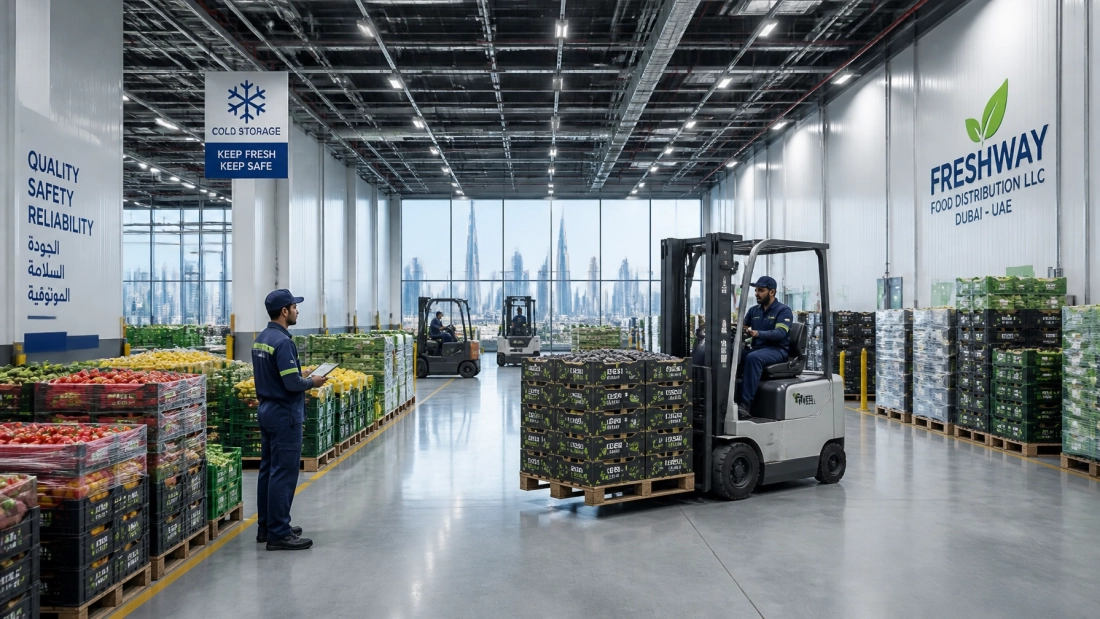
Dubai serves as the primary redistribution hub for the Middle East and North Africa (MENA) region, making it a high-priority destination for global food exporters. However, the complexity of the market: ranging from the fast-paced Al Aweer Central Fruit & Vegetable Market to the stringent requirements of high-end retail: necessitates a strategic approach to finding verified wholesale buyers. For exporters, the objective is not merely to find a buyer, but to secure a partnership with a reliable distributor who can navigate the local logistics, regulatory, and pricing landscapes.
Establishing a presence in the UAE food sector requires a thorough understanding of how to bridge the gap between global supply and local demand. This guide outlines the operational steps and strategic frameworks necessary to connect with verified wholesale fruits and vegetables dubai buyers, focusing on transparency, liquidity, and operational excellence.
Understanding the Al Aweer Wholesale Landscape
The Al Aweer Central Fruit & Vegetable Market is the pulse of the UAE’s fresh produce trade. It operates as a high-volume B2B environment where speed and reliability are the primary currencies. For an exporter, understanding this market is the first step in identifying a verified buyer.
The Role of the Central Fruit and Vegetable Market
Al Aweer is not a retail destination; it is a professional trading floor where registered importers and wholesale traders operate. Direct selling by foreign entities is prohibited; all transactions must be facilitated through a licensed UAE trader. Verified buyers in this sector typically manage their own cold storage, logistics fleets, and distribution networks.
When evaluating potential partners in Al Aweer, exporters must prioritize companies that demonstrate a physical presence within the market and a proven track record of handling bulk consignments. Companies like Mayil Global provide a gateway to this market, offering a structured 3% commission distributor model that allows exporters to tap into the market's high liquidity while maintaining transparency.
Steps to Exporting Food to Dubai Safely
Navigating the transition from an overseas farm to a Dubai warehouse involves a series of mandatory regulatory steps. Compliance is non-negotiable, and errors in documentation can lead to costly delays at Jebel Ali Port or the Al Aweer market gates.
Navigating Regulatory Compliance and Documentation
To successfully export food to dubai, exporters must adhere to the standards set by the Ministry of Climate Change and Environment (MOCCAE) and the Dubai Municipality.
- Product Registration: All food items must be registered via the ZAD portal before arrival. This ensures the product meets UAE safety standards.
- Health and Safety Standards: Compliance with Maximum Residue Limits (MRLs) and international phytosanitary standards is essential.
- Mandatory Documentation: A complete set of documents is required for customs clearance, including:
- Commercial Invoice (Attested)
- Packing List
- Phytosanitary Certificate
- Certificate of Origin (crucial for CEPA benefits)
- Bill of Lading
- Import Permit from the Food Import and Re-export System (FIRS)
Partnering with a verified buyer who understands these workflows is critical. A reliable partner will assist in ensuring that labeling (including mandatory Arabic translations) and packaging comply with UAE.S GSO 9:2013 standards.

Identifying Verified Wholesale Buyers: The "Who" and "How"
The challenge for most exporters is distinguishing between a casual trader and a verified wholesale buyer. A verified buyer is characterized by financial stability, physical infrastructure, and a transparent fee structure.
Moving Beyond Basic Directories
While trade directories and B2B platforms like Abraa or Alibaba provide a starting point, verification requires deeper due diligence.
- Verification of Licenses: Always request a copy of the buyer’s Dubai Economic Department (DED) trade license and VAT registration.
- Infrastructure Inspection: A verified buyer should have access to professional cold storage and organized logistics.
- Trade Model Analysis: Be wary of buyers who offer vague pricing. Professional distributors in Dubai often operate on a commission basis or a clear cash-and-carry model.
Exporters are increasingly moving away from high-risk credit models toward the 3% commission-based distribution offered by Mayil Global. This model provides the exporter with a clear "work-back" pricing structure, where the local handling costs and a small, fixed commission are the only deductions from the daily market price.
The Mayil Global Advantage: 3% Commission and Cash & Carry
Mayil Global has redefined the relationship between global exporters and the UAE market by prioritizing liquidity and transparency. For many exporters, the traditional credit-based system in the UAE creates significant financial strain.
Optimizing Liquidity for Global Exporters
The primary USPs of Mayil Global are designed to mitigate the risks associated with international trade:
- 3% Commission Model: Unlike traditional traders who may have hidden margins, Mayil Global operates on a transparent 3% commission. This ensures the exporter receives the maximum possible return from the Al Aweer market’s daily price fluctuations.
- Cash & Carry Wholesale: For exporters who need immediate liquidity, Mayil Global offers a Cash & Carry model. We purchase entire containers outright, providing immediate payment and eliminating the wait associated with market sales. This is particularly beneficial for managing liquidity gaps in bulk rice or fresh produce exports.
- End-to-End Logistics: From port clearance at Jebel Ali to organized storage and final distribution, our logistics ensure that the quality of the produce is maintained from farm to market.

Product-Specific Insights: Importing Onions to Dubai
Onions represent one of the highest-volume commodities in the UAE’s fresh produce trade. Successfully importing onions dubai requires meeting specific market demands that influence the daily wholesale price.
Meeting Market Specifications for Maximum Value
To achieve the best margins in the Al Aweer market, exporters should align their shipments with the following requirements:
- Variety: Red onions are the most sought-after variety in the UAE.
- Sizing: The market prefers a bulb size of 55mm and above.
- Packaging: Breathable leno mesh bags (typically 18kg to 25kg) are the standard to prevent decay during transit.
- Consistency: Maintaining a steady supply of high-grade onions allows for more stable pricing and stronger buyer relationships.
Exporters from India, for instance, can leverage the India-UAE CEPA to benefit from 0% duty, making their produce even more competitive. Detailed strategies for exporting onions to Dubai can help shippers maximize their profits by timing their shipments with market demand.
Ensuring Quality and Reliability in the Supply Chain
In the B2B food sector, quality control is the ultimate filter for long-term success. Verified buyers do not just look for the lowest price; they look for consistency.
Strict Inspection and Hygienic Handling
At Mayil Global, our products undergo inspection at every stage: from farm-direct sourcing to the final point of sale. Our commitment to safety and hygiene ensures that we remain a preferred supplier for supermarkets, restaurants, and wholesale distributors across the UAE. For local businesses, our Cash & Carry model simplifies inventory management, providing them with fresh, verified produce without the complexities of direct importing.

Conclusion: Building Long-Term B2B Partnerships
Connecting with a verified wholesale food buyer in Dubai is a process of aligning operational capabilities with market demands. By focusing on transparent models like the 3% commission distribution and ensuring rigorous compliance with UAE import regulations, exporters can secure their margins and build a sustainable presence in the region.
Mayil Global stands as a professional partner for both international exporters and local B2B buyers. Whether you are seeking a reliable distributor for your next container of onions or looking to source premium spices and rice for your restaurant chain, our infrastructure and expertise provide the reliability your business requires.
Contact Mayil Global today to discuss how our distribution models can optimize your food export strategy to the UAE.