

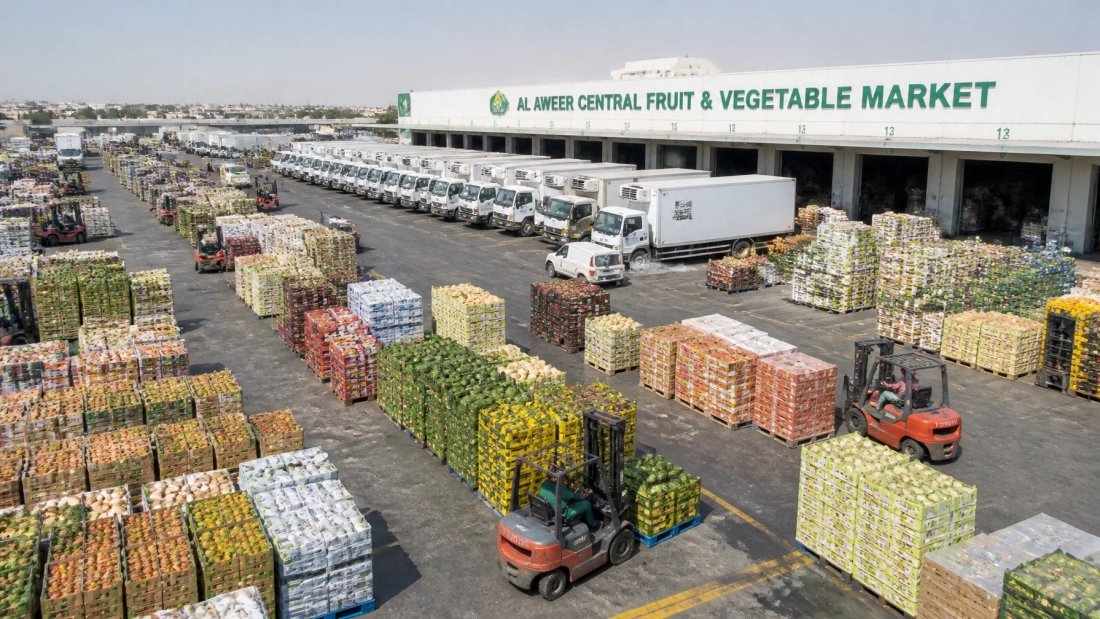
Navigating the international food trade requires a combination of logistical precision, regulatory compliance, and reliable partnerships. For global exporters targeting the Middle East, the Al Aweer Central Fruit & Vegetable Market in Dubai stands as the most critical entry point. As the primary hub for wholesale fruits and vegetables in Dubai, Al Aweer is more than just a marketplace; it is a complex ecosystem that dictates the flow of fresh produce across the United Arab Emirates and the wider Gulf Cooperation Council (GCC) region.
However, entering this market is not without its challenges. Finding a verified buyer who understands the nuances of local demand and the complexities of international shipping is essential for long-term success. At Mayil Global, we facilitate this transition by acting as a strategic partner for exporters, offering a specialized 3% commission-based distribution model and immediate cash-and-carry options for bulk containers.
Before dispatching your next shipment, here are 10 critical things you should know about the Al Aweer market.
1. Scale and Volume: The Engine of UAE Food Security
Al Aweer is the largest wholesale fruit and vegetable market in the Gulf region. Spanning approximately one million square meters, the facility handles over 7,000 tonnes of fresh produce every single day. For an exporter, this scale represents significant opportunity, but it also demands a high level of operational readiness. Approximately 80% of the fresh produce consumed in Dubai passes through this hub before reaching supermarkets, restaurants, or re-export channels.
2. The Strategic Gateway: Beyond Dubai
While the market is located in Dubai, its influence extends far beyond the city’s borders. Al Aweer serves as a central re-export hub for the entire GCC, including Oman, Qatar, Bahrain, and Saudi Arabia. Goods arriving at Al Aweer are frequently consolidated and shipped to neighboring countries, making it a strategic location for exporters who want to establish a footprint across the Middle East. Understanding this "re-export" dynamic is key to scaling your export volume.
3. The Necessity of a Local Partner: Finding a Verified Buyer
Foreign exporters cannot sell directly within Al Aweer without a UAE-licensed entity. This regulatory requirement makes the choice of a local partner paramount. A "Verified Buyer" is an importer who not only possesses the necessary licenses but also has established relationships with local retail chains and wholesale distributors. Mayil Global acts as this vital link, ensuring your produce is cleared through customs and distributed efficiently.
4. The 3% Commission Model: A Transparent Distribution Strategy
One of the most significant barriers for exporters is the lack of transparency in traditional wholesale pricing. To solve this, Mayil Global offers a 3% commission-based distribution model. Instead of buying at a fixed low price and keeping the margin, we sell your produce at the prevailing market rate and charge a transparent 3% fee for our distribution and management services. This model ensures that the exporter retains the majority of the market upside while benefiting from our local logistics and sales expertise.
5. Cash & Carry: Solving Liquidity for Global Exporters
Liquidity is often a major concern for international shippers. Waiting for long payment cycles can cripple a business's ability to fund the next container. At Mayil Global, we provide a Cash & Carry wholesale option. We purchase containers directly from the port or the market, providing immediate liquidity to the exporter. This "immediate purchase" model is ideal for exporters who prioritize cash flow and want to minimize their exposure to local market price fluctuations over long periods.

6. Sourcing Priority: Importing Onions to Dubai
If you are looking at importing onions to Dubai, Al Aweer is your primary destination. Onions, along with potatoes and citrus fruits, are among the highest-volume commodities traded in the market. The demand is constant, driven by both the local population and the massive hospitality sector. Successful onion exporters focus on consistent grading, durable mesh packaging, and phytosanitary compliance. You can learn more about our specific strategies for this category in our guide on exporting onions to Dubai.
7. Operational Standards: HACCP and Municipality Compliance
Dubai maintains rigorous food safety standards. All produce entering Al Aweer must comply with Dubai Municipality regulations and the Food Integrated Registration and Licensing System (FIRS). This includes strict labeling requirements, shelf-life declarations, and phytosanitary certifications. Partnering with a distributor like Mayil Global, which prioritizes strict quality control and hygienic handling, ensures that your shipments are not delayed or rejected at the border due to non-compliance.

8. Early Morning Trading: The Pulse of Market Pricing
The Al Aweer market operates on a unique schedule. Peak trading hours typically occur between 2:00 AM and 12:00 PM. This is when prices are established based on daily supply and demand. For an exporter, this means that the timing of your shipment’s arrival at the port and its subsequent transport to the market is critical. Arriving late in the day can lead to lower price realizations as the primary bulk buyers (supermarkets and large wholesalers) have already completed their purchases.
9. Supply Chain Logistics: From Jebel Ali to Al Aweer
Most sea freight enters through Jebel Ali Port, one of the world's most efficient container ports. From there, the produce must be transported in temperature-controlled trailers to the Al Aweer market or cold storage facilities. Understanding how to export food to Dubai involves mastering this "last mile" of the cold chain. Mayil Global manages this entire process, utilizing organized logistics to ensure that the produce remains fresh from the moment it leaves the container until it reaches the end buyer.

10. Risk Management and Quality Control
The fresh produce market is inherently volatile. Prices can shift daily based on the arrival of competing shipments from different origins. A verified buyer helps mitigate this risk by providing real-time market intelligence. At Mayil Global, we provide our partners with detailed insights into market trends, helping them decide when to increase shipments and when to hold back. Our inspection at every stage: from arrival at the port to final delivery: ensures that the quality remains consistent, protecting the exporter’s brand reputation in the UAE.
Conclusion: Why Partner with Mayil Global?
Success in the UAE's fresh produce sector is built on trust, transparency, and operational excellence. For global exporters, Al Aweer represents a land of opportunity, but only if they have the right partner on the ground.
Mayil Global is committed to being that partner. Whether you are interested in our 3% commission model to maximize your profits or our Cash & Carry service for immediate liquidity, we offer the infrastructure and expertise needed to thrive in the Dubai market. We focus on B2B supply to supermarkets, restaurants, and retailers, ensuring your produce reaches the most profitable channels.
Ready to start your export journey to Dubai? Contact Mayil Global today to discuss how we can help you navigate the Al Aweer market and secure your position as a preferred supplier in the UAE.