

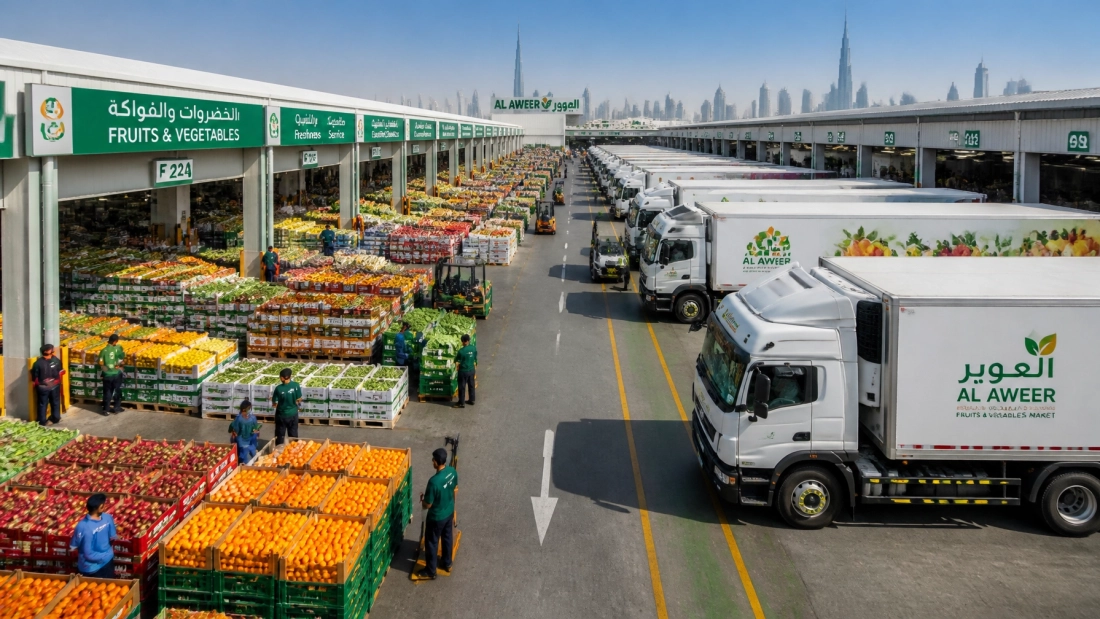
Navigating the fresh produce market in Dubai requires a sophisticated understanding of distribution models, logistics, and market dynamics. For international exporters and local B2B buyers, the Al Aweer Central Fruit and Vegetable Market serves as the epicenter of trade. However, the success of a shipment often hinges on one critical decision: selecting the right wholesale partner.
In the UAE, the two primary frameworks for wholesale trade are the 3% Commission (Consignment) Model and the Fixed Price (Outright Purchase) Model. Understanding the nuances of these structures is essential for maximizing profit margins and ensuring a steady, reliable supply chain. This guide provides a comprehensive comparison of these models, emphasizing why a strategic partnership with a distributor like Mayil Global can transform your operations.
Defining the Landscape: Al Aweer Market Dynamics
The Dubai wholesale market is characterized by high volatility and rapid turnover. Prices fluctuate daily based on global supply, regional demand, and seasonal availability. In this environment, distributors act as the bridge between international farms and local retailers.
Standard commission agents in Al Aweer typically charge a 5% fee on gross sales. However, emerging leaders in the industry are optimizing this process. By offering a 3 percent commission distributor UAE model, companies are providing exporters with a more competitive edge while maintaining full transparency.
The 3% Commission Model: Maximizing Exporter Upside
The commission-based or consignment model is the traditional backbone of the Al Aweer market. In this arrangement, the exporter retains ownership of the goods until they are sold to the final buyer (supermarkets, restaurants, or sub-wholesalers).
How the 3% Model Functions
Under this framework, the distributor acts as a service provider rather than a buyer. They utilize their established network to sell the cargo at the highest possible market price. In return, they deduct a flat 3% commission from the gross sales value.
- Ownership: The exporter maintains control over the product.
- Transparency: Detailed sales reports provide visibility into daily market rates.
- Alignment of Interests: The distributor is incentivized to secure the best price, as their commission is a percentage of the final sale.
For high-quality produce such as bulk onions or premium citrus, this model often yields the highest net returns, especially during periods of market scarcity.

The Fixed Price Model: Prioritizing Immediate Liquidity
Alternatively, the fixed-price or outright purchase model involves a Dubai-based wholesaler buying the cargo at a pre-agreed price upon arrival.
Key Characteristics of Fixed Price Trades
- Risk Transfer: Once the sale is finalized, the buyer assumes all market and inventory risks.
- Predictable Cash Flow: The exporter knows exactly what they will receive, regardless of market dips.
- Limited Upside: If market prices spike, the exporter does not benefit from the additional profit; that margin remains with the buyer.
While this model offers certainty, it often comes at a cost. Buyers typically negotiate a lower purchase price to buffer against potential market downturns, which can significantly reduce the exporter’s overall profitability.
Comparative Analysis: 3% Commission vs. Fixed Price
| Feature | 3% Commission (Consignment) | Fixed Price (Outright Purchase) |
|---|---|---|
| Ownership | Exporter retains ownership until sale | Ownership transfers to the buyer |
| Market Risk | Borne by the Exporter | Borne by the Dubai Buyer |
| Profit Potential | High (Exporter keeps the upside) | Capped (Buyer keeps the upside) |
| Transparency | Full sales reporting and market data | Limited to the agreed contract price |
| Ideal For | High-quality, consistent shipments | One-off deals or distressed stock |
| Commission Fee | Flat 3% (Mayil Global Standard) | Built into the buyer's margin |
For exporters seeking long-term growth and daily liquidity, the 3% commission model offered by Mayil Global provides a leaner, more transparent alternative to the standard 5% market rate.
Sourcing and Quality Control: The Foundation of Reliability
Regardless of the financial model chosen, the physical handling of produce is where a wholesale partner proves their worth. Choosing a partner that manages the entire lifecycle: from farm-direct sourcing to final delivery: is paramount.
Rigorous Inspection Standards
Delivering fresh produce requires a "Zero Compromise" approach to quality. This involves:
- Farm-Direct Sourcing: Bypassing middlemen to ensure freshness and competitive pricing.
- Stage-by-Stage Inspection: Monitoring quality at the point of origin, during transit, and upon arrival in Dubai.
- Hygienic Handling: Adhering to international safety standards to ensure the product is shelf-ready for premium retailers.
By maintaining strict quality control, distributors reduce the risk of "claims" or rejections, which are common pitfalls in the fresh produce industry.

Efficient Distribution and Logistics Excellence
In the UAE, logistics is not just about moving goods; it is about maintaining the cold chain. An organized logistics network ensures that temperature-sensitive products like tomatoes, ginger, and leafy greens reach their destination without degradation.
Ensuring timely delivery to supermarkets and restaurants requires a robust fleet and strategically located storage facilities. Proper storage and handling from farm to market prevent wastage and preserve the nutritional value of the food. For local buyers, this means receiving products that have a longer shelf life and better visual appeal for their customers.
Diversification: Beyond Fruits and Vegetables
While fresh produce is a major focus, a versatile wholesale partner offers a broader range of premium food products. This "one-stop-shop" capability is particularly beneficial for large-scale retailers and hotel groups (HORECA).
At Mayil Global, our expertise extends to:
- Premium Rice: Providing bulk rice solutions that solve liquidity gaps for exporters.
- Premium Spices: Sourcing aromatic and high-grade spices globally.
- Farm Fresh Eggs: Maintaining a steady supply of high-demand staples.
Diversification allows for consolidated shipments and streamlined procurement, reducing administrative overhead for B2B buyers.

Checklist: Choosing the Best Wholesale Partner in Dubai
When evaluating a potential distributor or wholesale partner, utilize the following checklist to ensure they meet the rigorous standards of the UAE market:
- Model Transparency: Do they offer a clear 3% commission structure, or are there hidden "handling" fees?
- Market Presence: Are they active in the Aweer market with a proven track record of rotating containers quickly?
- Infrastructure: Do they have refrigerated storage and a modern logistics fleet?
- Financial Stability: Can they facilitate immediate cash-and-carry purchases for local buyers?
- Quality Assurance: Do they provide inspection reports and follow international food safety protocols?
- Communication: Is there a dedicated account manager providing real-time market updates?
Conclusion: Building Long-Term B2B Partnerships
Choosing a wholesale partner is a strategic business decision that impacts your bottom line and brand reputation. While the fixed-price model offers simplicity, the 3% commission model provides the transparency and profit potential necessary for sustainable export growth in Dubai.
At Mayil Global, we are committed to building dependable supply chains through operational excellence. Whether you are an exporter looking for a 3% commission distributor or a local supermarket in need of farm-direct produce, our focus remains on providing consistent quality and reliable service.
Building a partnership with a distributor that understands the intricacies of the Al Aweer market is the first step toward securing your position in the competitive UAE food industry.
