

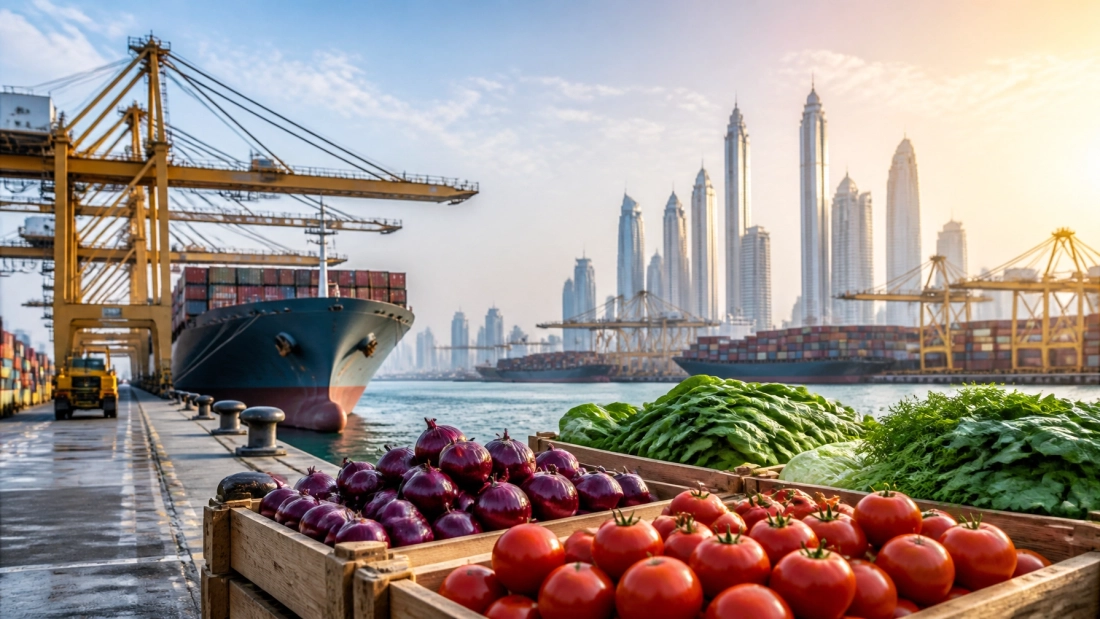
Dubai is a global powerhouse for food distribution, serving as the primary gateway for the Middle East, Africa, and beyond. For global exporters, the opportunity is immense, but the regulatory landscape and market dynamics can be complex. Success in this market requires more than just high-quality produce; it demands a strategic partnership with a distributor that understands local regulations, pricing fluctuations, and logistics.
At Mayil Global, we have established ourselves as a cornerstone of the Dubai food trade. As part of our Verified Buyer series, this guide provides a comprehensive roadmap for global suppliers looking to master the art of exporting to the UAE, with a focus on maximizing profitability through our unique 3% commission-based distribution model and Cash & Carry wholesale opportunities.
Step 1: Regulatory Compliance and Product Registration
Before a single container leaves your port, compliance must be your primary focus. Dubai operates under a "pre-entry compliance" philosophy. You cannot fix documentation issues after the goods have arrived at Jebel Ali Port or Al Aweer.
The ZAD National System
All food products: whether fresh produce like onions or processed goods: must be registered in the ZAD (National Food Accreditation and Registration System). This electronic platform is mandatory. Your UAE-based partner, such as Mayil Global, will handle this registration on your behalf, ensuring that every SKU is cleared for entry.
Mandatory Labelling Standards
Dubai Municipality enforces strict labelling requirements. In 2026, these standards include:
- Bilingual Labelling: Arabic is mandatory. You may use a bilingual label (Arabic/English), but the Arabic text must be clear and non-removable.
- The 12-Element Rule: This includes product name, ingredients, allergen warnings, country of origin, and net weight in metric units.
- Nutri-Mark Grading: Certain products now require front-of-pack nutrition grading (A–E).
- Production and Expiry Dates: Dates must follow a clear format, and most products require at least 50–75% of their shelf life remaining upon arrival.
Step 2: Choosing Your Distribution Model
The choice of a local partner determines your bottom line. Traditional distributors often take a significant cut, leaving exporters with thin margins. Mayil Global offers a more transparent and lucrative alternative.
The 3% Commission Advantage
For exporters seeking a reliable wholesale fruits and vegetables dubai partner, our 3% commission-based distribution model is a game-changer. Here is how it works:
- Transparency: We charge a flat 3% commission for managing your distribution.
- Market Access: We utilize our deep-rooted connections in the Al Aweer Central Fruit & Vegetable Market to move your volume at the highest possible daily rates.
- Liquidity: We prioritize cash flow, ensuring that exporters receive their funds swiftly, solving the common liquidity gaps found in international trade.
Cash & Carry for Immediate Movement
For suppliers with high-volume containers, our Cash & Carry food wholesale model provides immediate liquidity. We purchase entire containers directly, allowing you to bypass the traditional waiting periods associated with retail distribution.

Step 3: Navigating the Al Aweer Market Pricing
The Al Aweer Central Fruit & Vegetable Market is the beating heart of Dubai’s fresh produce trade. It is a dynamic, high-volume environment where prices can fluctuate by the hour.
Understanding Price Drivers
- Arrival Timing: Early morning arrivals often command the best prices as supermarkets and HORECA (Hotel, Restaurant, and Catering) buyers complete their daily procurement.
- Grade and Quality: Dubai is a "premium-first" market. High-quality appearance and rigorous quality control are non-negotiable for securing top-tier pricing.
- Stock Levels: Prices are highly sensitive to daily arrival volumes. A shortage in onions can spike prices overnight, while a glut requires a partner who can move volume fast to avoid spoilage.
When importing onions dubai, understanding these hourly shifts is critical. Mayil Global provides real-time market insights, allowing our suppliers to make informed decisions on when to ship and what quantities the market can currently absorb.

Step 4: Logistics and Cold Chain Integrity
The journey from your farm to a supermarket shelf in Dubai involves several critical handovers. Maintaining the cold chain is the single most important factor in preventing loss.
Port Clearance and Inspection
Upon arrival, containers undergo risk-based inspections. High-risk foods (meat, dairy, and certain fresh vegetables) are subject to intensive laboratory analysis for heavy metals, pesticides, and microbiological contaminants.
Mayil Global’s sourcing and logistics team manages the entire process:
- Customs Filing: Ensuring HS codes and commercial invoices are perfect to avoid costly delays.
- Health Clearance: Coordinating with Dubai Municipality for rapid sampling and inspection.
- Storage: Moving goods immediately to our organized, temperature-controlled facilities to preserve shelf life.

Step 5: Targeting Specific Commodities (Onions, Spices, and Rice)
While the process remains similar across categories, certain products have specific nuances.
Importing Onions to Dubai
Onions are a high-volume staple. To succeed in importing onions dubai, exporters must focus on skin quality and moisture content. Our 3% commission model is particularly effective for onion exporters from India, Pakistan, and Egypt, where large volumes require rapid, transparent sales.
Premium Rice and Spices
For exporters of bulk rice and premium spices, the focus shifts to moisture-proof packaging and ESMA certification. Dubai's diverse population creates a year-round demand for high-quality Basmati rice and authentic spices, making it a stable market for consistent suppliers.

Summary: Your Path to Profitability in Dubai
Exporting food to Dubai is a sophisticated operation that rewards those who prioritize compliance and choose the right distribution model.
- Pre-Register Everything: Ensure your products and labels are approved in ZAD before shipping.
- Partner for Transparency: Utilize Mayil Global’s 3% commission model to keep more of your profits.
- Prioritize Freshness: Use our logistics expertise to minimize time at the port and maximize time on the shelf.
- Leverage Cash Flow: Use our Cash & Carry options for immediate liquidity on container-load shipments.
At Mayil Global, we are more than just a distributor; we are your operational partner in the UAE. Whether you are sourcing fresh produce or looking for a reliable B2B supplier for your restaurant or supermarket, our commitment to safety, hygiene, and efficiency remains unshakeable.
Ready to start exporting? Contact our team today to learn how our 3% commission model can transform your international trade operations.