

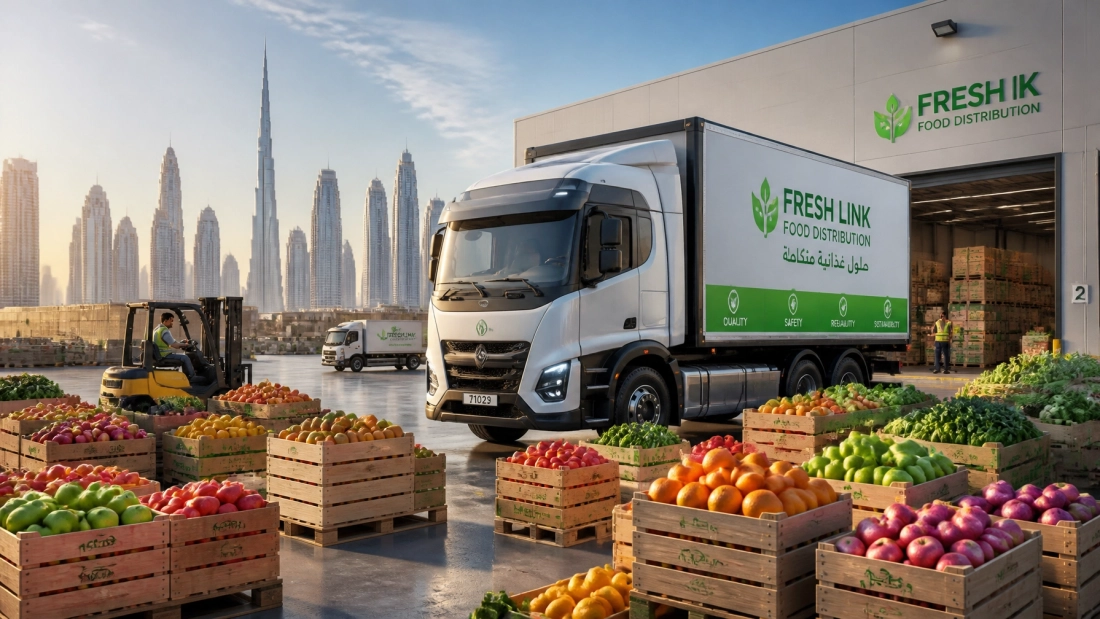
The United Arab Emirates, and specifically Dubai, serves as the primary logistical nerve center for the Middle East’s food trade. For global exporters, the challenge is rarely a lack of demand; rather, it is the complexity of identifying a verified wholesale buyer capable of navigating the region’s rigorous regulatory landscape while ensuring financial security. As the market evolves toward greater transparency and efficiency in 2026, exporters are increasingly seeking partners who offer more than just a purchase order: they require a strategic distribution infrastructure.
Finding a verified buyer for wholesale fruits and vegetables in Dubai requires a systematic approach that balances regulatory compliance with market-specific intelligence. At Mayil Global, we bridge the gap between international farms and the high-demand UAE market through a transparent, high-efficiency distribution model designed to maximize margins for the exporter.
Navigating the Dubai Wholesale Ecosystem
The cornerstone of the UAE’s produce trade is the Al Aweer Central Fruit and Vegetable Market. This massive facility dictates the daily pricing and volume flows for the entire region. However, for a foreign entity, the market can appear opaque. Prices fluctuate daily based on supply surges, seasonal shifts, and the arrival of large-scale shipments from major origins like India, Egypt, and South Africa.
Securing a foothold in this market necessitates a partner with an established "Importer Code" and a deep-rooted presence within Al Aweer. A verified buyer is not merely a middleman; they are a licensed entity registered with the Dubai Municipality Food Safety Department and the Federal Ministry of Climate Change & Environment (MOCCAE).

How to Export Food to Dubai: The Regulatory Framework
Successful market entry depends on strict adherence to the latest 2026 guidelines. Understanding how to export food to Dubai begins with two digital pillars: the ZAD and FIRS systems.
1. Product Registration (ZAD and FIRS)
Every food product entering the UAE must be registered. The ZAD system handles federal-level food registration, while FIRS (Food Import and Re-export System) is Dubai’s specific portal for managing inspections and releases. This process requires detailed label artwork, ingredient lists, and country-of-origin documentation.
2. Labeling Requirements
Compliance with GSO 2233:2021 standards is non-negotiable. Labels must be bilingual (Arabic and English) and must clearly state the manufacturer's details, production and expiry dates, and nutritional information. Failure to meet these standards results in immediate rejection at the port, leading to costly demurrage fees.
3. Essential Documentation
To clear customs at Jebel Ali or other UAE ports, the following documents are mandatory:
- Commercial Invoice & Packing List
- Bill of Lading
- Certificate of Origin
- Phytosanitary Certificate (For fresh produce like fruits and vegetables)
- Health Certificate (For processed goods and animal products)
The Mayil Global Advantage: 3% Commission Model
For many exporters, the traditional "trading" model is fraught with hidden costs and lack of transparency. Mayil Global operates on a 3% commission-based distribution model, specifically designed for international exporters who want to retain control over their profits while leveraging a local powerhouse.
Under this model, Mayil Global acts as your dedicated distribution arm in Dubai. We handle the complex logistics, customs clearance, and market placement for a flat 3% commission on the final sale value. This ensures that the exporter benefits directly from market price surges. Unlike traditional buyers who may offer a fixed low price to hedge their own risks, our model aligns our success with yours: the higher the sale price in Al Aweer, the better the return for both parties.
Exporters interested in this high-transparency model can explore our 3% commission strategy explained to understand how we maintain daily liquidity for our partners.
Case Study: Importing Onions to Dubai
Onions represent one of the highest-volume commodities in the UAE. However, importing onions to Dubai requires specific attention to grading and variety. The market primarily demands Red Onions, specifically those with a diameter of 55mm and above.
Quality Standards for Onions
When preparing a container for Dubai, the following specifications are standard:
- Variety: Red Onion (Deep purple skin, firm texture).
- Size: 55mm+ is the premium grade for Al Aweer.
- Packing: 18kg to 20kg mesh bags are the preferred wholesale format.
- Condition: Onions must be fully cured (dried), free from soil, and show no signs of sprouting or moisture.
At Mayil Global, we specialize in the bulk procurement and distribution of onions. Our guide on exporting onions to Dubai details how our 3% commission and Cash & Carry models solve the liquidity gaps often faced by onion shippers.

Cash & Carry: Immediate Liquidity for Exporters
In addition to our commission model, Mayil Global provides a Cash & Carry wholesale option. This is ideal for exporters who prefer immediate capital turnover. We purchase full containers directly upon arrival and inspection, providing instant cash flow. This model is particularly popular among exporters of stable commodities like bulk rice and premium spices.
For local B2B buyers: including restaurants, supermarkets, and smaller wholesale distributors: our Cash & Carry facility offers a reliable supply of farm-fresh eggs, vegetables, and fruits without the lead times associated with direct importing.
The Importance of Sourcing and Logistics
Reliability in the food supply chain is built on the foundation of sourcing and logistics. Mayil Global maintains a global supply network that ensures a steady flow of products even during seasonal shortages in specific regions. Our logistics operations include:
- Strict Quality Control: Inspection at origin and upon arrival in Dubai.
- Hygienic Handling: Adherence to international safety standards during storage and transport.
- Organized Distribution: A fleet of temperature-controlled vehicles ensuring timely delivery to supermarkets and retailers across the UAE.

Conclusion: Partnering for Long-Term Growth
Finding a verified wholesale food buyer in Dubai is the first step toward a successful export business. However, the ultimate goal is to find a partner that offers stability, transparency, and a scalable business model. Whether you are an exporter looking to capitalize on our 3% commission distribution or a local retailer seeking a consistent wholesale vegetable supplier, Mayil Global provides the infrastructure to succeed.
The Dubai market offers unparalleled opportunities for those who respect its regulations and understand its dynamics. By choosing a partner with a proven track record in Al Aweer and a commitment to B2B excellence, you ensure that your produce moves swiftly from the farm to the consumer's table, with your margins protected at every stage.
For more information on our distribution services or to discuss a potential shipment, contact our sourcing team today.