

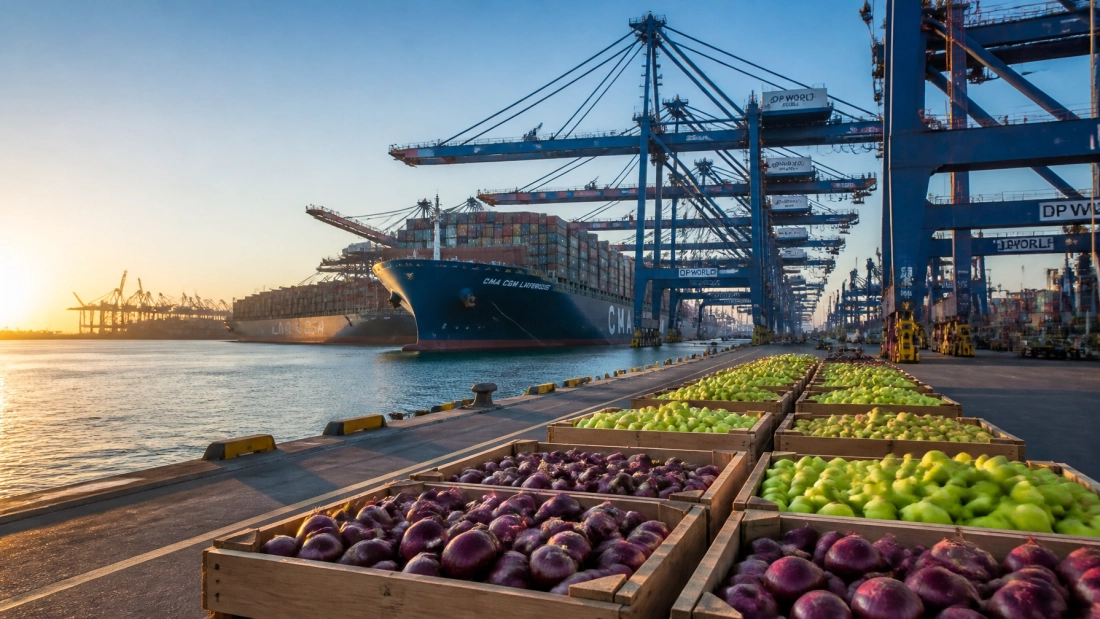
Navigating the landscape of international food trade requires more than just high-quality produce; it demands a deep understanding of regional regulations and market dynamics. The United Arab Emirates (UAE), particularly Dubai, serves as a primary gateway for food distribution across the Middle East and North Africa. For global exporters, the challenge lies in maintaining profitability while navigating the complexities of Dubai Customs, Dubai Municipality, and the competitive Al Aweer Fruit and Vegetable Market.
At Mayil Global, we specialize in streamlining this transition. As a premier wholesale supplier of fresh produce and premium food products in the UAE, we bridge the gap between global farms and local markets. Our operational model is built on transparency, offering a unique 3% commission-based distribution and immediate cash-and-carry container purchases to ensure our partners secure their margins without the burden of liquidity gaps.
This guide outlines the five essential steps to successfully exporting food to Dubai, ensuring your cargo meets international standards and reaches the right buyers efficiently.
Step 1: Navigating Regulatory Compliance and Product Registration
The foundation of a successful export operation to Dubai is strict adherence to the regulatory frameworks established by the Dubai Municipality (DM) and the Ministry of Climate Change and Environment (MOCCAE). Before a single container leaves your port, every product must be registered and verified.
Utilizing the Foodwatch Platform
Dubai Municipality utilizes Foodwatch, a comprehensive digital platform that tracks the lifecycle of food products. Every item you intend to export must be registered here. This process involves submitting a detailed ingredient list, nutritional information, and label artwork for approval. Ensuring your product is pre-registered prevents costly delays or rejections at the port of entry.
Labeling Requirements for 2026
Labeling is a critical component of compliance. All pre-packaged food must adhere to GSO 9/2013 standards. Key elements include:
- Mandatory Arabic Text: Product names, country of origin, and storage instructions must be provided in Arabic.
- Clear Dates: Production and expiry dates must follow the approved GCC format.
- Nutritional Accuracy: Labels must align with GSO 2233:2021 for nutritional reporting.
Maintaining these standards is non-negotiable. At Mayil Global, we ensure our global supply network adheres to these rigorous safety and hygiene standards before products enter our distribution chain.

Step 2: Assembling the Essential Export Documentation Pack
Efficiency in Dubai’s food trade is driven by documentation. Incomplete paperwork is the primary cause of clearance bottlenecks. To ensure your shipment moves swiftly through customs, you must prepare a comprehensive "Export Pack."
The Mandatory Checklist
A standard shipment of wholesale fruits and vegetables in Dubai requires the following:
- Commercial Invoice: Including HS codes, unit prices, and total value.
- Packing List: Detailing weights, dimensions, and packaging types (e.g., 25kg mesh bags for onions).
- Bill of Lading / Air Waybill: The official title document for the cargo.
- Certificate of Origin (COO): Issued by your local Chamber of Commerce.
- Health (Sanitary) Certificate: Confirming the product is fit for human consumption.
- Phytosanitary Certificate: Specifically required for fresh produce to prove freedom from pests.
For exporters importing onions to Dubai, matching the documentation exactly to the physical cargo is vital. Discrepancies can lead to secondary inspections, increasing your overhead and threatening your margins.
Step 3: Logistics Management and Cold Chain Integrity
Maintaining the quality of fresh produce during transit is a logistical priority. Most food shipments enter the UAE via Jebel Ali Port, the region's largest sea hub, or through Dubai International Airport for high-value perishables.
Managing the Cold Chain
For products such as apples, grapes, or farm-fresh eggs, the cold chain must remain unbroken from the point of origin to the final market. This involves:
- Temperature-Controlled Containers: Utilizing specialized reefer units that monitor temperature and humidity in real-time.
- Efficient Port Clearance: Working with a licensed importer like Mayil Global ensures that once the ship docks, the process of customs clearance and ESMA (Emirates Authority for Standardization and Metrology) inspection is initiated immediately.
Delivering fresh produce requires organized logistics and proper storage. Our facilities are designed to handle bulk imports, ensuring that the "farm-to-market" promise is upheld through rigorous temperature control and hygienic handling.

Step 4: Understanding the Al Aweer Market Pricing Dynamics
Once your goods clear customs, they typically move to the Al Aweer Central Fruit & Vegetable Market. This is the primary hub for wholesale trade in the UAE, and understanding its pricing mechanics is crucial for securing your margins.
Real-Time Supply and Demand
Unlike retail environments with fixed prices, the Al Aweer market operates on a dynamic, cash-based system. Prices fluctuate daily based on:
- Total Arrivals: High volumes from competing origins (e.g., India, Pakistan, or Egypt) can drive prices down.
- Quality Variations: Premium grade produce consistently commands higher rates.
- Daily Liquidity: The market relies on rapid cash turnover, making real-time intelligence essential.
Exporters often struggle with the lack of transparency in traditional commission-agent models. This is where how to export food to dubai becomes a question of finding a partner who offers stability. Relying on stale price lists is a risk; successful exporters depend on partners who are physically present in the market every day.

Step 5: Securing Your Margins with Mayil Global’s 3% Commission Model
The final and most critical step is choosing the right distribution partner. Traditional models in Dubai often involve high commissions and delayed payment cycles, which can cripple an exporter’s cash flow.
The 3% Commission Advantage
Mayil Global has revolutionized food distribution for global exporters by offering a transparent 3% commission model. Unlike traditional agents who may take a significant portion of the sale, our fixed 3% fee allows exporters to retain 97% of the market value. This model is designed to attract international exporters who prioritize high-volume, consistent trade.
Cash & Carry for Immediate Liquidity
For exporters with containers already at the port or in the Al Aweer market, we offer a Cash & Carry wholesale solution. We purchase entire containers immediately, providing the liquidity needed to fund your next shipment. This eliminates the waiting period associated with retail payment cycles and secures your profit margins instantly.
- B2B Focus: We supply directly to supermarkets, restaurants, and retailers, ensuring a steady demand for your produce.
- Operational Excellence: Our logistics network and storage facilities ensure your goods are handled with the highest standards of safety and hygiene.
The 3% commission strategy is not just a fee structure; it is a commitment to building long-term, dependable relationships with global suppliers.

Conclusion: Building a Reliable Supply Chain in the UAE
Exporting food to Dubai is a high-reward venture for those who prioritize operational excellence and regulatory compliance. By following these five steps: ensuring registration, mastering documentation, maintaining the cold chain, understanding market dynamics, and partnering with a transparent distributor: you can secure your margins and establish a permanent footprint in the UAE market.
Mayil Global remains committed to being the most reliable wholesale supplier and distributor in the region. Whether you are exporting onions, premium rice, or fresh fruits, our 3% commission and Cash & Carry models are designed to support your growth.
For exporters ready to scale their operations in Dubai, contact Mayil Global today to discuss how our distribution network can work for you.