

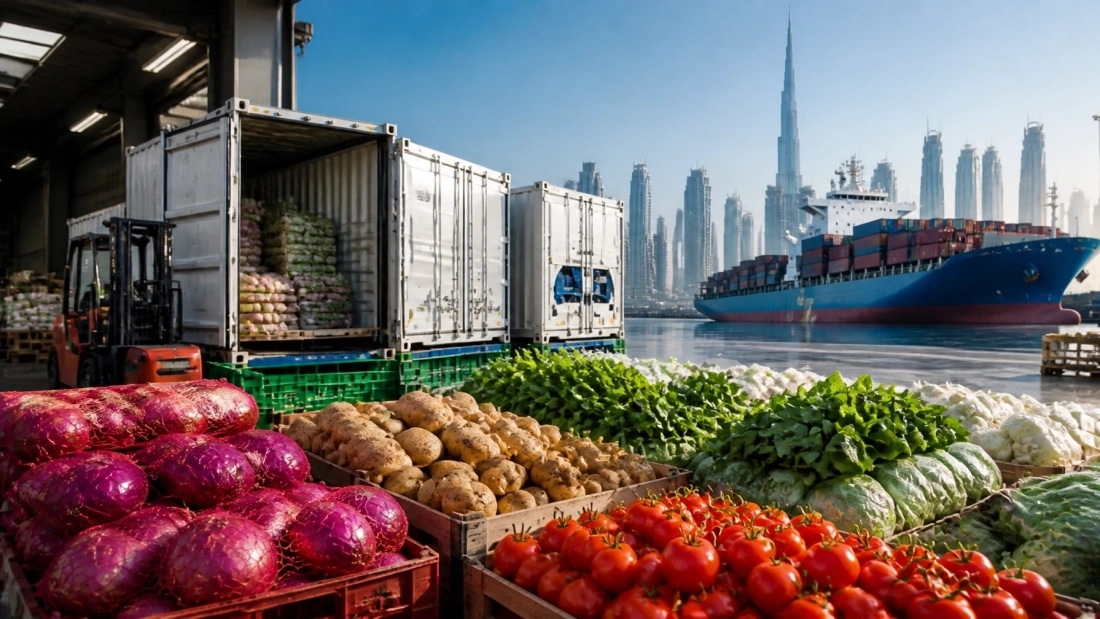
Exporting food to Dubai requires more than finding a buyer and booking a container. International exporters must coordinate product sourcing, documentation, quality control, port clearance, logistics, market pricing, and settlement.
Dubai’s Al Aweer Central Fruit and Vegetable Market is a major wholesale hub for imported onions, potatoes, tomatoes, citrus, leafy vegetables, and other fresh products. The market serves supermarkets, restaurants, retailers, foodservice operators, and wholesale distributors across the UAE.
Mayil Global provides exporters with a structured route into this market through a transparent 3% commission-based distribution model and an immediate Cash & Carry container purchase system. These models support dependable market access, faster liquidity, and professional B2B distribution.
Why Dubai Requires a Structured Export Model
Dubai is a high-volume, fast-moving food market. Wholesale prices change according to daily arrivals, product origin, grade, packaging, shelf life, weather, freight conditions, and buyer demand.
Exporters managing shipments without a local distribution partner may face:
- Delayed port clearance
- Storage and demurrage costs
- Unclear handling deductions
- Grading and quality disputes
- Slow buyer settlement
- Product deterioration during market placement
- Limited access to established B2B buyers
Fresh produce is especially sensitive to time. Delays between vessel discharge, inspection, transport, and sale can reduce both product quality and commercial value.
Mayil Global coordinates sourcing, inspection, hygienic handling, storage, logistics, and wholesale distribution. The objective is consistent across every shipment: delivering dependable supply and consistent quality to the UAE market while improving exporter visibility and liquidity.

Understanding the 3% Commission Model
Mayil Global’s 3% commission model is designed for international exporters seeking a controlled and transparent route into Dubai’s wholesale market.
Under the model, Mayil Global supports the local distribution and sale of agreed products for a 3% commission on the realized sales value, subject to the commercial terms agreed for each shipment. Applicable statutory, port, transport, inspection, storage, and handling costs should be itemized separately.
How the Model Benefits Exporters
- Reducing distribution costs
A 3% commission provides a competitive cost-to-market structure. Lower distribution costs can improve net returns, particularly when exporters are working with high-volume containers and narrow produce margins.
- Improving market access
Mayil Global connects shipments with UAE-based supermarkets, restaurants, retailers, wholesale buyers, and foodservice distributors. This gives exporters access to established B2B channels without building a local sales operation from the beginning.
- Supporting transparent reporting
A professional distribution arrangement should record quantities received, product specifications, selling prices, deductions, commission, and final settlement. Clear reporting allows exporters to improve future decisions on origin, grade, packaging, and shipment timing.
- Aligning commercial incentives
A commission-based distributor earns when the shipment is sold. This creates a direct incentive to manage product placement, protect quality, and maintain efficient logistics.
- Supporting repeat shipments
Reliable market information helps exporters plan recurring supply. Exporters can compare daily demand, competing origins, pack sizes, and expected wholesale prices before committing to the next container.
The 3% commission is a central Mayil Global USP. It supports exporter margin control while providing local representation, distribution capability, and B2B buyer access in Dubai.
Cash & Carry Container Purchases
The Cash & Carry system provides an alternative to extended consignment arrangements and long buyer credit cycles.
Under this structure, Mayil Global evaluates the shipment based on:
- Product and variety
- Country of origin
- Grade and size
- Quantity and packaging
- Expected arrival date
- Product condition
- Current market conditions
- Required documentation
The parties then agree on commercial terms for the immediate container purchase. This gives the exporter faster access to funds and reduces exposure to downstream payment delays.
Cash & Carry is particularly relevant for exporters managing:
- Seasonal harvest volumes
- Perishable inventory
- Freight cost increases
- High-interest trade finance
- Multiple containers in transit
- Working-capital pressure
- Short selling windows at destination
The model allows exporters to recover working capital more quickly, reinvest in production, and maintain a more stable export cycle. Exporters should confirm in writing whether each shipment will follow the 3% commission route or the Cash & Carry purchase route.
Al Aweer Market Pricing: What Exporters Should Monitor
Al Aweer pricing is not fixed. Published rates and trader updates should be treated as market references rather than guaranteed transaction prices.
Recent August 2026 market guidance referenced the following indicative onion benchmarks:
- Indian new-crop onions in 18 kg sacks: approximately AED 1.95–2.00 per kilogram
- Egyptian onions in 20 kg bags: approximately AED 1.45 per kilogram
- Iranian white and brown onions: approximately AED 1.67–2.22 per kilogram
- Broader onion pricing: approximately AED 1.10–7.33 per kilogram, depending on variety, grade, size, and pack
These figures can move significantly during the day. Arrival schedules, vessel delays, competing containers, product condition, and demand from retailers and restaurants can influence the final selling price.
Before loading a shipment, exporters should request a market update covering:
- Product variety and origin
- Grade and size
- Pack format and net weight
- Expected arrival date
- Current competing arrivals
- Estimated wholesale price range
- Clearance and inland transport costs
- Expected commission or purchase terms
The correct approach is to use Al Aweer pricing as a planning reference and then confirm the actual commercial position through current buyer quotations and physical inspection.
Importing Onions to Dubai: Step-by-Step Guidance
Exporters researching importing onions Dubai opportunities should treat compliance, packaging, and logistics as one integrated process.
1. Confirm the UAE Importer
The UAE-side importer or distributor should hold the correct trade activity and complete the required registrations. Confirm the shipment route, entry port, local distribution channel, and whether the cargo will be sold in Dubai or re-exported to another market.
A local partner is particularly important for exporters without their own UAE food trading entity.
2. Prepare the Required Documents
The official UAE agricultural consignment release service identifies core documents for imported agricultural products, including:
- Phytosanitary certificate issued by the competent authority in the exporting country
- Customs manifest, bill of lading, or delivery authorization
- Certificate of origin, where the origin is not stated on the phytosanitary certificate
- List of contents or commercial invoice
- Pesticide residue analysis where required for the product or origin
The service also states that imported consignments may undergo visual inspection and laboratory testing before release.
3. Verify Dubai Food-Safety Requirements
Importers should review the relevant Dubai Municipality procedures before shipment. Dubai Municipality provides services for releasing imported food consignments for sale in the local market, transferring food consignments, and approving food imports for re-export.
Product descriptions, weights, origins, labels, invoices, and certificates must match. Documentation inconsistencies can cause delays, additional costs, or rejection.
4. Protect Onion Quality During Transit
Onions require correct curing, drying, ventilation, and packaging. Exporters should verify:
- Absence of rot, pests, sprouting, and excessive physical damage
- Correct mesh sack or carton weight
- Suitable ventilation during sea transit
- Clean and dry container condition
- Accurate seal and loading records
- Product inspection before loading
- Appropriate temperature and humidity controls where applicable
Mayil Global applies quality control and inspection at every stage, from sourcing and packing to storage, transportation, and wholesale distribution.

5. Coordinate Port Clearance and Delivery
After arrival at Jebel Ali or another approved entry point, the UAE importer or clearing agent submits the required documents for customs and agricultural clearance.
Once released, the shipment must move efficiently to Al Aweer or an appropriate distribution facility. Coordinated logistics reduce port storage, transport delays, product loss, and unnecessary handling.
How to Export Food to Dubai Successfully
Exporters searching for how to export food to Dubai should use a repeatable operating framework.
Step 1: Select the Right Product
Mayil Global supports wholesale supply across fresh fruits, vegetables, onions, premium spices, rice, and farm-fresh eggs. Select products based on UAE demand, expected shelf life, export documentation, and available supply.
Step 2: Confirm Product Specifications
Define the origin, variety, grade, size, pack format, net weight, and expected arrival date before booking the shipment.
Step 3: Calculate the Complete Landed Cost
Include:
- Farm or supplier purchase price
- Sorting and packing
- Inland transport
- Freight and insurance
- Port and customs charges
- Inspection and documentation costs
- Local transport
- Storage and handling
- 3% commission, where applicable
- Expected wastage
Stress-test the calculation against lower market prices and potential delays. Historical price references should not be used as guaranteed returns.
Step 4: Complete Compliance Checks
Confirm phytosanitary requirements, pesticide residue documentation, certificates of origin, food-safety procedures, labeling, and importer registrations before loading.
Step 5: Choose the Settlement Structure
Use the 3% commission model when the priority is transparent wholesale distribution and market participation. Use Cash & Carry when immediate container liquidity and reduced credit exposure are more important.
Step 6: Maintain Shipment Records
Keep inspection photographs, certificates, packing lists, seal numbers, loading reports, temperature records, invoices, and settlement statements. These records support traceability and reduce the risk of quality disputes.

Benefits for UAE Wholesale Buyers
The same operating structure benefits local UAE buyers. Supermarkets, restaurants, retailers, and wholesale distributors require regular access to products that meet agreed specifications.
Mayil Global supports buyers through:
- Farm-direct sourcing from trusted farms
- A global supplier network across multiple countries
- Inspection and quality control at every stage
- Hygienic handling and packaging
- Proper storage from farm to market
- Organized distribution logistics
- Reliable replenishment for recurring B2B demand
This approach supports dependable supply and consistent quality across the wholesale fruits and vegetables Dubai market.
Conclusion
Exporting food to Dubai requires disciplined execution across sourcing, documentation, quality control, logistics, storage, distribution, and settlement.
Al Aweer offers significant access to UAE buyers, but exporters need a verified local partner to manage pricing changes, port procedures, product placement, and payment structures.
Mayil Global’s 3% commission model provides a transparent route for exporters seeking professional wholesale distribution. The Cash & Carry container purchase system offers an immediate-liquidity option for suppliers that want faster settlement and lower credit exposure.
Whether you are exporting onions, fresh vegetables, fruits, premium rice, spices, or other food products, Mayil Global provides a structured supply-chain solution based on dependable supply, consistent quality, hygienic handling, and efficient distribution.
Learn more about Mayil Global’s sourcing and logistics, explore available products, or contact Mayil Global to discuss an upcoming container or wholesale distribution arrangement.
Frequently Asked Questions
What is Mayil Global’s exporter commission?
Mayil Global’s primary distribution USP is a 3% commission model, subject to agreed commercial terms and separate itemization of applicable port, transport, inspection, storage, and handling costs.
Can Mayil Global purchase an entire container immediately?
Yes. Exporters can discuss a Cash & Carry container purchase based on product, origin, quality, quantity, arrival timing, documentation, and current market conditions.
Are Al Aweer prices fixed?
No. Al Aweer prices vary according to arrivals, origin, grade, size, packaging, demand, and negotiation. Market-rate updates are indicative and should be confirmed before shipment.
What documents are needed for importing onions to Dubai?
Typical documents include a phytosanitary certificate, commercial invoice, packing list, bill of lading, certificate of origin, and pesticide residue or other health documentation where required for the product and origin.
Who buys wholesale produce in Dubai?
Wholesale produce is purchased by supermarkets, restaurants, retailers, foodservice operators, wholesale distributors, and traders supplying the wider UAE market.