

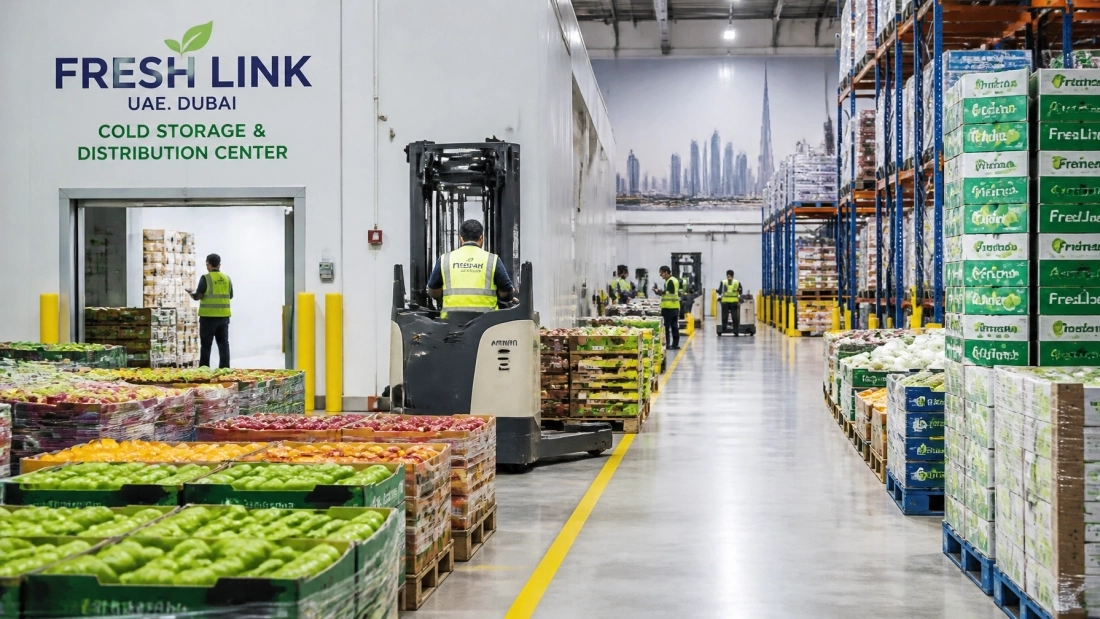
Mid-August places additional pressure on every fresh-produce supply chain entering the UAE. High ambient temperatures, port congestion, temperature fluctuations, and rapid price movement can reduce the commercial value of a container before it reaches the wholesale market.
For international and local exporters, successful market entry depends on three operating controls: maintaining cold-chain integrity, completing port clearance without avoidable delays, and working with a verified buyer or distribution partner in the UAE.
Mayil Global supports exporters and local B2B buyers through a structured distribution model focused on dependable supply, consistent quality, and transparent commercial execution. Our 3% commission distributor UAE model provides exporters with a defined route to market, while our cash-and-carry container purchase option supports faster liquidity where the transaction terms are agreed in advance.
Why Al Aweer Market Requires Structured Distribution
Al Aweer Central Fruit and Vegetable Market is one of Dubai’s principal wholesale hubs for fresh produce. Supermarkets, restaurants, hotels, retailers, and wholesale distributors depend on the market for daily supply across a wide range of fruits and vegetables.
The market operates on a high-volume B2B basis. Produce is inspected, graded, priced, and moved quickly. For an overseas exporter, direct access without a properly established local partner is operationally difficult. Import documentation, customs procedures, agricultural inspections, local transport, storage, and buyer placement must be coordinated through a UAE-licensed importer or distributor.
This makes a verified buyer for exporters UAE strategy essential. The correct partner should be able to demonstrate:
- UAE trade and foodstuff trading credentials.
- Access to wholesale buyers in Dubai and the wider UAE.
- Experience with port clearance and agricultural documentation.
- Suitable storage, handling, and refrigerated transport arrangements.
- Clear payment, commission, and quality-claim procedures.
Mayil Global connects global suppliers with UAE wholesale channels while managing the operational requirements between origin, port, market, and final B2B buyer.
Mid-August Cold-Chain Integrity: Protecting Product Value
Pre-cooling and origin inspection
Cold-chain compliance begins before loading. Produce should be inspected, graded, and prepared at origin according to the agreed product specification. For highly perishable fruits and vegetables, pre-cooling removes field heat and reduces the rate of deterioration during transit.
Every shipment should be checked for:
- Product temperature before loading.
- Uniform grade, size, and maturity.
- Visible damage, decay, bruising, or pest activity.
- Correct packaging and ventilation.
- Net weight and pallet or carton count.
- Reefer set-point, humidity, and ventilation requirements.
In August, loading a warm product into a refrigerated container does not immediately restore quality. The container maintains conditions; it does not replace proper pre-cooling. This distinction is particularly important when shipping leafy vegetables, berries, tomatoes, cucumbers, cauliflower, and other products affected by heat stress.

Reefer monitoring during maritime transit
For sea freight to Dubai, exporters and their UAE partners should agree on the reefer operating parameters before shipment. Temperature records, ventilation settings, humidity controls, and container alarms should be monitored throughout the journey.
A practical August protocol includes:
- Confirming the product-specific temperature range with the packhouse and shipping line.
- Recording pulp temperature rather than relying only on ambient readings.
- Using breathable packaging for products that require airflow.
- Avoiding over-stacking, which restricts circulation.
- Reviewing reefer data before discharge at Jebel Ali Port.
- Preparing refrigerated transport for the port-to-market movement.
The objective is to preserve product condition from farm to market. This supports higher recovery rates, reduces post-harvest loss, and protects the exporter’s market reputation.
Reducing heat exposure after arrival
The movement from port to Al Aweer should be planned around the wholesale trading cycle. Delays while containers or pallets remain exposed to direct heat can accelerate water loss, softening, fungal growth, and loss of shelf life.
Mayil Global coordinates distribution planning around:
- Pre-arranged customs and inspection documentation.
- Prompt release and collection from the port.
- Temperature-controlled vehicles.
- Reduced dwell time during unloading.
- Early-morning market placement where possible.
- Fast allocation to supermarkets, restaurants, retailers, and wholesale buyers.
Operational speed is a quality-control measure. It directly benefits buyers by improving freshness and reducing inconsistent deliveries.
Importing Onions Dubai: Product-Specific Controls
Onions are a major wholesale commodity, but their handling requirements differ from highly perishable produce. Successful importing onions Dubai programs depend on curing, dryness, ventilation, uniform sizing, and protection from moisture.
Exporters should align with the verified UAE buyer on the following specifications:
- Onion variety and country of origin.
- Preferred size range.
- Grade and allowable defect tolerance.
- Curing and dryness requirements.
- Mesh-bag, carton, or other approved packaging.
- Container quantity and pallet configuration.
- Target arrival date and distribution plan.
Onions should have dry outer skins and should be free from sprouting, excessive soil, fungal decay, and soft rot. Moisture accumulation during transit creates significant quality risk. Ventilated packaging and suitable airflow are therefore important, even when the commodity is less temperature-sensitive than berries or leafy vegetables.
A trial container is an effective way to validate product specifications, packaging, transit performance, clearance procedures, and buyer acceptance before increasing shipment volume.
Port Clearance and UAE Documentation
Preparing the document pack
Understanding how to export food to Dubai requires early coordination between the exporter, UAE importer, customs broker, shipping line, and distribution partner.
A typical fresh-produce document pack includes:
- Commercial invoice.
- Detailed packing list.
- Bill of lading or air waybill.
- Certificate of origin.
- Phytosanitary certificate issued by the exporting country’s competent plant-protection authority.
- Pesticide-residue analysis or other product certificates where required.
- Import permits, product registrations, or food-safety submissions requested by the UAE importer.
The UAE Ministry of Climate Change and Environment agricultural consignment release service provides official guidance on requirements for imported agricultural products. Requirements may vary by commodity, origin, and current regulatory circulars. Exporters should confirm the latest conditions with the licensed UAE importer or customs broker before shipment.
Preventing documentation delays
All documents must match in product description, quantity, weight, origin, container number, and relevant classification details. A discrepancy between the commercial invoice and phytosanitary certificate can create a hold, inspection delay, or additional cost.
Mayil Global’s distribution process emphasizes pre-shipment document review and coordinated port planning. The commercial benefit is direct: accurate documentation reduces demurrage exposure, supports faster release, and enables earlier market placement.

The Mayil Global 3% Commission Distribution Model
The 3 percent commission distributor UAE model is designed for exporters that want UAE market access without surrendering a disproportionate share of their sale proceeds to multiple intermediaries.
Under Mayil Global’s model, the agreed distribution service is handled through a transparent 3% commission structure. The model supports:
- Market placement through UAE B2B channels.
- Sales facilitation with qualified wholesale buyers.
- Coordination between exporters, importers, and local customers.
- Operational oversight from arrival through distribution.
- Clear reporting on sales and agreed expenses.
- Faster movement of perishable inventory.
The 3% commission is a key commercial advantage for exporters of onions, fruits, vegetables, rice, spices, and other food products. Retaining up to 97% of sale proceeds can improve pricing flexibility and support repeat shipments.
The final commercial agreement should clearly define whether customs, freight, storage, transport, inspection, and other third-party charges are included in or charged separately from the commission. Product claims, quality deductions, unsold inventory, and payment timing should also be documented before loading.
Immediate Cash-and-Carry Container Purchases
Commission-based distribution and immediate cash-and-carry purchasing serve different exporter requirements.
Under the distribution model, Mayil Global facilitates market placement and earns the agreed 3% commission on sales. Under a cash-and-carry arrangement, an eligible buyer purchases the container or agreed inventory immediately under pre-approved commercial terms. This can help exporters:
- Recover working capital faster.
- Reduce extended credit exposure.
- Fund the next production or shipment cycle.
- Avoid prolonged inventory ownership after arrival.
- Improve supply-chain planning during volatile periods.
Cash-and-carry terms must be confirmed before shipment, including product specifications, inspection rights, documentation, pricing, delivery point, and settlement timing. Mayil Global works with exporters to identify the most suitable route based on product type, shipment size, demand, and buyer requirements.

A Practical Mid-August Exporter Checklist
Before dispatching a container to Dubai, exporters should complete the following steps:
- Confirm the verified buyer: Validate the UAE partner’s trade credentials, buyer network, product experience, and payment process.
- Approve the specification: Agree on variety, grade, size, packaging, volume, and acceptable quality tolerances.
- Complete origin compliance: Secure phytosanitary certification, residue analysis where applicable, certificate of origin, and commercial documents.
- Protect the cold chain: Pre-cool suitable products, confirm reefer settings, use ventilated packaging, and monitor transit conditions.
- Coordinate clearance: Submit accurate documentation early through the UAE importer or licensed customs broker.
- Plan market placement: Align port release, refrigerated transport, and Al Aweer delivery with buyer demand.
- Select the commercial model: Use Mayil Global’s transparent 3% commission distribution model or agree on an immediate cash-and-carry container purchase.
- Review the first shipment: Measure arrival quality, clearance time, sales speed, realized price, and post-harvest loss before scaling.
Building Dependable UAE Supply Relationships
Success in Dubai’s wholesale food market is based on operational consistency. Exporters need more than a buyer’s telephone number. They need a verified UAE distribution route supported by quality control, compliant documentation, reliable logistics, and transparent settlement.
Mayil Global supplies UAE supermarkets, restaurants, retailers, and wholesale distributors while supporting international exporters seeking dependable market access. Our focus remains consistent: sourcing quality food products, protecting product condition, and distributing efficiently through professional B2B channels.
To discuss a shipment of onions, fruits, vegetables, rice, spices, or other food products, visit the Mayil Global website or use the Mayil Global contact page. Exporters can also review our guides on how to export food to Dubai, container liquidation at Al Aweer, and the 3% commission distributor UAE model.