

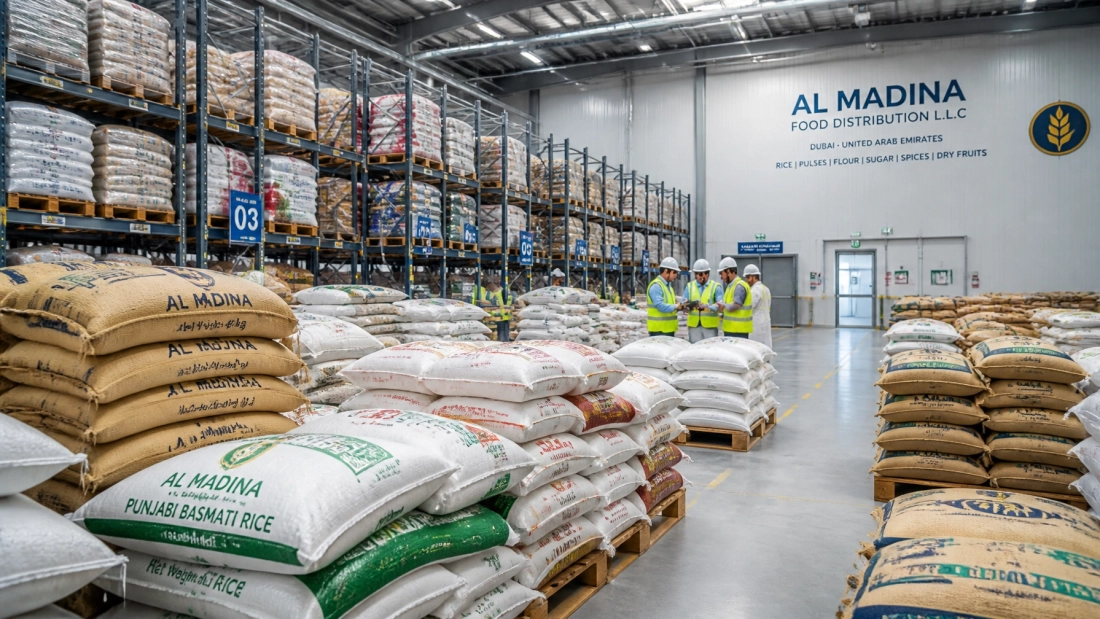
The United Arab Emirates stands as a critical global crossroads for the food trade. As an import-dependent nation, the UAE, and specifically Dubai, serves as the primary gateway for rice, pulses, and grains entering the Middle East, Africa, and South Asia. For exporters and local B2B buyers, navigating this high-growth market requires more than just high-quality products; it requires a strategic partnership with a reliable distribution network.
This guide provides a comprehensive overview of the UAE’s grain and pulse market, outlining the regulatory requirements, demand trends, and the operational advantages of partnering with a specialized 3 percent commission distributor in the UAE.
Understanding the UAE Rice Market Dynamics
Rice is a non-negotiable staple in the UAE, with a market structure heavily reliant on international imports. India currently supplies over 70% of the country’s rice, followed by significant volumes from Thailand and Pakistan. The demand is driven by a diverse expatriate population and a robust hospitality sector.
Primary Rice Varieties in Demand
To succeed as an exporter or a wholesale food buyer in Dubai, understanding the specific varieties that dominate the market is essential:
- Basmati Rice: The gold standard for the UAE market. Demand remains consistently high for premium 1121 Sella and Steam Basmati varieties, preferred for their long grain and aroma.
- Jasmine Rice: Primarily consumed by the East Asian community and widely used in upscale dining establishments.
- Sona Masuri and Matta Rice: Crucial for the South Indian demographic, representing a significant portion of the daily dietary needs in the region.
- Non-Basmati Long Grain: Often utilized by industrial caterers and labor housing facilities where volume and cost-efficiency are prioritized.

Essential Pulses and Grains: The Protein Pillars
Beyond rice, pulses like chickpeas, lentils, and beans are integral to the Middle Eastern diet. Dubai has evolved into one of the world's largest processing and re-export hubs for these commodities.
Key Commodities
- Lentils: Red, green, and yellow lentils are high-volume imports, frequently processed and re-packaged in Dubai’s free zones.
- Chickpeas: Both Kabuli and Desi varieties see strong demand, particularly for the production of hummus and other regional staples.
- Alternative Grains: There is a rising trend toward quinoa, millet, and sorghum as the UAE market shifts toward health-conscious and organic options.
Sourcing these products requires strict adherence to UAE food-safety standards. Mayil Global ensures that every shipment meets these rigorous quality controls before it enters the local supply chain.

The Mayil Global Advantage: 3% Commission Distribution
For international exporters, the traditional wholesale model can often be opaque, with hidden costs and delayed payments. Mayil Global disrupts this by offering a transparent 3 percent commission distributor UAE model.
Why Exporters Choose the 3% Model
- Full Transparency: Exporters retain control over their pricing while leveraging Mayil Global’s established distribution network for a flat 3% fee.
- Immediate Liquidity: We facilitate cash-and-carry container purchases at UAE ports and the Al Aweer market, ensuring exporters receive their funds promptly without the typical 60-90 day credit cycles.
- Market Intelligence: By acting as your local partner, we provide real-time data on price fluctuations in the Dubai market, allowing you to time your shipments for maximum profit.
This model is specifically designed to attract high-volume exporters of rice and pulses who require a dependable, low-overhead entry point into the Dubai wholesale market.
Navigating Export Requirements to Dubai
Entering the Dubai market involves a series of mandatory regulatory steps. Failure to comply can result in shipment delays or rejections at the port.
Documentation and Compliance
To operate effectively, exporters must provide:
- Phytosanitary Certificates: Mandatory for all plant-based products to ensure they are free from pests.
- Halal Certification: Required for processed or mixed grain products to meet local religious standards.
- Labeling Standards: Labels must be in Arabic (or bilingual) and include production/expiry dates, country of origin, and net weight.
Mayil Global assists partners in navigating these requirements, ensuring that all bulk rice suppliers in Dubai working through our network remain fully compliant with the Ministry of Climate Change and Environment (MOCCAE) and Dubai Municipality regulations.
Logistics and Distribution Excellence
The efficiency of your supply chain determines your success in the UAE. With professional storage facilities and an organized logistics fleet, Mayil Global ensures that fresh produce and grains are handled with the highest level of care.
Ensuring Timely Delivery
Maintaining a steady supply is critical for our B2B clients, including supermarkets and restaurants. Our logistics operations focus on:
- Hygienic Handling: Utilizing safety-standard packaging to prevent contamination.
- Organized Logistics: Strategic positioning near Jebel Ali Port and major wholesale hubs to facilitate rapid distribution.
- Global Supply Network: Leveraging a vast network of suppliers to ensure reliability even during global supply chain disruptions.

Conclusion: Strategic Growth in the UAE
The UAE market for rice, pulses, and grains offers immense potential for those who can provide consistent quality and reliable supply. Whether you are looking for bulk rice suppliers in Dubai or seeking to export your containers under a transparent 3 percent commission model, Mayil Global provides the infrastructure and expertise necessary for your success.
We prioritize long-term B2B relationships, focusing on functional clarity and operational excellence. Contact Mayil Global today to discuss how our distribution network can scale your operations in the Middle East.