6q1wE-MaTz2

Looking For Bulk Rice Suppliers Dubai? 10 Things You Should Know About Our 3% Commission Model

In the competitive landscape of the UAE food trade, securing a reliable partner among the many bulk rice suppliers in Dubai is a critical operational decision. As a primary global trade hub, Dubai serves as the gateway for rice distribution across the Middle East, Africa, and Europe. At Mayil Global, we have established ourselves as a cornerstone of this supply chain, offering a structured, transparent, and highly efficient distribution framework.

Our operations are built on a foundation of reliability, safety, and a unique 3% commission model designed to empower international exporters while ensuring local B2B buyers receive premium products at competitive wholesale rates. Whether you are an exporter seeking a 3 percent commission distributor in the UAE or a local wholesale food buyer in Dubai, understanding our operational pillars is essential for a successful partnership.

Below are 10 critical aspects of our business model that redefine bulk rice distribution in the region.

1. The Transparency of the 3% Commission Model

In traditional distribution, hidden fees and opaque markups often erode the margins of international exporters. Mayil Global operates on a strictly defined 3% commission-based distribution model. This transparency ensures that exporters retain maximum profitability while benefiting from our established local infrastructure.

By charging a flat 3% commission, we align our success with that of our partners. This model is particularly beneficial for high-volume container shipments where even a small percentage shift can result in significant financial impact. It provides exporters with a predictable cost structure, allowing for more accurate financial forecasting and competitive pricing in the Dubai market.

2. Diverse Sourcing: From Premium Basmati to Fragrant Jasmine

The UAE market is diverse, with high demand for various rice profiles. Our global supply network allows us to source and distribute a wide range of varieties, ensuring that our clients: ranging from high-end restaurants to large-scale supermarkets: always find the specific product they require.

  • Basmati Rice: Sourced from the fertile plains of India and Pakistan, we supply long-grain Basmati (1121, 1509, and Sella) known for its distinct aroma and fluffy texture.
  • Jasmine Rice: Premium fragrant rice sourced from Thailand and Vietnam, catering to the growing demand for Southeast Asian cuisine in the region.
  • Non-Basmati & Parboiled: Efficiently sourced for institutional catering and large-scale industrial kitchens that prioritize consistency and volume.

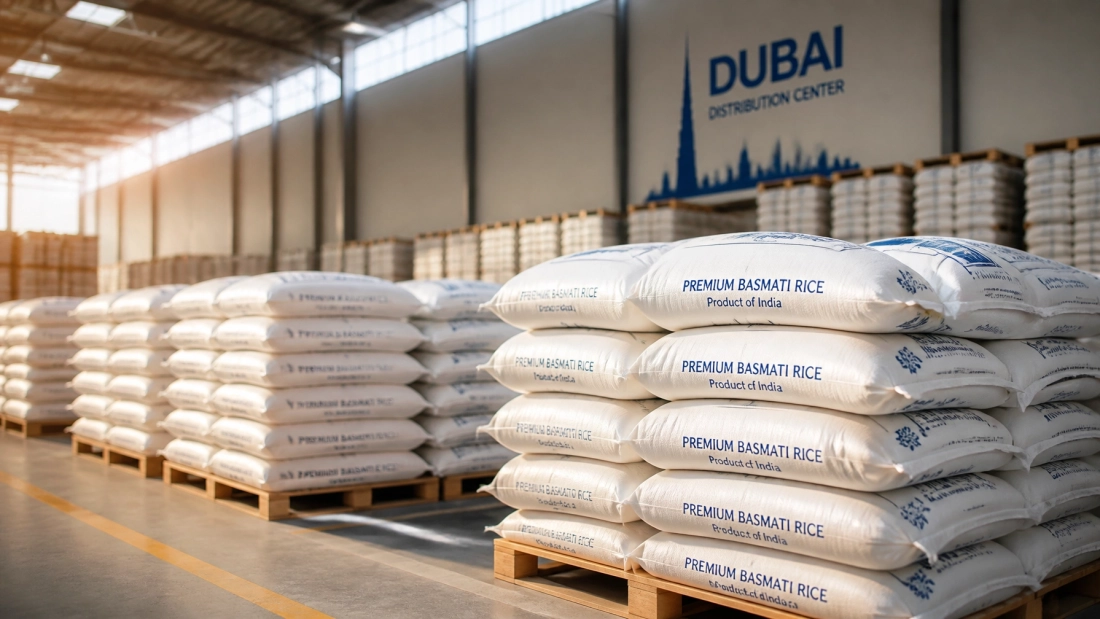
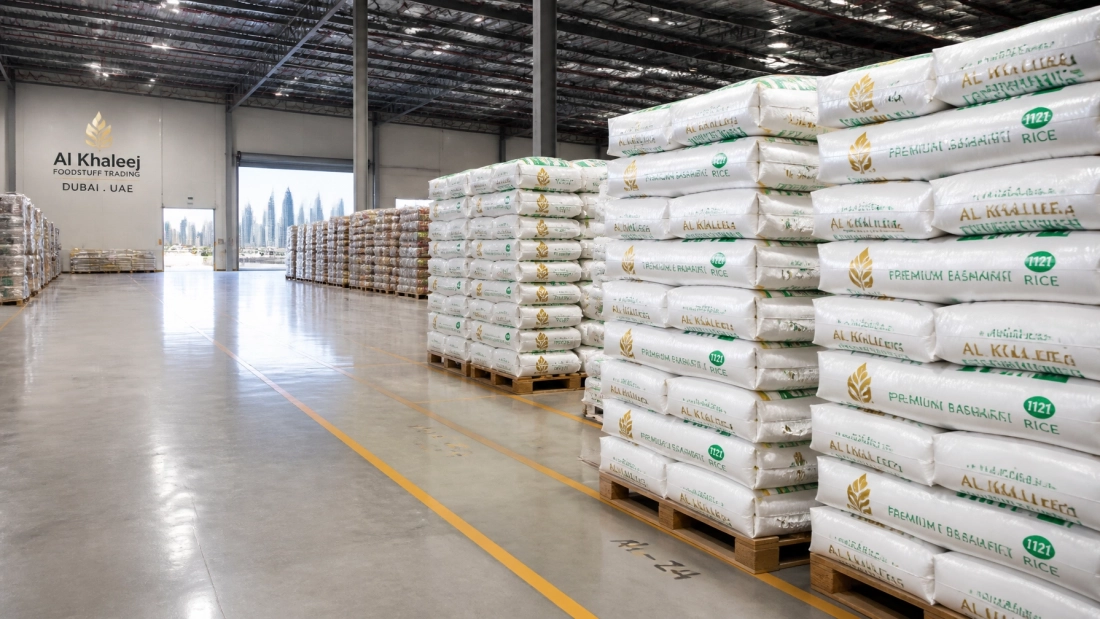
Premium Basmati and Jasmine rice packaging

3. Rigorous Quality Control and Pre-Shipment Inspection

Quality is a non-negotiable pillar at Mayil Global. We recognize that in the bulk rice trade, consistency is the hallmark of professional excellence. Our quality control team conducts inspections at every stage: from the farm gate to the final delivery in Dubai.

We implement strict parameters for grain length, moisture content, broken grain percentage, and purity. This commitment to excellence ensures that every shipment meets the high standards expected by our B2B clients. By maintaining these rigorous standards, we mitigate the risks of shipment rejection and protect the brand reputation of our exporting partners.

Quality control inspector examining rice grains

4. Immediate Liquidity through Cash-and-Carry

For many exporters, the primary challenge in the Dubai market: particularly within the Aweer Market ecosystem: is liquidity. Traditional credit cycles can delay payments, hindering an exporter's ability to reinvest in further shipments.

Mayil Global addresses this through our cash-and-carry model for container purchases. We offer immediate purchase options for full containers, providing exporters with instant liquidity. This "container-to-cash" approach is a significant USP for international shippers who need to maintain a rapid turnover of capital to scale their operations.

5. Operational Excellence in Global Logistics

Navigating the logistics of international rice trade requires precision and deep local knowledge. Mayil Global manages an organized logistics network that ensures timely delivery from the port to the warehouse, and ultimately to the client.

Our proximity to Jebel Ali Port and our presence in the heart of Dubai’s trading zones allow us to handle customs clearance and inland transportation with maximum efficiency. We utilize advanced tracking systems to monitor shipments, ensuring that our supply chain remains uninterrupted and that our clients receive their products exactly when they are needed.

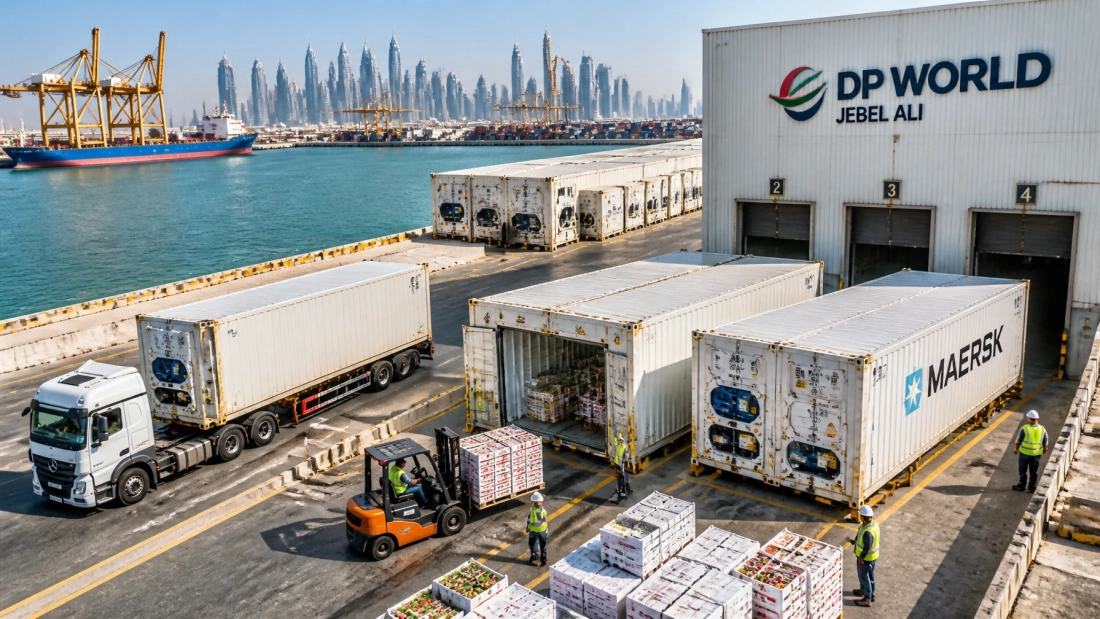
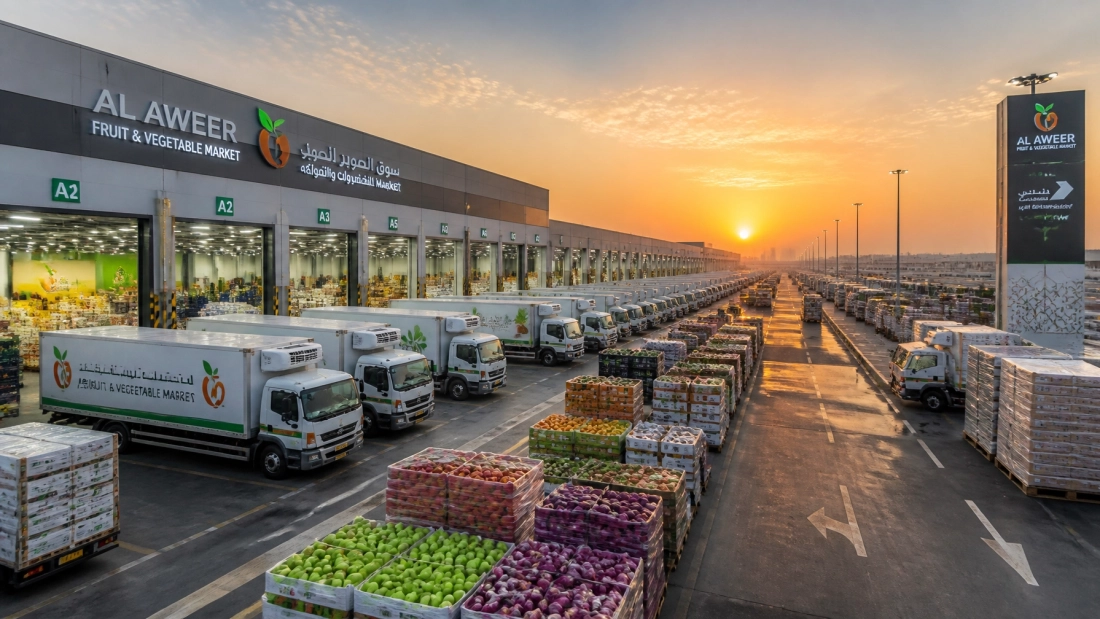
Logistics containers and trucks at a Dubai port

6. Direct Farm Sourcing Strategy

To maintain competitive pricing and ensure the freshest possible produce, Mayil Global prioritizes direct sourcing from trusted farms and global suppliers. By bypassing unnecessary intermediaries, we reduce costs and gain greater control over the production process.

This direct-from-source approach allows us to verify the agricultural practices used, ensuring that our rice is grown under optimal conditions. For our B2B customers, this translates to a "farm-to-market" reliability that is rare in the high-volume wholesale sector.

7. Adherence to International Hygiene Standards

In the food distribution industry, safety and hygiene are paramount. Mayil Global follows strict international safety standards in the handling and packaging of all rice varieties. Our facilities are designed to prevent contamination and ensure that the rice remains free from pests and environmental pollutants.

We utilize hygienic packaging solutions that preserve the quality and shelf-life of the rice, whether it is being stored in our warehouses or transported to a retail location. This focus on hygiene is a key reason why we are a preferred partner for major supermarkets and restaurants in the UAE.

8. Strategic Hub: Positioning in the UAE

Dubai is not just a destination; it is a global redistribution center. By partnering with Mayil Global, exporters gain access to a strategic hub that connects them to the broader GCC and North African markets.

Our deep understanding of the local market dynamics, including seasonal demand fluctuations and regulatory changes, allows us to provide valuable market intelligence to our partners. We don't just distribute rice; we help our partners navigate the complexities of the UAE trade environment to maximize their market share.

9. Serving the B2B Sector: Supermarkets and Restaurants

Mayil Global is dedicated to the B2B sector. We understand the specific needs of large-scale buyers who require a steady and reliable supply of high-quality rice.

  • Supermarkets: We provide consistent quality and professional packaging, helping retailers maintain full shelves and satisfied customers.
  • Restaurants: We supply specific rice varieties tailored to culinary requirements, ensuring that chefs can deliver consistent taste and texture in every dish.
  • Wholesale Distributors: We offer the scale and reliability needed for other distributors to fulfill their own supply commitments.

10. Building Scalable and Sustainable Partnerships

Our ultimate goal is to move beyond transaction-based trading to build long-term, sustainable partnerships. Whether it is through our 3% commission model or our cash-and-carry options, every element of our business is designed to foster growth for both our suppliers and our customers.

We believe that by providing a reliable, ethical, and efficient service, we create a win-win scenario for all stakeholders in the supply chain. Our commitment to operational excellence ensures that Mayil Global remains the first choice for those looking for a dependable wholesale food buyer in Dubai.


Conclusion: Partner with Mayil Global

Finding the right bulk rice suppliers in Dubai requires more than just looking at price points. It requires finding a partner that offers transparency, quality assurance, and operational stability. With Mayil Global’s 3% commission model and our robust global supply network, we offer a pathway to success in the UAE market for exporters and a reliable source of premium rice for local businesses.

If you are an exporter looking to enter the Dubai market or a local B2B buyer in need of a consistent supply of Basmati, Jasmine, or parboiled rice, contact Mayil Global today to discuss how we can support your business objectives.

ajFtmLUXX-2

7 Mistakes You’re Making Following UAE Export News (And How to Catch Al Aweer Price Shifts)

Navigating the complexities of the UAE food trade requires more than just a general understanding of global markets. For exporters targeting the Middle East, the Al Aweer Fruit and Vegetable Market in Dubai stands as the primary barometer for regional demand, price fluctuations, and supply chain health. However, many international suppliers fall into predictable traps when interpreting UAE export news, leading to missed opportunities and diminished margins.

Understanding the operational landscape of Al Aweer is essential for any business aiming to establish a foothold in the UAE. As a major re-export hub, Dubai does not merely consume what it imports; it redistributes nearly 1 million tons of fresh produce annually to neighboring Gulf and African nations. Consequently, misreading the signals from this market can be a costly error.

This guide identifies the seven most critical mistakes exporters make when tracking UAE export news and provides a strategic framework for monitoring Al Aweer price shifts with precision.

1. Relying on Lagging Macroeconomic Data

The most common mistake is monitoring high-level macroeconomic reports while ignoring granular, daily Al Aweer market updates. While national export statistics provide a historical perspective, they often lag behind the ground reality by weeks or months.

In the fast-paced world of perishable goods, a 48-hour delay in information can be the difference between a profitable shipment and a loss. Al Aweer operates on a daily cycle. Prices for staples like onions, tomatoes, and citrus can shift overnight based on the arrival of a single vessel or a change in regional weather patterns. To stay ahead, exporters must move beyond "UAE export news" as a broad category and focus on real-time wholesale price dissemination.

2. Overlooking MOCCAE Regulatory Refinements

The Ministry of Climate Change and Environment (MOCCAE) frequently updates its food safety and documentation frameworks. A significant mistake is assuming that once a product is registered, the compliance process is static.

By 2026, the UAE has intensified its focus on sourcing and logistics standards, particularly regarding Certificate of Analysis (CoA) and labeling requirements. Failing to track these regulatory shifts in the news can result in shipments being detained at the port. Professional exporters understand that regulatory news is just as important as price news. Ensuring your documentation matches current GSO standards is a non-negotiable pillar of the export process.

Professional digital dashboard showing real-time food trade data and price charts for the UAE market.

3. Miscalculating the Logistics-to-Market-Price Ratio

Many exporters see a price spike in Al Aweer and immediately initiate a shipment without factoring in the current state of regional logistics. UAE export news often highlights "record-high prices" for premium fruits, such as dragon fruit or avocados. However, if these spikes are driven by high air-freight costs or shipping disruptions in the Red Sea, the increased market price may already be offset by logistics expenses.

Successful exporters analyze price shifts in the context of landed costs. If the wholesale price in Dubai rises by 10% but shipping costs have risen by 15%, the "good news" in the market report is actually a warning sign. At Mayil Global, we emphasize the importance of efficient distribution and organized logistics to maintain margins even during volatile periods.

4. Ignoring the UAE’s Role as a Re-export Hub

A frequent error is analyzing Al Aweer price shifts solely based on UAE local consumption. Because Dubai re-exports significant volumes of apples, onions, and garlic to Saudi Arabia, Oman, and Kuwait, a sudden price increase in Al Aweer might be triggered by a supply shortage in a neighboring country rather than a local change.

If you are only following news related to UAE domestic demand, you are missing half the picture. Exporters should monitor regional trade agreements and cross-border logistics news within the GCC. When regional demand surges, Al Aweer acts as the vacuum that pulls in global supply, and prices react accordingly.

5. Working with Unverified Intermediaries

The UAE market is highly competitive, and the presence of numerous "brokers" can lead to misinformation. A mistake many global suppliers make is relying on unverified third parties for market intelligence. These intermediaries may provide skewed data to encourage shipments that benefit their commission rather than the exporter’s bottom line.

To avoid this, it is critical to partner with a verified buyer for exporters in the UAE. A verified partner like Mayil Global provides transparent market insights and handles premium food products with strict quality control. This direct relationship eliminates the "noise" created by middle-men and ensures that the news you receive is actionable and accurate.

Industrial scene of a shipping container being unloaded at a Dubai port with a MOCCAE quality control checklist.

6. Misunderstanding the 3% Commission Distribution Model

In the UAE wholesale sector, the traditional "trading" model often involves hidden costs and fluctuating margins. Many exporters fail to realize that there is a more transparent alternative: the 3 percent commission distributor UAE model.

Mistakenly sticking to traditional buy-sell arrangements can limit your profit potential. Under the 3% commission strategy, the distributor acts as your service partner in the market. You retain better control over the final sale price in Al Aweer, while the distributor manages the logistics, storage, and sales for a fixed, transparent fee. This model is specifically designed for high-volume exporters of spices, rice, and fresh produce who want to maximize their returns in the Dubai market.

7. Failing to Diversify Shipments Based on Seasonal Supply

UAE export news frequently covers the arrival of "Indian Onions" or "Pakistani Mangoes." A mistake is failing to recognize the cyclical nature of these arrivals. When India has a bumper crop of onions, the Al Aweer market is flooded, and prices drop. If you ship the same commodity at that time without a unique value proposition (like superior packaging or pre-arranged B2B contracts), your shipment will face stiff price competition.

Catching Al Aweer price shifts requires an understanding of the "origin calendar." By tracking the harvest seasons in India, Pakistan, and Egypt, you can predict when supply will be high and when "windows of opportunity" will open for alternative origins.

How to Catch Al Aweer Price Shifts Before They Happen

To master the Al Aweer market, you must move from reactive to proactive monitoring. Follow these three steps:

  1. Monitor Daily Social Media Updates: Many leading trading firms and the market authorities themselves now post daily price sheets on social media and video platforms. These are the most accurate sources for "real-time" AED pricing.
  2. Analyze Port Arrival Data: Track the volume of containers arriving at Jebel Ali Port. A cluster of arrivals for a specific commodity usually precedes a price softening in Al Aweer 3–5 days later.
  3. Engage with a Verified Buyer: Establish a direct line with a UAE-based distributor. A verified buyer can provide "floor-level" feedback on which items are moving fast and which are stagnating.

Minimalist infographic showing a handshake between an exporter and a UAE distributor with a 3% commission emblem.

The Mayil Global Advantage: Your Partner in Dubai

At Mayil Global, we bridge the gap between global exporters and the UAE wholesale market. We operate as a verified buyer for exporters in the UAE, providing a reliable and professional gateway for your products.

Our core value proposition is built on transparency and operational excellence:

  • 3% Commission Model: We offer a transparent 3% commission distribution service, allowing exporters to capitalize on Al Aweer price shifts while keeping overheads low.
  • Cash-and-Carry Options: For exporters seeking immediate liquidity, we provide direct container purchase options on a cash-and-carry basis.
  • B2B Supply Network: We supply directly to supermarkets, restaurants, and wholesale distributors, ensuring your products reach the right end-users efficiently.
  • Quality Assurance: With strict inspection at every stage and hygienic handling in our dedicated storage facilities, we maintain the integrity of your brand in the UAE.

Conclusion

Following UAE export news is a necessity, but following it correctly is a skill. By avoiding the common mistakes of relying on outdated data, ignoring regulatory shifts, and working with unverified intermediaries, you can position your export business for long-term success.

The Al Aweer market is dynamic and demanding. To thrive, you need more than just news: you need a partner who understands the mechanics of the market. Whether you are exporting fresh fruits, bulk rice, or premium spices, Mayil Global provides the stability, transparency, and distribution power you need to conquer the UAE market.

For exporters ready to leverage our 3 percent commission distributor UAE model or explore our verified buyer services, contact Mayil Global today.

kiDwdMAfazd

3% Commission vs. Traditional Fees: Which Is Better for Your UAE Export Business?

For international exporters and container owners targeting the United Arab Emirates, specifically the central hub of the Al Aweer Fruit and Vegetable Market, the financial architecture of your distribution partnership is the single most critical factor in your profitability. Navigating the complexities of local market dynamics requires more than just high-quality produce; it demands a distribution model that aligns with your bottom line.

In the UAE’s competitive food wholesale landscape, two primary financial models dominate: the traditional commission agent system and the emerging 3% commission model. Understanding the structural differences between these two is essential for any business aiming to secure sustainable margins and long-term stability.

The Traditional Commission Landscape: Beyond the 5% Baseline

Traditionally, the Al Aweer market has operated on a commission-based system where agents typically charge a baseline fee of 5% on the total sales value. While 5% may appear manageable on paper, the operational reality often involves a cascading series of additional deductions that can significantly erode an exporter's net returns.

1. The Cumulative Deduction Structure

In a traditional setup, the 5% commission is rarely the final cost. Exporters frequently encounter supplementary charges for:

  • Unloading and Handling: Costs associated with moving produce from containers to the market floor.
  • Storage and Refrigeration: Daily fees for unsold inventory stored in cold rooms.
  • Market Service Fees: Municipal and administrative charges passed down to the exporter.
  • Repacking and Sorting: Charges for handling damaged goods or resizing packages for retail customers.

2. The Incentive Misalignment

Traditional agents often operate on a "buy-low, sell-high" philosophy. In some cases, the agent acts as both the distributor and the buyer, purchasing the container at a lower price point and retaining the spread when selling to secondary wholesalers or retailers. This creates a lack of transparency regarding the actual market value of the goods, making it difficult for exporters to forecast their ROI accurately.

Infographic comparing traditional fees vs Mayil Global 3% model

The Mayil Global 3% Commission Strategy: A New Standard in Transparency

At Mayil Global, we have restructured the distribution framework to prioritize exporter profitability. Our 3% commission model is designed specifically for container owners and exporters of fresh fruits, vegetables, premium spices, and rice who require a transparent, lean, and highly efficient distribution partner.

Sourcing and Distribution Excellence

By adopting a flat 3% commission strategy, we align our success directly with yours. Because our fee is a fixed percentage of the final sales price, our operational objective is identical to your business objective: achieving the highest possible market price.

Operational Advantages of the 3% Model:

  • Predictable Margins: Exporters can calculate their distribution costs with precision before the container even arrives at the port.
  • Elimination of Hidden Spread: We do not profit from price gaps. We provide clear reporting on the final sale price, ensuring you receive the full market value of your produce.
  • Priority Logistics: Our organized logistics and strict quality control ensure that produce is moved quickly, minimizing the risk of spoilage and additional storage costs.

Financial Comparison: A Practical Analysis

To understand why the 3% model is superior for high-volume wholesale fruits and vegetables in Dubai, consider a standard container sale valued at AED 100,000.

Financial Aspect Traditional Agent (Approx. 5%) Mayil Global (3% Flat)
Gross Sale Value AED 100,000 AED 100,000
Base Commission AED 5,000 AED 3,000
Handling & Unloading AED 1,500 – 2,500 Included or Minimal
Estimated Deductions AED 2,000+ Transparent/Agreed
Estimated Net Return AED 90,500 – 91,500 AED 96,000 – 97,000

The difference of AED 5,000 to AED 6,000 per container represents more than just extra profit; it is the capital required to reinvest in your next shipment, scaling your operations at a pace that traditional models cannot sustain.

Liquidity Solutions and the Cash & Carry Advantage

One of the most significant challenges in the UAE food export business is the delay in payment settlements. Traditional agents may take weeks to reconcile accounts after a container has been sold. This creates a "liquidity gap" that prevents exporters from purchasing new stock and maintaining a steady supply chain.

Ensuring Immediate Cash Flow

Mayil Global addresses this through our Cash & Carry food wholesale model. For qualified exporters and container owners, we offer immediate liquidity options, including the outright purchase of containers at competitive market rates. This allows you to convert inventory into cash instantly, ensuring that your capital is never locked in a slow-moving distribution cycle.

Premium spices and rice in professional wholesale packaging

Beyond Produce: Wholesale Supply of Spices, Rice, and Eggs

While the 3% commission is a key differentiator for the fresh produce market, Mayil Global's reach extends to a diverse portfolio of premium food products. We serve as a comprehensive food distribution company in the UAE, supplying:

  • Premium Rice: Sourcing long-grain basmati and other varieties for local retailers.
  • Premium Spices: Ensuring hygienic handling and high-potency sourcing of ginger, turmeric, and garlic.
  • Farm Fresh Eggs: Maintaining strict temperature-controlled logistics to ensure maximum freshness for supermarkets and restaurants.

By consolidating your distribution through a single, reliable partner, you benefit from a unified supply chain strategy that maximizes efficiency across multiple product categories.

Building Reliable Long-Term B2B Relationships

The UAE market values stability and dependability. Our focus is on fostering long-term relationships with both international exporters and local B2B buyers. Whether you are a supermarket chain in Dubai needing a 3 percent commission distributor in the UAE or a restaurant group seeking high-quality ingredients, our infrastructure is built to support your growth.

Quality Control and Safety Standards

Safety and hygiene are non-negotiable pillars of our process. Every shipment undergoes rigorous inspection to ensure it meets both international export standards and UAE food safety regulations. From farm-direct sourcing to the final market delivery, we maintain a chain of custody that guarantees the integrity of your products.

B2B meeting discussing distribution data and transparency

Conclusion: Strategic Selection for Growth

The choice between a traditional commission model and Mayil Global’s 3% strategy is a choice between the status quo and a optimized future. For exporters who demand transparency, high-speed liquidity, and a partner who treats your containers as their own, the 3% model is the clear operational winner.

By reducing distribution overhead and providing immediate cash-and-carry solutions, we empower you to capture more of the value you create. Mayil Global is more than a distributor; we are the strategic link in your UAE supply chain.

Contact Mayil Global today to discuss your next container shipment and experience the 3% commission advantage.

A close-up of premium fresh red onions and potatoes in a crate, with a professional quality control inspector's hand holding a digital thermometer and a checklist, symbolizing strict quality standards.

3% Commission vs Fixed Fee: Which Is Better For Your Wholesale Fruits and Vegetables Dubai Exports?

Navigating the distribution landscape of the wholesale fruits and vegetables Dubai market requires a strategic choice between two primary financial models: the 3% commission-based distribution and the fixed-fee (or fixed-rate) purchase model. For international exporters and local producers aiming to penetrate the Al Aweer Central Fruit & Vegetable Market, this decision directly impacts net margins, risk exposure, and long-term scalability.

In the high-volume environment of the UAE, where over 7,000 tonnes of produce are handled daily, operational efficiency must be matched by financial transparency. This article provides a technical comparison of these models, emphasizing why a structured 3% commission framework is increasingly becoming the industry standard for professional exporters seeking to maximize their returns.

Understanding the Fixed-Fee Model in Dubai Produce Trading

The fixed-fee model, often referred to as "outright buying," involves a Dubai-based importer purchasing a container at a predetermined price (FOB or CIF). Once the transaction is complete, the importer assumes full ownership and market risk.

Operational Characteristics

  • Price Certainty: The exporter receives a guaranteed amount per ton or carton, regardless of the daily price fluctuations at Al Aweer.
  • Risk Transfer: All market volatility: price drops, oversupply, or shifting demand: is borne by the local buyer.
  • Compressed Margins: Because the buyer takes the risk, they typically offer a lower purchase price to ensure their own profit margin, often leaving significant upside on the table for the exporter.

While this model provides immediate clarity, it frequently results in the exporter being disconnected from the actual value of their produce in the UAE market. For high-quality, farm-direct goods, a fixed-fee approach often undervalues the product's true market potential.

The 3% Commission Model: Transparency and Incentive Alignment

The 3% commission model operates on a consignment basis. In this structure, a distributor like Mayil Global acts as the exporter’s professional arm in the UAE, selling the produce to a network of supermarkets, restaurants, and wholesale distributors.

Functional Benefits

  • Revenue Optimization: The distributor’s fee is a flat 3% of the gross sale price. This aligns the distributor’s incentives with the exporter’s; the higher the sale price achieved, the more both parties earn.
  • Market Transparency: Exporters retain ownership until the final sale, providing full visibility into real-time Dubai market prices and consumer demand.
  • Scalability: This model is particularly effective for high-volume commodities like onions, potatoes, and citrus, where minor price improvements per kilogram result in significant total profit gains.

A close-up of premium fresh red onions and potatoes in a crate, with a professional quality control inspector's hand holding a digital thermometer and a checklist, symbolizing strict quality standards.

Comparative Analysis: Risk vs. Reward

When evaluating a 3 percent commission distributor UAE partner versus a fixed-rate buyer, exporters must weigh the following factors:

Feature 3% Commission Model Fixed-Fee / Outright Buy
Market Upside Fully retained by the exporter. Retained by the Dubai buyer.
Incentive Alignment High; distributor wants the highest price. Low; buyer wants the lowest entry price.
Transparency Full access to sale reports and market data. Limited to the negotiated contract price.
Risk Exporter bears market price volatility. Buyer bears all market and inventory risk.
Best For High-quality produce and long-term growth. One-off shipments or distressed stock.

Why Mayil Global Prioritizes the 3% Commission Strategy

At Mayil Global, we have established our operations around the 3% commission model to foster long-term partnerships with global exporters. By charging a flat fee, we ensure that our focus remains on operational excellence: efficient logistics, strict quality control, and maximizing sales velocity: rather than attempting to arbitrage price differences at the exporter's expense.

Our Distribution Infrastructure

  1. Sourcing & Inspection: We utilize farm-direct sourcing and perform rigorous inspections at every stage to ensure produce meets UAE safety and hygiene standards.
  2. Organized Logistics: Our distribution network ensures timely delivery from the port or farm to the Aweer market produce buyers and beyond.
  3. B2B Integration: We supply directly to major supermarket chains, HORECA (Hotels, Restaurants, Catering), and retail outlets, cutting out unnecessary middlemen.

A fleet of modern refrigerated delivery trucks branded with professional logistics logos, parked in a row at a Dubai distribution hub during sunset.

Solving the Liquidity Gap: The Cash-and-Carry Option

One common criticism of the commission model is the impact on cash flow while waiting for goods to sell. To address this, Mayil Global offers a unique dual-track system. While we recommend the 3% commission for maximum profit, we also provide immediate cash-and-carry container purchases.

This allows exporters to choose:

  • The Commission Track: For those seeking the highest possible net return through transparent market sales.
  • The Cash Track: For exporters requiring immediate liquidity and a guaranteed payout upon container arrival in Dubai.

This flexibility ensures that our clients can manage their working capital requirements without sacrificing the opportunity for market-driven growth.

Strategic Implementation for Exporters

For exporters looking to enter the Dubai market, we recommend a phased approach:

  • Phase 1: Quality Calibration. Ensure your produce meets the specific grading and packaging requirements of the UAE market. High-quality standards are the foundation of successful commission-based sales.
  • Phase 2: Trial Shipments. Execute 2–3 trial shipments under the 3% commission model. This establishes a baseline for market performance and proves the transparency of the reporting system.
  • Phase 3: Scaling. Once quality and processes are aligned, scale volumes to take advantage of the low fixed distribution cost, effectively lowering your overhead as your export business grows.

A professional business meeting in a bright, modern office in Dubai. Two professionals in business attire are reviewing a digital dashboard on a tablet showing supply chain data, with a bowl of fresh fruit on the table.

Conclusion: Driving Excellence in UAE Food Distribution

The choice between a 3% commission and a fixed fee ultimately depends on an exporter’s risk tolerance and growth objectives. However, for those committed to building a sustainable B2B presence in the UAE, the 3% commission model offers the most robust framework for transparency, profit maximization, and operational partnership.

Mayil Global remains dedicated to providing a reliable, efficient, and professional gateway for wholesale fruits and vegetables in Dubai. By combining farm-direct sourcing with a low-commission distribution strategy, we empower our partners to thrive in one of the world's most dynamic food markets.


High-quality red onions being inspected and sorted by workers in a hygienic, well-lit warehouse facility, focusing on the vibrant color and firm texture of the produce.

Looking For a Verified Buyer for Exporters in the UAE? Here Are 10 Things You Should Know About Al Aweer Market Pricing

For global exporters, the United Arab Emirates represents one of the most lucrative hubs for the food trade. However, navigating the central nervous system of this trade: the Al Aweer Fruit and Vegetable Market: requires more than just a quality harvest. It requires an intricate understanding of how pricing is determined, how commissions are structured, and how to identify a truly verified buyer amidst a sea of intermediaries.

At Mayil Global, we specialize in bridging the gap between international suppliers and the UAE’s B2B sector. Whether you are importing onions to Dubai or supplying premium fruits, understanding the following 10 pricing dynamics is critical to securing your margins.

1. Daily Wholesale Price Lists are "Guides," Not Fixed Tariffs

The first thing every exporter must understand is that Al Aweer operates on a daily "guide price" system. Every morning, price lists are circulated via WhatsApp, social media, and official bulletins. However, these figures are indicative. The actual transaction price between a wholesaler and a buyer (like a supermarket or restaurant) fluctuates throughout the day based on the volume of arrivals and immediate demand.

2. The Standard 5% Commission vs. The 3% Advantage

Traditionally, most commission agents in Al Aweer charge a 5% fee to sell your produce. For high-volume exporters, this 2% difference is the margin between profit and loss. Mayil Global has disrupted this standard by offering a 3% commission-based distribution model. By reducing the intermediary cost, we ensure that more value returns to the exporter.

3. Quality Grading Determines Your "Slot" in the Price Range

A daily price list might show onions ranging from AED 0.95 to AED 1.10 per kg. Where your product falls in that range depends entirely on quality grading. Factors such as skin integrity, size uniformity, and the absence of sprouting are non-negotiable. Exporters who invest in rigorous quality control at the source always command the upper end of the price bracket.

High-quality red onions being inspected and sorted by workers in a hygienic, well-lit warehouse facility, focusing on the vibrant color and firm texture of the produce.

4. Origin-Based Pricing and Seasonality

Pricing at Al Aweer is heavily influenced by the "origin" of the produce. For instance, when Indian onions are in the off-season, prices for Egyptian or Pakistani onions typically surge. Knowing how to export food to Dubai effectively involves timing your shipments to coincide with supply gaps from major competing origins.

5. Packaging Impacts Marketability and Price

How you package your produce is just as important as the produce itself. In the wholesale fruits and vegetables Dubai market, ventilated mesh bags are standard for staples like onions and potatoes, while reinforced corrugated boxes are mandatory for delicate fruits. Improper packaging leads to higher "wastage" deductions during the final settlement, directly impacting your net return.

6. Logistics, Port Fees, and Detention Costs

The Al Aweer price you see is the "selling price" in the market. To calculate your net profit, you must subtract the "landing costs." This includes:

  • Sea/Air freight.
  • Customs clearance and Dubai Municipality inspection fees.
  • Transportation from Jebel Ali Port to Al Aweer.
  • Cold storage fees (if the produce is not sold immediately).

7. The Risks of the "Consignment" Model

Many exporters fall into the trap of sending goods on a "consignment" basis to unverified buyers, only to receive a lower-than-expected payment weeks later. This is often blamed on "market fluctuations." A verified buyer like Mayil Global provides transparency in every transaction, ensuring that exporters are not penalized by artificial price drops.

8. The Shift Toward "Cash & Carry" for Immediate Liquidity

For exporters who cannot afford to wait for a 15-to-30-day payment cycle, the Cash & Carry model is the gold standard. Mayil Global offers immediate container purchases, providing exporters with instant liquidity. This allows you to reinvest in your next shipment immediately, rather than having your capital tied up in the UAE supply chain.

A large cargo ship being unloaded at Jebel Ali Port in Dubai, with giant cranes moving containers and a professional logistics manager overseeing the operation with a digital tablet.

9. Regulatory Compliance and FIRS/ZAD Registration

You cannot achieve premium pricing if your goods are stuck in customs. All food imports must be registered in the Food Import and Re-Export System (FIRS) or the ZAD portal. Compliance with Dubai Municipality standards, including correct Arabic labeling and phytosanitary certification, is a prerequisite for entering the market. Failure to comply results in fines and storage costs that eat into your pricing.

10. Transparency in Settlement and "Wastage"

In a typical commission deal, a buyer might claim a 10% wastage rate. Without a trusted partner on the ground, the exporter has no way to verify this. Mayil Global prioritizes operational excellence, providing detailed reports on sales and minimal, documented wastage, ensuring that the 3% commission is the only significant deduction from your gross sales.

Why Mayil Global is the Strategic Choice for Exporters

As a leading wholesale supplier of fresh produce in the UAE, Mayil Global is more than just a buyer; we are a logistics and distribution partner. We understand that for an exporter, the UAE market can be intimidating due to its fast-paced nature and complex pricing.

Our Verified Buyer Advantage:

  • 3% Commission Model: We offer one of the most competitive distribution rates in the industry, significantly lower than the market average of 5%.
  • Immediate Cash & Carry: We provide instant liquidity for container-load shipments, eliminating the payment risks associated with traditional commission agents.
  • End-to-End Logistics: From port clearance to temperature-controlled storage, we manage the entire sourcing and logistics chain.
  • Direct B2B Network: We supply directly to major supermarkets, restaurants, and retailers, ensuring your produce bypasses unnecessary middlemen.

A professional business meeting in a modern Dubai office between an international exporter and a Mayil Global representative, with samples of premium spices and rice displayed on a glass table.

Securing Your Export Success

The UAE market remains a land of opportunity for those who understand the mechanics of Al Aweer. By focusing on quality, timing, and partnering with a transparent, low-commission distributor, global exporters can maximize their returns and build a sustainable trade presence in the Middle East.

If you are ready to export onions, fruits, or premium food products to the UAE and are looking for a verified buyer, contact Mayil Global today. We provide the stability, reliability, and operational excellence your business deserves.

9ldNikIb10C

3 Percent Commission Distributor UAE: Why This Model is Changing the Way You Export Bulk Basmati and Grains

The global landscape for food trade is undergoing a significant transformation, particularly within the competitive hubs of the Middle East. For exporters of Basmati rice, jasmine rice, pulses, and essential grains, the UAE: and specifically Dubai: represents one of the most lucrative yet complex markets in the world. Success in this region depends heavily on one factor: the efficiency and transparency of your distribution partner.

At Mayil Global, we have introduced a disruptive business model designed to maximize exporter margins while ensuring a steady, high-quality supply for local B2B buyers. As a 3 percent commission distributor UAE, we are redefining the standard operating procedures for bulk food imports. This model addresses the traditional pain points of high overheads, opaque pricing, and slow liquidity, offering a streamlined path from global farms to the Dubai market.

Understanding the 3% Commission Distribution Model

In traditional FMCG distribution across the UAE, distributors often demand high margins, sometimes ranging from 10% to 25%, to cover their logistics, marketing, and listing fees. While this may suit large established brands, it often suffocates the margins of bulk exporters and producers who provide high-volume commodities like Basmati rice and grains.

The 3 percent commission distributor UAE model by Mayil Global operates on a principle of volume and operational excellence. Instead of acting as a traditional middleman that inflates prices at every touchpoint, we act as your strategic extension in the Dubai market. For a flat 3% commission, we handle the critical local aspects of the supply chain, including:

  • Market Entry and Compliance: Navigating the complex regulatory requirements of the UAE food authorities.
  • Storage and Handling: Utilizing our state-of-the-art facilities for hygienic storage.
  • Sales Execution: Connecting your inventory with our established network of supermarkets, restaurants, and wholesalers.
  • Financial Liquidity: Facilitating immediate cash-and-carry transactions for container-load exports.

By capping our commission at 3%, we ensure that the lion's share of the profit remains with the exporter, fostering a sustainable long-term partnership rather than a one-off transaction.

Close-up high-resolution photo of premium long-grain Basmati rice. The grains are slender, creamy white, and aged. The lighting is crisp and highlights the texture of the rice. Professional food photography style.

Why Dubai is the Global Hub for Basmati and Grain Trade

Dubai's position as a premier re-export hub and a major consumer market makes it the primary target for grain exporters from India, Pakistan, Thailand, and beyond. The UAE is highly dependent on rice imports, with no significant local production. According to recent market data, the UAE imports over 400,000 metric tons of rice annually, with Basmati being the preferred choice for a vast majority of the population.

The demand is driven by two main sectors:

  1. Retail and Ethnic Groceries: Catering to a large South Asian expatriate community that considers Basmati a daily staple.
  2. HORECA (Hotels, Restaurants, and Catering): Supporting a booming tourism and hospitality industry that demands premium, consistent quality for culinary excellence.

For exporters, tapping into this demand requires more than just a good product. It requires a partner who understands the rhythm of the bulk rice suppliers Dubai market. The 3% commission model provides the competitive edge needed to displace established competitors by offering a better price-to-quality ratio.

Mayil Global: Your Gateway to the UAE Market

Mayil Global is not just a distributor; we are a comprehensive supply chain solution. Our focus remains on B2B supply, serving as the bridge between international exporters and the local wholesale food buyer Dubai. Our service offering is built on several key pillars:

1. Global Sourcing Network

We maintain deep-rooted relationships with trusted farms and global suppliers. This allows us to source premium spices, rice, and grains at the point of origin, ensuring that the quality meets our rigorous standards before it even reaches a shipping container.

2. Strict Quality Control

Quality is non-negotiable in the food industry. Our inspection process occurs at every stage of the journey. From the moisture content of Basmati rice to the purity levels of pulses, our team ensures that every batch delivered to our local partners is of the highest caliber. This commitment to quality is what makes us a preferred 3 percent commission distributor UAE.

3. Organized Logistics and Distribution

Operating out of Dubai, our logistics network is designed for speed and reliability. We understand that in the food business, time is a critical factor. Our organized logistics ensure timely delivery to supermarkets and restaurants, maintaining the freshness and integrity of the produce.

A 3D isometric illustration of a global supply chain map showing lines connecting agricultural regions in Asia to the Dubai skyline. The map features icons for cargo ships, trucks, and grain silos. Professional and clean corporate aesthetic.

The Exporter's Advantage: 3% Commission and Cash-and-Carry

One of the greatest challenges for exporters is liquidity. Shipping a container of high-value Basmati rice involves significant capital. If that capital is locked up in slow-moving credit terms with local retailers, it limits the exporter's ability to send the next shipment.

Mayil Global solves this through our Immediate Cash-and-Carry Container Purchases. For exporters who prefer a swift exit, we purchase containers outright, providing immediate liquidity. For those looking for long-term market presence, our 3% commission model offers a transparent distribution route.

This flexibility is particularly beneficial for those exporting to the Aweer Market or other major wholesale hubs in the UAE. By choosing a 3 percent commission distributor UAE, you gain a partner invested in your volume, not just their individual margin.

Sourcing for Local B2B Buyers: Reliability at Scale

For supermarkets, restaurants, and retailers in the UAE, sourcing bulk rice and grains can be a logistical headache. Fluctuating prices, inconsistent quality, and unreliable delivery schedules can disrupt operations.

Mayil Global provides a solution by acting as a dependable wholesale food buyer Dubai. When you source through us, you benefit from:

  • Consistent Supply: Our global network ensures that your shelves are never empty, even during market fluctuations.
  • Verified Quality: Every product undergoes our internal inspection, reducing the risk of customer complaints or returns.
  • Hygienic Packaging: We follow strict safety standards in handling and packaging, ensuring food safety from farm to fork.

Our focus on the "Who, What, and How" of business operations ensures that local buyers receive more than just a product: they receive a commitment to excellence.

A professional food safety inspector in a clean white coat and gloves, using a magnifying glass and digital equipment to examine a batch of grains in a lab-style setting. Modern, sterile, and professional atmosphere.

The Strategic Importance of Proper Storage and Handling

The UAE's climate presents unique challenges for grain storage. Heat and humidity can quickly degrade the quality of Basmati rice, leading to loss of aroma and infestation. Mayil Global invests heavily in climate-controlled storage and handling facilities.

By maintaining the integrity of the grain from the moment it leaves the farm to the moment it reaches the market, we protect the brand reputation of our exporters and the health of our local consumers. This attention to detail is a cornerstone of our bulk rice suppliers Dubai service.

Conclusion: Building Long-Term Partnerships

The future of grain and Basmati trade in the UAE belongs to those who prioritize efficiency, transparency, and quality. The 3 percent commission distributor UAE model is not just a pricing strategy; it is a philosophy of partnership. At Mayil Global, we are committed to helping exporters reach the Dubai market with minimal friction and maximum profit.

Whether you are an international exporter looking for a reliable gateway or a local UAE business seeking a high-quality wholesale supply, Mayil Global offers the expertise and infrastructure to support your growth. Our global network, combined with our local operational excellence, ensures that we remain at the forefront of the UAE food distribution industry.

Are you ready to optimize your export strategy or secure a reliable wholesale supply? Partner with Mayil Global today and experience the difference of a 3% commission model built for your success.

A laboratory technician in a professional white coat and safety gear inspecting fresh produce under a microscope and using digital scanning tools in a high-tech food safety laboratory, representing strict quality control and regulatory compliance in the UAE food industry.

The Ultimate Guide to Al Aweer Market Updates: Everything You Need to Succeed

Navigating the complexities of the UAE’s fresh produce sector requires more than just high-quality products; it demands real-time intelligence and strategic partnerships. As the central nervous system of Dubai’s food trade, the Al Aweer Fruit and Vegetable Market serves as the primary gateway for international exporters and local distributors alike. Staying informed with the latest Al Aweer market updates is not merely a competitive advantage: it is a fundamental requirement for operational success in a landscape defined by rapid regulatory shifts and fluctuating price trends.

For exporters seeking to penetrate the Middle Eastern market, the UAE represents a multi-billion dollar opportunity. However, success depends on understanding the "Who, What, and How" of the supply chain. At Mayil Global, we function as the bridge between global agricultural sources and the UAE’s demand, offering specialized services such as our signature 3 percent commission distributor uae model and immediate container procurement.

Navigating the Al Aweer Ecosystem: The Hub of Middle Eastern Trade

The Al Aweer Market, also known as the Ras Al Khor Fruit and Vegetable Market, is the largest of its kind in the region. In 2026, it remains the definitive price-setter for staples such as onions, potatoes, tomatoes, and citrus fruits across the GCC. For any business involved in UAE export news, monitoring the daily turnover at Al Aweer is essential for gauging demand and adjusting supply schedules.

The market operates on a high-volume, fast-turnaround basis. It is where bulk containers are deconsolidated and redistributed to hypermarkets, restaurants, and secondary wholesalers. Understanding the logistical flow within this hub: from customs clearance at Jebel Ali Port to the cold storage facilities in Ras Al Khor: is critical for maintaining the integrity of perishable goods.

UAE Export News: Regulations and Compliance in 2026

The regulatory environment for food imports in the UAE has undergone significant refinement. As of 2026, the Ministry of Climate Change and Environment (MOCCAE) and local municipal authorities have implemented stricter "compliance by composition" standards. This shift means that authorities are looking deeper into the chemical and biological makeup of produce, rather than just surface-level documentation.

Key regulatory requirements include:

  1. Mandatory Product Registration: All food items must be registered through the ZAD portal or local municipal systems before arrival.
  2. Label Approval: Labels must strictly adhere to UAE.S GSO 9:2013 standards, including Arabic translations and clear nutritional/origin data.
  3. Risk-Based Inspection: Consignments are categorized by risk levels. High-risk items, such as leafy greens or certain fruits with high pesticide residue potential, undergo more frequent laboratory testing.
  4. Health & Phytosanitary Certification: Every shipment must be accompanied by an original health certificate from the exporting country’s recognized authority.

Failing to meet these standards results in costly delays or even the destruction of cargo. Mayil Global acts as a verified buyer for exporters uae, ensuring that all documentation is vetted and compliant before the container even leaves the port of origin.

A laboratory technician in a professional white coat and safety gear inspecting fresh produce under a microscope and using digital scanning tools in a high-tech food safety laboratory, representing strict quality control and regulatory compliance in the UAE food industry.

Decoding Price Trends: Strategic Insights for 2026

Price volatility is a constant in the fresh produce sector. Current Al Aweer market updates indicate that while supply chains have stabilized, prices for premium-grade imports remain firm. Factors such as regional seasonality, shipping costs, and global weather patterns continue to influence daily quotes.

  • Premium Commodities: High-demand items like Indian onions, Pakistani potatoes, and Egyptian citrus continue to command a premium due to their consistent quality and established consumer preference.
  • Market Growth: The UAE fruit and vegetable market is projected to reach over USD 10.5 billion by 2031. This growth is driven by a rising population and an increasing focus on food security and healthy living.
  • Data-Driven Decisions: Successful exporters use market data to time their shipments. For instance, identifying gaps in local production seasons allows international suppliers to fill the void at higher margins.

The 3% Commission Model: Redefining Distribution for Exporters

One of the most significant challenges for international exporters is finding a transparent and cost-effective distribution partner. Traditional distributors often charge high margins or have hidden fees that erode the exporter's profit.

Mayil Global has disrupted this traditional framework with our 3 percent commission distributor uae model. This transparent pricing structure allows exporters to retain 97% of the market value of their goods, minus logistics and handling.

Benefits of the 3% Commission Strategy:

  • Maximized Profitability: Exporters receive the highest possible return on their investment.
  • Full Transparency: Every transaction is documented, ensuring that the exporter knows exactly what their produce sold for in the Al Aweer market.
  • Alignment of Interests: As your distributor, our goal is to sell your products at the highest possible price, as our success is directly tied to yours.

Whether you are exporting onions, tomatoes, or ginger, this model provides the financial clarity needed to scale your operations.

A detailed infographic-style image showing a financial chart with a 97% to 3% split, surrounded by professional business icons representing transparency, profit growth, and global trade, set against a clean corporate background.

Becoming a Verified Buyer: Why Mayil Global is Your Strategic Partner

In the Al Aweer market, trust is the primary currency. Exporters often face the risk of non-payment or delayed payments from unverified buyers. Mayil Global positions itself as a verified buyer for exporters uae, providing the financial security and operational reliability that global shippers demand.

We do not just facilitate trades; we take ownership of the process. By acting as a verified buyer, we mitigate the risks associated with international trade, providing exporters with peace of mind. Our status as a trusted entity in the UAE means we have the established relationships with customs, logistics providers, and retailers to ensure your cargo moves through the supply chain without friction.

Immediate Liquidity: The Cash-and-Carry Advantage for Containers

Liquidity is the lifeblood of any export-import business. Many exporters struggle with long payment cycles that tie up their capital for weeks or months. To solve this, Mayil Global offers a cash-and-carry model for full container loads.

If your produce meets our quality standards and aligns with current market demand, we are prepared to purchase the entire container immediately. This provides you with instant liquidity, allowing you to reinvest in your next shipment without delay. This immediate cash-and-carry approach is particularly beneficial for high-volume traders of bulk rice, spices, and staples.

A professional photo of several large white shipping containers being moved by a heavy-duty forklift in a busy industrial port area, symbolizing immediate container purchase and logistics efficiency in the UAE.

Operational Excellence: Logistics and Quality Control

Maintaining the "farm-to-market" quality of fresh produce requires a rigorous operational framework. At Mayil Global, our logistics and quality control processes are designed to meet international standards.

1. Sourcing and Inspection

We prioritize farm-direct sourcing. Our team conducts inspections at every stage, from the initial harvest to the final packaging. This ensures that only produce meeting "export quality" standards enters our distribution network.

2. Hygienic Handling

Following global safety standards, our handling and packaging processes are strictly monitored for hygiene. This is particularly crucial for sensitive items like farm fresh eggs and leafy vegetables.

3. Organized Logistics

Time is the enemy of fresh produce. Our logistics network is optimized for speed and reliability. We coordinate the movement of goods from the port to our temperature-controlled storage facilities in Al Aweer, ensuring that the cold chain remains unbroken.

4. Global Supply Network

With a supply network spanning multiple countries, we provide a steady and reliable supply of products to our B2B clients in the UAE, including supermarkets, restaurants, and retail chains.

Conclusion: Securing Your Position in the UAE Market

Succeeding in the Al Aweer market requires a combination of timely information, regulatory compliance, and a reliable partner. By following the latest Al Aweer market updates and understanding the nuances of UAE export news, businesses can navigate this lucrative sector with confidence.

Mayil Global is committed to empowering exporters and B2B buyers through our transparent 3 percent commission distributor uae model and our role as a verified buyer for exporters uae. Whether you are looking to move a single container or establish a long-term supply chain, our operational excellence and market expertise ensure your success.

For exporters ready to unlock the potential of the Dubai market, the path to success begins with a partner who understands the value of your product and the urgency of your business. Contact Mayil Global today to discuss how our distribution and cash-and-carry models can transform your export operations.

A wide variety of fresh, high-quality fruits and vegetables in a professional wholesale market setting

Cash and Carry Food Wholesale Dubai Vs Traditional Sourcing: Which Is Better For Your Restaurant?

In the high-velocity culinary landscape of Dubai, the efficiency of your supply chain is the primary determinant of your restaurant’s profitability. For procurement managers and restaurant owners, the decision often oscillates between two primary operational models: Cash and Carry Food Wholesale and Traditional Sourcing.

Each model offers distinct advantages in terms of liquidity, quality control, and logistical management. As Dubai continues to solidify its position as a global food hub, understanding the mechanics of these sourcing strategies is essential for maintaining a competitive edge. This article provides a comprehensive comparison of these models, specifically through the lens of the UAE’s unique market dynamics, including the strategic 3% commission distribution model utilized at the Al Aweer market.

Understanding Traditional Sourcing in the UAE

Traditional food sourcing in the UAE typically involves established relationships with distributors who manage the end-to-end supply chain. This model is characterized by scheduled deliveries, credit terms, and pre-negotiated pricing structures.

The Operational Workflow

In a traditional setup, food distribution companies in UAE take ownership of the logistics. They source products globally, manage cold storage, and deliver directly to the restaurant's loading dock. This "delivered-in" service allows restaurant staff to focus on kitchen operations rather than procurement logistics.

Key Advantages and Limitations

  • Credit Facilities: Traditional distributors often offer 30- to 60-day credit cycles, which can assist with cash flow management for large-scale operations.
  • Logistical Consistency: Fixed delivery schedules ensure a predictable flow of inventory.
  • Cost Implications: The convenience of delivery and credit often comes with a markup. Intermediary costs and logistics overheads are integrated into the unit price, potentially impacting the bottom line of cost-sensitive establishments.

The Rise of Cash and Carry Food Wholesale Dubai

The cash and carry food wholesale Dubai model has seen a significant surge in adoption, particularly among independent restaurants and supermarkets looking for immediate liquidity solutions and physical quality verification.

Direct Inspection and Immediate Acquisition

Unlike traditional sourcing, where the buyer relies on the distributor's quality control, the cash and carry model allows for a "touch and feel" approach. Procurement officers can visit wholesale hubs, such as those operated by Mayil Global, to inspect the freshness of fruits, vegetables, and premium spices before finalizing the purchase.

A wide variety of fresh, high-quality fruits and vegetables in a professional wholesale market setting

Liquidity and Pricing

Cash and carry operations prioritize immediate transactions. By eliminating the overhead of credit management and door-to-door delivery, wholesalers can offer more aggressive pricing. For a restaurant, this translates to lower COGS (Cost of Goods Sold) and higher immediate margins, provided they have the logistical capacity to transport the goods.

The Mayil Global Advantage: 3% Commission and Container Purchases

At the heart of the UAE’s wholesale sector is the Al Aweer Fruit and Vegetable Market. Here, Mayil Global has introduced a paradigm shift in how international exporters and local buyers interact through a transparent 3 percent commission distributor UAE model.

For International Exporters and Container Owners

Traditional agents in Dubai often charge upwards of 5% to 10% in commissions, frequently coupled with opaque handling fees. Mayil Global offers a streamlined 3% commission structure for exporters shipping full-container-loads (FCL). This model ensures:

  1. Maximum Returns: Exporters retain a higher percentage of the sales value.
  2. Immediate Liquidity: We facilitate immediate cash-and-carry container purchases, solving the liquidity gaps often found in consignment-based trading.
  3. Operational Transparency: Every stage, from inspection to distribution, follows strict safety and hygiene standards.

For Local B2B Buyers (Restaurants and Supermarkets)

By sourcing directly from exporters through this 3% model, Mayil Global secures a steady supply of farm-fresh eggs, premium rice, and fresh produce. We pass these savings directly to our B2B clients, positioning ourselves as a leading wholesale fruits and vegetables Dubai partner.

Stacks of premium rice bags and spices in a clean, temperature-controlled wholesale warehouse

Comparative Analysis: Which Fits Your Business?

Feature Cash & Carry (Wholesale) Traditional Sourcing
Pricing Lower unit cost; volume-based discounts. Higher unit cost; includes delivery/credit.
Quality Control Physical inspection at the point of sale. Reliance on supplier quality standards.
Logistics Buyer manages transport and handling. Supplier manages cold chain to your door.
Payment Immediate cash/card (Better for liquidity). 30–60 day credit terms.
Best For Small-Medium restaurants, Supermarkets. Large hotel chains, massive caterers.

The Case for Cash & Carry

If your restaurant prioritizes daily freshness and has the agility to manage small-scale logistics, the cash and carry model is superior. It allows for rapid menu adjustments based on market availability and price fluctuations. For example, sourcing bulk spices or rice through a cash-and-carry wholesaler can significantly reduce monthly procurement expenses compared to fixed-contract distributors.

The Case for Traditional Sourcing

For massive operations where logistical complexity outweighs incremental cost savings, traditional sourcing remains a staple. However, many of these businesses are now shifting to a hybrid model: using traditional sources for stable dry goods and cash-and-carry for high-turnover fresh produce to capitalize on market-bottom prices.

Ensuring Quality and Safety Standards

Regardless of the model chosen, the integrity of the supply chain is non-negotiable. At Mayil Global, we bridge the gap between these models by providing the pricing of a wholesaler with the rigorous standards of a corporate distributor.

Our pillars of operational excellence include:

  • Farm-Direct Sourcing: Eliminating unnecessary intermediaries to ensure product longevity.
  • Strict Inspection: Quality control at every stage: from the farm to our distribution center.
  • Hygienic Handling: Packaging and storage that adhere to international safety standards.
  • Global Supply Network: Ensuring a steady supply of staples like onions and potatoes even during seasonal shifts.

A modern refrigerated truck being loaded at a professional distribution center in Dubai

Strategic Recommendations for UAE Business Owners

To optimize your procurement strategy in the Dubai market, consider the following steps:

  1. Analyze Your Liquidity: If you have the capital to pay upfront, leverage the cash and carry model to secure lower prices.
  2. Evaluate Logistical Costs: Calculate the cost of your staff’s time and transport. If it is less than the distributor's markup, cash and carry is the logical choice.
  3. Leverage the 3% Commission Model: If you are an exporter or a bulk buyer, working with a 3 percent commission distributor in UAE like Mayil Global ensures you are getting the best possible market rate with minimal overhead.
  4. Diversify Sourcing: Use specialized food distribution companies in UAE for niche products while utilizing wholesale markets for high-volume fresh items.

Conclusion: Building a Reliable Supply Chain

Choosing between cash and carry and traditional sourcing is not a binary decision but a strategic one. For restaurants in Dubai, the goal is to build a reliable, transparent, and cost-effective supply chain that guarantees the quality of the plate while protecting the bottom line.

Mayil Global stands at the intersection of these needs, offering the scale of a global supplier with the transparency of a 3% commission model. Whether you are a restaurant owner looking for reliable wholesale supply or an international exporter seeking a trusted partner in the Aweer market, our focus remains on providing dependable supply and consistent quality.

Professional business partners shaking hands in a corporate office setting, symbolizing a successful B2B partnership

w_xBe0niwuv

How to Export Food to Dubai Using the 3 Percent Commission Model for Maximum Profit

Exporting fresh produce to the United Arab Emirates (UAE) represents a significant opportunity for global farmers and food exporters. Dubai, specifically through the Al Aweer Fruit and Vegetable Market, serves as a central hub for food distribution across the Middle East and North Africa. However, for many international suppliers, navigating the complexities of the market while maintaining healthy profit margins remains a challenge.

Traditionally, the UAE market has operated on a 5% commission model, which often places a heavy financial burden on the exporter. At Mayil Global, we have restructured this approach. By operating as a leading 3 percent commission distributor in the UAE, we provide a more transparent and profitable path for exporters looking to establish a footprint in the region.

Understanding the Dubai Food Export Landscape

Dubai’s food sector is characterized by a high reliance on imports, strict regulatory standards, and a fast-moving wholesale environment. To succeed, exporters must align with partners who understand both the regulatory requirements and the operational nuances of the Al Aweer market produce buyers.

The market is highly volatile; prices fluctuate daily based on supply, demand, and the quality of arriving shipments. In such an environment, the difference between a 5% and a 3% commission is not just a 2% saving: it is often the difference between a profitable shipment and a financial loss.

The Mayil Global 3% Commission Model Explained

Our business model is designed to prioritize the exporter's liquidity and profitability. While the industry standard is 5%, Mayil Global offers a 3% commission model for high-volume fresh produce and premium food products.

Why the 3% Model Matters

  1. Increased Net Returns: By reducing the commission taken by the local distributor, exporters retain a larger share of the gross sales value.
  2. Transparency in Costs: We provide clear, itemized reporting on all sales. Exporters receive detailed accounts of every lot sold, ensuring there are no hidden deductions.
  3. Faster Liquidity: One of the greatest pain points in exporting is the delay in payment. Our model focuses on securing daily liquidity for exporters, allowing you to reinvest in your next container faster.
  4. Incentivized Sales: Our success is tied to your volume. By lowering the entry barrier, we encourage long-term partnerships that focus on consistent supply rather than one-off high-margin gains.

Professional 3% Commission Model infographic representing higher profit margins for food exporters.

Step-by-Step Guide to Exporting Food to Dubai

Navigating the logistical and legal framework of the UAE requires precision. Here is the operational flow for exporting to the region:

1. Regulatory Compliance and Documentation

Before shipping, you must ensure your products meet the standards set by the Ministry of Climate Change and Environment (MOCCAE) and Dubai Municipality.

  • Phytosanitary Certificate: Mandatory for all fresh produce, confirming the shipment is free from pests.
  • Certificate of Origin: Authenticates the country where the goods were produced.
  • Commercial Invoice & Packing List: Detailed records of the quantity, weight, and value of the goods.
  • Health Certificate: Required for processed foods and certain fresh items to ensure they are fit for human consumption.

2. Sourcing and Packing

Quality control starts at the farm. Mayil Global emphasizes farm-direct sourcing to maintain the integrity of the supply chain. Goods must be packed in export-grade cartons with clear labeling in English and Arabic, specifying the product name, weight, and origin.

3. Shipping and Logistics

Most fresh produce arrives via Jebel Ali Port in refrigerated containers (reefers). It is vital to maintain the cold chain from the packing house to the final destination. Mayil Global manages the arrival logistics, ensuring that containers are moved swiftly from the port to our temperature-controlled storage facilities.

4. Sales in the Al Aweer Wholesale Market

Upon arrival and clearance, produce is moved to the Al Aweer market. This is where the 3% commission model becomes active. We handle the sales process, targeting high-volume buyers, including local retailers, catering companies, and other wholesale distributors.

Fresh red onions, tomatoes, and lemons stacked in export-grade crates in a professional UAE warehouse.

Maximizing Profit with Specific Commodities

While we handle a wide variety of food products, certain high-demand commodities benefit significantly from our 3% commission and cash-and-carry models.

Onion Exports

Onions are a staple in the UAE. By utilizing our 3% commission model for onion exports, suppliers can tap into a high-turnover market while minimizing overhead costs.

Tomato and Potato Sourcing

Tomatoes and potatoes require delicate handling and rapid sales to avoid spoilage. We specialize in connecting exporters with reliable tomato buyers in Dubai and securing consistent margins for potato suppliers.

Premium Spices and Ginger

For non-perishable or semi-perishable goods like ginger and spices, the focus shifts to price stability. Our ginger distribution services utilize the same 3% commission structure, providing a competitive edge over traditional spice traders.

Why B2B Buyers in the UAE Choose Mayil Global

Our role extends beyond helping exporters; we are a primary supplier for wholesale fruits and vegetables in Dubai. Supermarkets, restaurants, and wholesale distributors rely on Mayil Global for several key reasons:

  • Strict Quality Control: We perform inspections at every stage: from the farm to the container arrival and final delivery. This ensures that the produce hitting the retail shelves meets international safety standards.
  • Hygienic Handling: Our facilities adhere to rigorous hygiene protocols, preventing cross-contamination and ensuring food safety.
  • Reliable Supply Chain: By working with a global network of farmers and utilizing our own logistics infrastructure, we guarantee a steady supply of fresh produce even during seasonal fluctuations.
  • Organized Logistics: Our fleet of temperature-controlled vehicles ensures that "fresh" remains the standard, not just a label.

Refrigerated delivery trucks at a modern loading dock in Dubai, highlighting strict hygiene and logistics standards.

Operational Excellence: The Mayil Global Standard

At Mayil Global, we do not just facilitate trades; we build supply chains. Our approach is rooted in operational excellence. We understand that in the B2B food sector, reliability is the only currency that matters.

Delivering premium products consistently requires a combination of local market expertise and global logistical reach. Whether you are an exporter with a container of fresh lemons or a local supermarket chain looking for a bulk supplier of rice, our systems are optimized for your success.

Conclusion: Partnering for Growth

Exporting food to Dubai does not have to be a gamble. By choosing the right partner and a transparent commission model, you can secure your profits and build a sustainable business in one of the world's most dynamic markets.

Mayil Global is committed to redefining food distribution in the UAE. Our 3% commission model, combined with our focus on quality control and efficient logistics, makes us the preferred partner for international exporters and local B2B buyers alike.

If you have a container ready for the Al Aweer market or are looking to source premium produce for your business, contact Mayil Global today. Let us streamline your supply chain and maximize your export potential.


WJ0Ot6Lh4Yk

How to Export Food to Dubai: The Ultimate Step-by-Step Guide for Global Suppliers

Dubai is a global powerhouse for food distribution, serving as the primary gateway for the Middle East, Africa, and beyond. For global exporters, the opportunity is immense, but the regulatory landscape and market dynamics can be complex. Success in this market requires more than just high-quality produce; it demands a strategic partnership with a distributor that understands local regulations, pricing fluctuations, and logistics.

At Mayil Global, we have established ourselves as a cornerstone of the Dubai food trade. As part of our Verified Buyer series, this guide provides a comprehensive roadmap for global suppliers looking to master the art of exporting to the UAE, with a focus on maximizing profitability through our unique 3% commission-based distribution model and Cash & Carry wholesale opportunities.

Step 1: Regulatory Compliance and Product Registration

Before a single container leaves your port, compliance must be your primary focus. Dubai operates under a "pre-entry compliance" philosophy. You cannot fix documentation issues after the goods have arrived at Jebel Ali Port or Al Aweer.

The ZAD National System

All food products: whether fresh produce like onions or processed goods: must be registered in the ZAD (National Food Accreditation and Registration System). This electronic platform is mandatory. Your UAE-based partner, such as Mayil Global, will handle this registration on your behalf, ensuring that every SKU is cleared for entry.

Mandatory Labelling Standards

Dubai Municipality enforces strict labelling requirements. In 2026, these standards include:

  • Bilingual Labelling: Arabic is mandatory. You may use a bilingual label (Arabic/English), but the Arabic text must be clear and non-removable.
  • The 12-Element Rule: This includes product name, ingredients, allergen warnings, country of origin, and net weight in metric units.
  • Nutri-Mark Grading: Certain products now require front-of-pack nutrition grading (A–E).
  • Production and Expiry Dates: Dates must follow a clear format, and most products require at least 50–75% of their shelf life remaining upon arrival.

Step 2: Choosing Your Distribution Model

The choice of a local partner determines your bottom line. Traditional distributors often take a significant cut, leaving exporters with thin margins. Mayil Global offers a more transparent and lucrative alternative.

The 3% Commission Advantage

For exporters seeking a reliable wholesale fruits and vegetables dubai partner, our 3% commission-based distribution model is a game-changer. Here is how it works:

  1. Transparency: We charge a flat 3% commission for managing your distribution.
  2. Market Access: We utilize our deep-rooted connections in the Al Aweer Central Fruit & Vegetable Market to move your volume at the highest possible daily rates.
  3. Liquidity: We prioritize cash flow, ensuring that exporters receive their funds swiftly, solving the common liquidity gaps found in international trade.

Cash & Carry for Immediate Movement

For suppliers with high-volume containers, our Cash & Carry food wholesale model provides immediate liquidity. We purchase entire containers directly, allowing you to bypass the traditional waiting periods associated with retail distribution.

A 3% commission financial growth chart and digital dashboard

Step 3: Navigating the Al Aweer Market Pricing

The Al Aweer Central Fruit & Vegetable Market is the beating heart of Dubai’s fresh produce trade. It is a dynamic, high-volume environment where prices can fluctuate by the hour.

Understanding Price Drivers

  • Arrival Timing: Early morning arrivals often command the best prices as supermarkets and HORECA (Hotel, Restaurant, and Catering) buyers complete their daily procurement.
  • Grade and Quality: Dubai is a "premium-first" market. High-quality appearance and rigorous quality control are non-negotiable for securing top-tier pricing.
  • Stock Levels: Prices are highly sensitive to daily arrival volumes. A shortage in onions can spike prices overnight, while a glut requires a partner who can move volume fast to avoid spoilage.

When importing onions dubai, understanding these hourly shifts is critical. Mayil Global provides real-time market insights, allowing our suppliers to make informed decisions on when to ship and what quantities the market can currently absorb.

The busy Al Aweer Fruit and Vegetable Market in Dubai

Step 4: Logistics and Cold Chain Integrity

The journey from your farm to a supermarket shelf in Dubai involves several critical handovers. Maintaining the cold chain is the single most important factor in preventing loss.

Port Clearance and Inspection

Upon arrival, containers undergo risk-based inspections. High-risk foods (meat, dairy, and certain fresh vegetables) are subject to intensive laboratory analysis for heavy metals, pesticides, and microbiological contaminants.

Mayil Global’s sourcing and logistics team manages the entire process:

  1. Customs Filing: Ensuring HS codes and commercial invoices are perfect to avoid costly delays.
  2. Health Clearance: Coordinating with Dubai Municipality for rapid sampling and inspection.
  3. Storage: Moving goods immediately to our organized, temperature-controlled facilities to preserve shelf life.

A quality control inspector examining fresh vegetables in a Dubai facility

Step 5: Targeting Specific Commodities (Onions, Spices, and Rice)

While the process remains similar across categories, certain products have specific nuances.

Importing Onions to Dubai

Onions are a high-volume staple. To succeed in importing onions dubai, exporters must focus on skin quality and moisture content. Our 3% commission model is particularly effective for onion exporters from India, Pakistan, and Egypt, where large volumes require rapid, transparent sales.

Premium Rice and Spices

For exporters of bulk rice and premium spices, the focus shifts to moisture-proof packaging and ESMA certification. Dubai's diverse population creates a year-round demand for high-quality Basmati rice and authentic spices, making it a stable market for consistent suppliers.

Premium onions in wholesale packaging in a modern Dubai warehouse

Summary: Your Path to Profitability in Dubai

Exporting food to Dubai is a sophisticated operation that rewards those who prioritize compliance and choose the right distribution model.

  1. Pre-Register Everything: Ensure your products and labels are approved in ZAD before shipping.
  2. Partner for Transparency: Utilize Mayil Global’s 3% commission model to keep more of your profits.
  3. Prioritize Freshness: Use our logistics expertise to minimize time at the port and maximize time on the shelf.
  4. Leverage Cash Flow: Use our Cash & Carry options for immediate liquidity on container-load shipments.

At Mayil Global, we are more than just a distributor; we are your operational partner in the UAE. Whether you are sourcing fresh produce or looking for a reliable B2B supplier for your restaurant or supermarket, our commitment to safety, hygiene, and efficiency remains unshakeable.

Ready to start exporting? Contact our team today to learn how our 3% commission model can transform your international trade operations.