

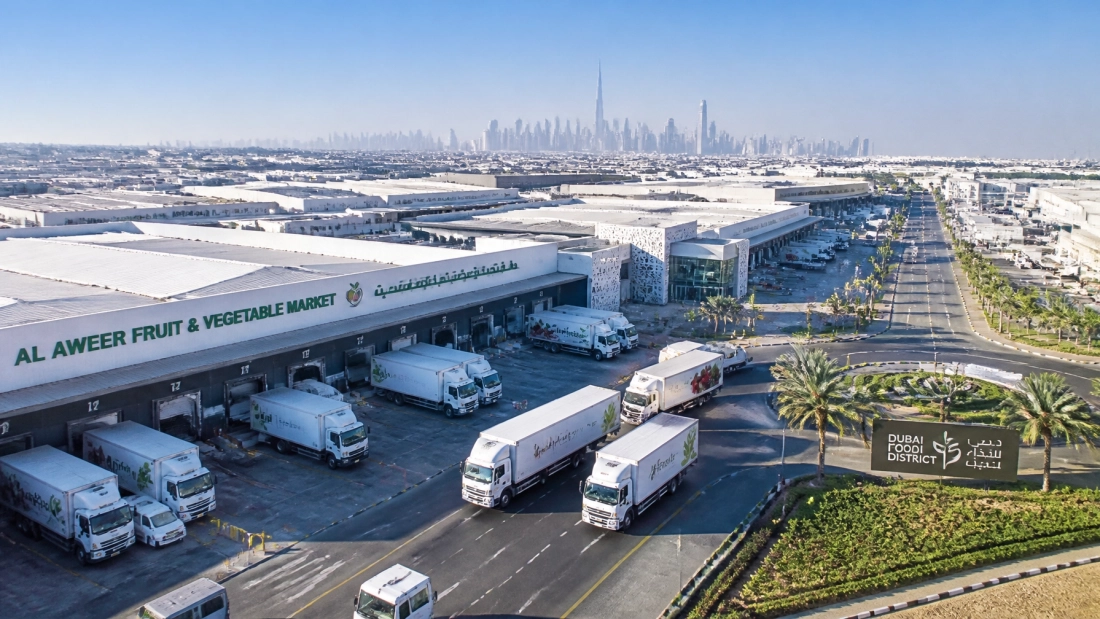
The landscape of food distribution in the UAE has undergone a significant transformation as we move through 2026. With Dubai’s Al Aweer market now handling approximately 7,000 metric tons of produce daily, the demand for streamlined, transparent, and high-volume supply chains has never been higher. For international exporters, the challenge is no longer just "getting the product to the port," but securing a verified buyer who can navigate the complex interplay of new digital regulations, shifting market prices, and the transition toward the upcoming Dubai Food District.
At Mayil Global, we facilitate this transition for global exporters through our specialized 3% commission-based distribution and Cash & Carry wholesale systems. As the UAE Minister of Economy recently confirmed abundant supplies and a stabilization of prices across the sector, the opportunity for reliable exporters to secure long-term market share is at its peak.
Step 1: Comply with the 2026 Digital Labeling and Registration Standards
The primary barrier to entry for food exports in 2026 is regulatory compliance. Dubai has fully transitioned to the Nutri-Mark Front-of-Pack Labeling (FOPL) and digital labeling system. This is no longer a recommendation but a mandatory requirement enforced through the ZAD (National Food Accreditation and Registration) and FIRS (Food Import and Re-export System) platforms.
Exporters must ensure that every shipment features bilingual labels (Arabic and English) that include:
- Nutri-Mark Score: A digital QR code or visual indicator reflecting the nutritional grade.
- Detailed Traceability: Clear batch numbers and production dates.
- Importer Credentials: Specific details of your licensed UAE partner, such as Mayil Global.
Failing to meet these digital standards can result in shipment rejection or significant delays at Jebel Ali Port. By aligning with a verified buyer who manages these registrations on your behalf, you mitigate the risk of non-compliance.

Step 2: Master the Al Aweer Market Dynamics (The Onion Case Study)
Understanding the "spot market" pricing of the Al Aweer market is essential for maintaining profitability. Pricing in Dubai is highly volatile, influenced by daily arrivals and regional harvest cycles.
Take the onion trade as a prime example. Since the 20% export duty on Indian onions was removed in April 2025, Dubai has seen a consistent influx, with roughly 403,000 metric tons of Indian onions arriving annually. As of mid-2026, we are seeing the following price bands at Al Aweer:
- New Red Onions: Trading between 1.40 – 1.60 AED/kg.
- Old Crop Onions: Trading between 0.30 – 0.50 AED/kg.
Exporters who rely on static pricing models often find their margins eroded. Mayil Global provides real-time market intelligence, ensuring that your shipments are timed to coincide with high-demand windows. Our 3% commission model is specifically designed to provide transparency in these fluctuating environments, allowing exporters to see the exact price their goods fetch on the floor.

Step 3: Utilize the Green Corridor and 90-Day Transit Window
Logistics efficiency is the backbone of a successful export business. Dubai Customs has optimized the "Green Corridor" for perishable goods, drastically reducing inspection times for pre-cleared exporters. Furthermore, the 90-day transit window allows for strategic storage and distribution, provided you have access to high-standard cold chain facilities.
As DP World continues the phased rollout of the Dubai Food District (scheduled for full activation in 2027), the infrastructure in and around Al Aweer has been upgraded to support massive throughput. Exporters must ensure their logistics partner can provide:
- Organized Logistics: Seamless movement from port to wholesale floor.
- Hygienic Handling: Adherence to strict Dubai Municipality safety standards.
- Proper Storage: Temperature-controlled environments to preserve the shelf life of sensitive produce like Pakistani mangoes, which are currently trading 20% higher this year due to premium quality and controlled supply.
For more insights on optimizing your margins through logistics, refer to our guide on exporting watermelons.
Step 4: Secure Immediate Liquidity via the 3% Commission Model
One of the most significant challenges for international exporters is the "liquidity gap": the time between shipping goods and receiving payment. In the traditional wholesale environment, this can take weeks, stalling your ability to reinvest in your next container.
Mayil Global solves this through our 3% Commission & Cash-and-Carry Model. Here is how it functions:
- The Model: We handle the entire distribution process for a flat 3% commission fee.
- Immediate Cash: Utilizing our Cash & Carry system, we sell your produce directly to our network of supermarkets, restaurants, and retailers.
- Transparency: You receive detailed reports on the sales price, minus our 3% commission, ensuring no hidden costs or "middleman" markups.
This model is particularly effective for high-volume commodities like bulk rice and vegetables, where speed of turnover is critical to maintaining freshness and cash flow.

Step 5: Establish a Partnership with a Verified UAE Buyer
The final and most crucial step is selecting a partner that acts as your eyes and ears on the ground. A verified buyer like Mayil Global doesn't just "buy" your product; we manage your brand's reputation in the UAE market.
Our B2B supply network covers the entire UAE, providing a steady and reliable outlet for your produce. Whether you are exporting premium basmati rice or fresh onions, our rigorous quality control and inspection at every stage ensure that your product meets the expectations of the Dubai market.
Why Exporters are Switching to Mayil Global in 2026:
- Farm-Direct Sourcing Integrity: We respect the relationship between the farm and the market.
- Strict Quality Control: Multi-stage inspections to minimize wastage.
- Reliable Supply Chain: Leveraging the latest DP World infrastructure.
- Financial Stability: Fast settlements through our transparent commission structure.
Conclusion
Exporting food to Dubai in 2026 requires a sophisticated approach that balances regulatory compliance with market agility. By following these five steps: mastering digital labeling, understanding Al Aweer spot pricing, utilizing the Green Corridor, securing liquidity through the 3% commission model, and partnering with a verified buyer: exporters can build a sustainable and profitable business in one of the world's most dynamic food hubs.
Mayil Global is committed to being the bridge between global exporters and the UAE's wholesale market. We are currently accepting new containers of fresh produce, spices, and rice under our 3% commission framework.
Contact Mayil Global today to secure your position in the Dubai Food District transition.