


Dubai’s wholesale food market requires dependable sourcing, documented quality, efficient logistics, and clear commercial terms. For exporters of staple commodities, market access must be supported by reliable local distribution and a process that protects margins.
In this installment of Mayil Global’s ongoing Rice, Pulses, and Grains Export Series, the focus is on three high-demand products for the Dubai market:
- Pusa Basmati Rice
- Toor Dal, also known as pigeon peas
- Wheat
Mayil Global connects international and local exporters with UAE wholesale channels through farm-direct sourcing, a global supplier network, strict quality control, hygienic handling, and organised distribution. Our 3% commission model provides a transparent route to market, while our cash-and-carry option supports exporters seeking immediate container purchases under agreed commercial terms.
Why Pusa Basmati Rice, Toor Dal, and Wheat Matter in Dubai
Dubai is a major food distribution and re-export hub serving supermarkets, restaurants, catering companies, retailers, and wholesale distributors across the UAE and wider GCC region.
Staple grains and pulses require consistent availability because they support daily food operations. Restaurants need dependable rice and dal supply. Supermarkets require uniform packaging and quality across replenishment cycles. Distributors need competitive landed costs and predictable logistics.
For these buyers, the commercial priorities are clear:
- Consistent product quality
- Reliable container availability
- Competitive wholesale pricing
- Accurate documentation
- Timely delivery
- Transparent distribution costs
Mayil Global addresses these requirements by managing sourcing, inspection, packaging, logistics, and B2B market placement as an integrated supply chain.

Pusa Basmati Rice for Dubai Wholesale Buyers
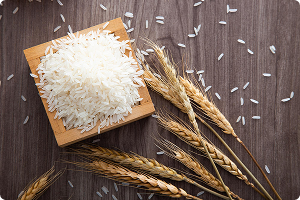
Pusa Basmati Rice is a commercially important variety for buyers seeking aromatic rice with consistent grain characteristics at a competitive price point. It is suitable for restaurants, catering operations, supermarkets, private-label programs, and wholesale distribution.
Key quality considerations
Pusa Basmati Rice may be supplied in raw, steamed, white, or parboiled formats, depending on buyer requirements. Final specifications should be agreed before shipment and supported by inspection reports.
Common buyer requirements include:
- Clearly identified Pusa variety and origin
- Uniform grain size and appearance
- Controlled moisture content
- Low broken-grain percentage
- Low foreign matter and admixture
- Natural aroma and acceptable cooking performance
- No live infestation or abnormal odour
- Food-grade packaging suitable for transport and storage
Pusa 1401 and Pusa 1509 are examples of Pusa basmati varieties that may be requested by importers. Grain length, purity, broken percentage, moisture, and packaging must be confirmed according to the specific purchase contract.
For businesses searching for bulk rice suppliers Dubai, the commercial advantage comes from combining consistent specifications with organised distribution. Mayil Global works with trusted farms, mills, and international suppliers to identify suitable grades for Dubai-based wholesale buyers.
Rice exporters can also benefit from Mayil Global’s 3% commission-based distribution model. Instead of absorbing a complex or unclear distribution structure, exporters receive a defined route-to-market cost that supports competitive pricing and better margin control.
Toor Dal and Pigeon Peas for the UAE Market
Toor Dal is a core pulse used by restaurants, caterers, grocery retailers, foodservice operators, and households across the UAE. It may be supplied as processed dal or as whole pigeon peas, depending on the buyer’s application and processing requirements.
Quality control for Toor Dal
A professional pulse supply program must control product cleanliness, uniformity, storage condition, and food safety. Typical commercial specifications may include:
- Moisture generally controlled within the agreed export range
- High purity after cleaning and sorting
- Low foreign matter
- Controlled damaged, discoloured, or shrivelled grains
- Uniform colour and size
- No live insects or infestation
- Compliance with applicable pesticide-residue and contaminant limits
- Secure, hygienic packaging for transport and storage
Toor Dal requires careful handling because poor storage conditions can affect colour, odour, moisture, and shelf stability. Mayil Global’s quality control process includes supplier evaluation, product inspection, packaging checks, and coordination across storage and transportation stages.
For exporters, the 3 percent commission distributor UAE model creates a transparent commercial alternative to conventional distribution arrangements. The objective is to help suppliers reach established UAE B2B channels while maintaining a clear commission structure and documented transaction process.
For local buyers, this structure supports more efficient sourcing. Supermarkets and distributors can discuss required grades, packing formats, quantities, and delivery schedules with a wholesale partner that understands the Dubai market.
Wheat for Foodservice, Retail, and Distribution
Wheat is supplied to Dubai for multiple end uses, including flour milling, bakery production, food manufacturing, retail, and wholesale distribution. Because wheat quality varies according to the end application, specifications must be defined clearly before procurement.
Wheat specifications depend on the end use
A flour mill may prioritise protein, gluten strength, test weight, falling number, moisture, and milling performance. A food manufacturer may require a different grade based on its processing line. Retail and wholesale buyers may focus more on packaging, origin, shelf life, and product consistency.
Common wheat specification areas include:
- Origin and variety
- Moisture
- Protein content
- Test weight
- Foreign matter
- Damaged or sprouted kernels
- Pest and infestation control
- Falling number or other processing indicators
- Packaging and storage conditions
Mayil Global coordinates product discussions according to the buyer’s written requirements. This reduces the risk of supplying a technically unsuitable wheat grade and supports more accurate quotations for exporters and UAE buyers.
How to Export Food to Dubai: A Practical Process
Exporters asking how to export food to Dubai must approach the transaction as a coordinated regulatory, logistics, and commercial process.
1. Confirm product specifications
The exporter and buyer should agree on:
- Product name and variety
- Country of origin
- Quality grade
- Moisture and purity limits
- Packaging format
- Quantity and container configuration
- Delivery terms
- Inspection requirements
- Payment and distribution terms
This is particularly important for Pusa Basmati Rice, Toor Dal, and wheat because commercial grades can vary significantly.
2. Prepare the document pack
Depending on the product, origin, and shipment structure, the document pack may include:
- Commercial invoice
- Packing list
- Bill of lading
- Certificate of origin
- Phytosanitary certificate
- Health certificate, where applicable
- Fumigation certificate, where required
- Laboratory analysis and pesticide-residue reports
- Product specifications and inspection certificate
- Approved labels and packaging details
Documentation must be accurate and consistent across all shipping records. The UAE importer or authorised local partner should also confirm product registration and clearance requirements with the relevant authorities.
Exporters can review Dubai Customs and the Dubai Municipality Foodwatch platform for relevant regulatory and food-control information.
3. Coordinate inspection and packaging
Mayil Global supports inspection at every relevant stage, from supplier selection to product handling, packaging, storage, and dispatch. Food-grade packaging must protect the goods from contamination, moisture, physical damage, and unsuitable storage conditions.
Packaging may include 25 kg or 50 kg bags for wholesale distribution, subject to buyer specifications. Retail-ready formats can also be discussed for supermarket programs.
4. Organise port and last-mile logistics
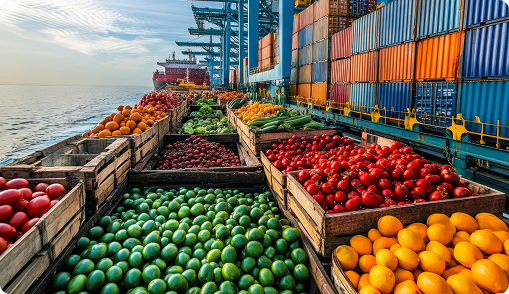
Most containerised food shipments enter the UAE through major port infrastructure, including Jebel Ali. After clearance, products must move efficiently to warehouses, wholesale markets, supermarkets, restaurants, and distributor facilities.
Mayil Global’s sourcing and logistics operations focus on organised transportation, proper storage, and timely delivery. This operational control helps protect product condition and reduces avoidable delays.
The Mayil Global 3% Commission Model
The Mayil Global model is structured for international exporters and local UAE suppliers seeking a transparent distribution route.
Under the 3% commission model, Mayil Global supports:
- B2B market access
- Buyer and sales coordination
- Distribution management
- UAE market placement
- Documentation coordination
- Operational oversight
- Transparent reporting on agreed transactions
The model is designed to reduce unnecessary cost layers and help exporters remain commercially competitive. For rice and pulses, where margins depend on efficient volume movement, a transparent 3% commission can support more practical pricing for the Dubai market.
The model also benefits buyers. When the supply chain has fewer unnecessary cost layers, supermarkets, restaurants, retailers, and distributors can evaluate more competitive wholesale offers while maintaining agreed quality standards.
Cash-and-Carry Container Purchases
Some exporters prioritise immediate liquidity rather than extended distribution cycles. For these suppliers, Mayil Global also facilitates cash-and-carry container purchases under agreed terms.
This option can help exporters:
- Move a complete container quickly
- Reduce exposure to prolonged payment cycles
- Secure a verified local transaction
- Plan the next shipment with greater confidence
- Reach Dubai wholesale channels without building a separate local distribution operation
Mayil Global’s cash-and-carry wholesale approach is relevant for exporters of Pusa Basmati Rice, Toor Dal, wheat, and other approved food products.
A Reliable Partner for Exporters and UAE Buyers
For exporters searching for a verified buyer for exporters UAE, Mayil Global provides a structured B2B platform supported by sourcing, quality control, logistics, and market knowledge.
For a wholesale food buyer Dubai, our role is to provide dependable access to food products that meet agreed specifications and delivery requirements.
The operating priorities remain consistent:
- Sourcing from trusted farms and global suppliers
- Inspecting products at every stage
- Maintaining hygienic handling and packaging
- Managing organised logistics
- Supporting timely distribution
- Providing clear commercial terms
- Building long-term supply relationships
Learn more about Mayil Global’s products, company operations, or 3% commission distribution model.
Conclusion
Pusa Basmati Rice, Toor Dal, and wheat represent practical opportunities for exporters targeting Dubai’s wholesale food market. Success depends on more than product availability. It requires accurate specifications, strict quality control, hygienic packaging, complete documentation, organised logistics, and reliable local distribution.
Mayil Global supports this process through a transparent 3% commission-based distribution model and immediate cash-and-carry container purchase options under agreed commercial terms.
For international exporters and local UAE suppliers, the objective is direct: building dependable supply, maintaining consistent quality, improving cost efficiency, and creating long-term B2B relationships across Dubai and the wider UAE market.