

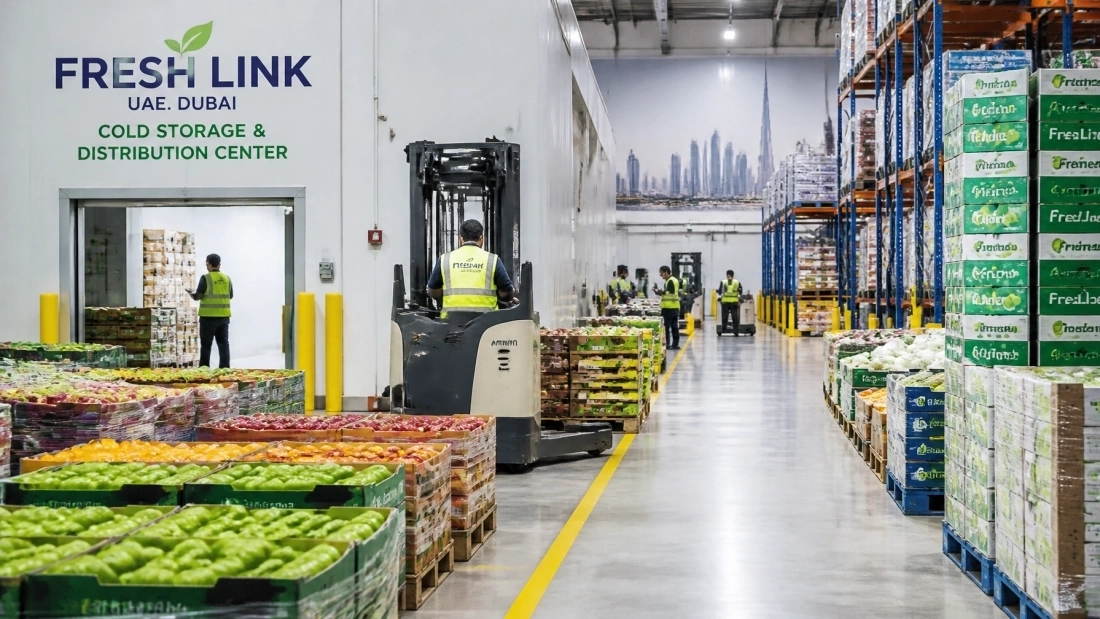
UAE Export News: Compliance and Supply Chain Priorities
Today’s UAE export news is being shaped by three operational priorities: immediate EU packaging compliance, alternative logistics planning, and dependable access to verified UAE buyers.
The EU PFAS restriction for food-contact packaging took effect on August 12, 2026. UAE exporters supplying food or packaged products to the European market must now provide formal laboratory certification confirming that packaging materials meet the applicable PFAS limits. There is no grace period for pre-existing non-compliant stock placed on the EU market after the effective date.
The compliance risk is material. Shipments without acceptable laboratory evidence may face detention, seizure, forced return, or destruction at the border. Exporters should therefore treat packaging documentation with the same importance as commercial invoices, certificates of origin, phytosanitary certificates, and health documentation.
The EU Packaging and Packaging Waste Regulation establishes the regulatory framework. In practical terms, exporters should maintain:
- PFAS laboratory test reports for food-contact packaging.
- Supplier declarations and packaging specifications.
- Bills of materials for films, cartons, trays, coatings, and liners.
- Product-to-packaging traceability records.
- A compliance file available to the importer, customs broker, and relevant authorities.
The immediate requirement is clear: exporters must verify packaging before loading cargo. A compliant product can still experience commercial loss if its packaging evidence is incomplete.
Land Bridges Are Supporting Retail Supply
Shipping disruptions are encouraging retailers and food companies to use alternative corridors. Land bridges are providing additional flexibility where sea freight schedules, maritime security, or port congestion affect replenishment.
Spinneys is reported to be using a UK and Europe road corridor through Turkey and Egypt, with an estimated transit time of approximately 17 days. This route demonstrates how retailers are combining road freight, cross-border logistics, and regional distribution to maintain continuity.
Al Dahra is also keeping supplies flowing through active logistics planning and diversified routes. For exporters, the lesson is operational rather than temporary: a dependable supply chain requires more than one transport option.
Comparing the Main Routes
Exporters planning shipments to Dubai should evaluate:
- Sea freight: Suitable for full containers and regular replenishment through Jebel Ali.
- Land bridges: Useful when shipping disruptions affect maritime schedules, but dependent on border permits, inspections, truck availability, and heat protection.
- Air freight: Appropriate for premium products, urgent replenishment, and high-value, low-volume cargo.
- Transshipment hubs: Useful for consolidating products and adjusting transport modes according to demand.
Route selection must account for transit time, customs requirements, product shelf life, temperature exposure, insurance, and final buyer requirements.

Al Aweer Market Updates: Lower Staple Prices and Higher Volatility
The latest Al Aweer market updates indicate a high-liquidity market. Abundant global arrivals are creating downward price pressure on several staple fruits and vegetables. Increased availability from international suppliers is supporting competitive wholesale pricing for supermarkets, restaurants, retailers, and distributors.
However, high liquidity does not mean stable prices throughout the day. Intraday volatility is reported at up to approximately 30% for fast-moving items such as:
- Cucumbers.
- Cauliflower.
- Gourds.
- Selected tomatoes and other high-turnover vegetables.
Price movements are influenced by morning auction activity, truck arrivals, product grade, urgent replenishment orders, weather conditions, and buyer concentration. Exporters should avoid relying on a single daily price when calculating shipment profitability.
Onion Prices Are Stabilizing
Onion prices are showing greater stability around AED 1.90–1.95 per kilogram for relevant new-crop wholesale lines. This range should be treated as a working market reference, not a fixed quotation. Quality, origin, size, packaging, arrival timing, and delivery terms continue to influence the final transaction value.
For an 18 kg onion bag, the indicative product value is approximately AED 34.20–35.10, before handling, storage, transport, customs, and distribution adjustments.
Exporters importing onions to Dubai should confirm the following before loading:
- Crop and origin.
- Bulb size and grade.
- Moisture and curing condition.
- Packaging format and ventilation.
- Expected arrival date.
- Buyer specification and settlement method.
- Current Al Aweer market benchmark.
For more detail, review Mayil Global’s onion export distribution and Cash & Carry model.

New Food Trade Signals: Mustard Honey and Corporate Performance
Tripura has exported its first consignment of mustard honey to Dubai. The one-metric-tonne shipment, supported by APEDA and supplied by the Dergang Farmer Producer Organisation, creates a new international route for beekeepers and farmer groups in Northeast India.
The shipment is commercially relevant for UAE buyers because it demonstrates continued demand for differentiated food products with traceable origins. Specialty food exporters entering Dubai must still meet UAE import, labeling, packaging, documentation, and buyer-quality requirements. Glass jars, seals, labels, cartons, and secondary packaging should be reviewed before dispatch.
The reported Tripura mustard honey export also reinforces the value of an established local buyer and distribution partner. Exporters can reach the UAE market more efficiently when customs clearance, inspection, storage, and B2B placement are coordinated before the shipment arrives.
Agthia Group has reported a 147% rise in profit in H1 2026. The result reflects the strength of structured food-sector operations and the continuing importance of supply chain efficiency, product availability, and disciplined cost management in the region.
The UAE Essential Goods Prices Platform is also expanding, following approximately 1,450 daily visits. Greater use of price-monitoring tools increases visibility across the food supply chain. Wholesalers and exporters should maintain clear records of purchase prices, freight costs, storage expenses, and distribution charges to support commercially defensible pricing.
How to Export Food to Dubai Under Current Conditions
Understanding how to export food to Dubai requires a coordinated process. Product quality alone does not secure market access. Exporters must align documentation, logistics, compliance, and buyer arrangements.
1. Confirm the UAE Buyer and Product Specification
Identify the importer, distributor, or wholesale buyer before loading. Confirm the product, grade, quantity, packaging, origin, arrival window, and required certificates.
Mayil Global works with supermarkets, restaurants, retailers, and wholesale distributors across the UAE. The company sources and distributes fresh fruits, vegetables, premium rice, spices, and farm-fresh eggs through a structured B2B supply chain.
2. Prepare the Documentation File
Depending on the commodity and origin, the file may include:
- Commercial invoice.
- Packing list.
- Certificate of origin.
- Phytosanitary certificate for applicable fresh produce.
- Health or fitness certificate where required.
- Fumigation documentation.
- HS code and accurate cargo description.
- Container and seal details.
- Arabic-English labeling information where applicable.
- Packaging compliance and laboratory records.
3. Submit Accurate Cargo Information
Exporters should provide complete Shipping Instructions and manifest data within the required advance deadline. Incorrect weights, vague descriptions, missing party details, or late submissions can cause delays, additional charges, or cargo rolling.
4. Protect Product Quality
Fresh produce requires appropriate loading, ventilation, storage, and transport conditions. Onions require dry handling and airflow. Cucumbers, cauliflower, gourds, and other vegetables require careful summer-temperature management.
5. Plan Distribution Before Arrival
Cargo should move promptly after clearance to Al Aweer, a warehouse, or an approved B2B buyer. Pre-arranged distribution reduces storage exposure, quality deterioration, and avoidable handling costs.
Mayil Global: Verified Buyer for Exporters UAE
Mayil Global is a verified buyer for exporters UAE suppliers seeking a structured route into the local wholesale market. Its operating model combines trusted sourcing, inspection at every stage, hygienic handling, storage coordination, organized logistics, and B2B distribution.
The 3 Percent Commission Distributor UAE Model
The 3 percent commission distributor UAE model provides exporters with a transparent commercial route into UAE markets. Mayil Global supports distribution through its network of supermarkets, restaurants, retailers, and wholesale buyers.
The model offers:
- A clearly defined 3% distribution commission.
- Access to UAE wholesale channels.
- Local market placement and buyer coordination.
- Quality inspection and handling supervision.
- Reduced dependence on multiple intermediaries.
- Greater visibility over stock movement and commercial outcomes.
This model is suitable for exporters that want market access while retaining control over product supply and shipment planning.
Immediate Cash-and-Carry Container Purchases
Exporters requiring immediate liquidity can also consider direct Cash & Carry container purchases for suitable products and volumes. This structure supports faster settlement and reduces exposure to extended credit cycles.
Immediate container purchases can help exporters:
- Recover working capital sooner.
- Reduce buyer-credit exposure.
- Avoid prolonged consignment periods.
- Move cargo quickly into UAE wholesale channels.
- Prepare the next export shipment with greater financial certainty.
The 3% commission route and Cash & Carry model address different commercial priorities. Both are designed to improve supply chain predictability and connect exporters with dependable UAE demand.

Action Plan for August 14, 2026
Exporters and UAE market participants should complete the following actions today:
- Review EU-bound packaging: Obtain formal laboratory certification and segregate compliant packaging from older stock.
- Confirm cargo documentation: Check invoices, packing lists, certificates, HS codes, weights, seals, and consignee details.
- Monitor Al Aweer prices: Use AED 1.90–1.95/kg as a working onion reference while checking daily market movement.
- Allow for volatility: Build pricing and delivery plans around possible intraday movements of up to 30% for selected vegetables.
- Evaluate route alternatives: Compare sea freight, land bridges, and air freight according to product and urgency.
- Select the commercial structure: Choose the 3% commission model or request an immediate Cash & Carry container purchase.
- Secure final distribution: Arrange clearance, storage, inspection, and delivery before cargo arrives.
Conclusion
Today’s UAE export news shows a market with strong liquidity, active international sourcing, and increasing compliance requirements. The EU PFAS packaging restriction is now operational. Retailers are using land bridges to protect supply continuity. New products such as Tripura mustard honey are entering Dubai, while Al Aweer remains competitive for staple produce.
For exporters, dependable market access depends on verified buyers, accurate documentation, quality control, hygienic handling, and efficient logistics. Mayil Global provides these capabilities through a transparent 3% commission distribution model and immediate Cash & Carry container purchases.
For support with wholesale fruits and vegetables in Dubai, importing onions to Dubai, or planning how to export food to Dubai, contact Mayil Global. You can also review the company’s sourcing and logistics system, product range, and exporter distribution guidance.