

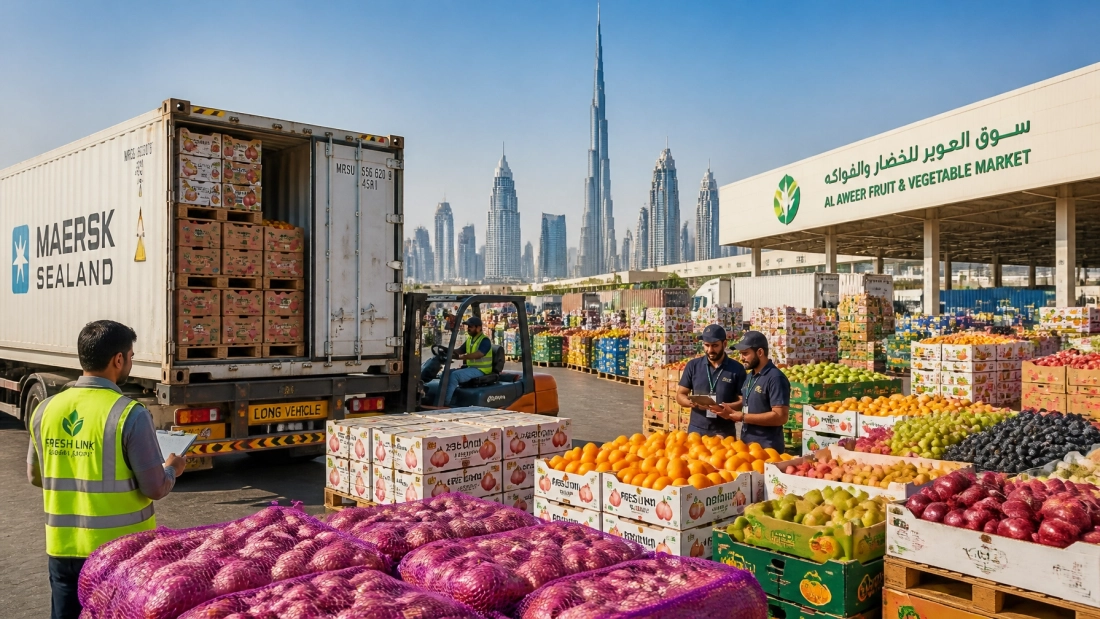
The United Arab Emirates, and Dubai specifically, represents one of the most sophisticated and lucrative food import hubs in the world. As a nation that imports over 80% of its food requirements, the demand for high-quality produce is constant. However, for global shippers, the challenge often lies not in the demand, but in navigating the regulatory landscape and securing a distribution partner that ensures financial liquidity.
At Mayil Global, we operate as a cornerstone of the Dubai food supply chain, specializing in the wholesale distribution of fresh produce. This guide outlines the precise technical and operational steps required for how to export food to dubai while leveraging our unique 3% commission model to maximize your margins.
Step 1: Market Intelligence and Commodity Selection
Before initiating any shipment, an exporter must conduct rigorous market analysis. Dubai is a high-volume market, particularly for staples. When considering importing onions dubai, for instance, shippers must understand that the market prefers specific grades and sizes: typically 55mm and above for red and yellow varieties.
The wholesale fruits and vegetables dubai market is centralized at the Al Aweer Fruit and Vegetable Market. Pricing here is dynamic, fluctuating daily based on global supply chains and local arrivals. Successful exporters monitor these trends through official market data apps or by maintaining close communication with their local distribution partners.
Key Considerations for Selection:
- Seasonality: Align your harvest cycles with UAE demand peaks.
- Variety Preference: Ensure your produce matches local culinary and retail standards (e.g., long-grain premium rice or specific onion varieties).
- Volume Stability: The Dubai market rewards consistent suppliers who can maintain a steady flow of goods throughout the year.
Step 2: Navigating Regulatory Compliance and Product Registration
The UAE has established world-class food safety standards. Every food item entering the country must be registered and approved by the relevant authorities.
The ZAD and Foodwatch Systems
All imported food products must be registered in the National Food Accreditation and Registration System (ZAD). This federal system ensures that every product meets UAE safety and quality standards before it enters the market. Furthermore, Dubai-based operations are managed through Foodwatch, a digital platform by Dubai Municipality that tracks food safety and traceability across the entire supply chain.
Mandatory Documentation for Shippers:
- Commercial Invoice and Packing List: Detailing the HS codes, quantity, and value.
- Certificate of Origin: Authenticated by the chamber of commerce in the exporting country.
- Phytosanitary Certificate: Essential for fresh produce to ensure the shipment is free from pests and diseases.
- Health Certificate: Issued by the competent government authority in the country of origin.
- Halal Certification: Mandatory for meat, poultry, and products containing animal derivatives.
Ensuring your labels are bilingual (Arabic and English) and include production/expiry dates, ingredients, and country of origin is non-negotiable for clearing Dubai Customs.

Step 3: Optimizing Logistics and Cold Chain Management
Maintaining the integrity of the cold chain is critical for wholesale fruits and vegetables dubai. A single break in temperature control can lead to spoilage, insurance disputes, and significant financial loss.
Exporters should utilize 40ft reefer containers with remote monitoring capabilities. Once the cargo arrives at Jebel Ali Port or Dubai World Central, the transition to local storage must be seamless. At Mayil Global, we prioritize "farm-to-market" handling, utilizing organized logistics and temperature-controlled storage to ensure that the quality at the farm is the same quality that reaches the retailer.
Logistics Checklist:
- Temperature Calibration: Set reefer units according to the specific requirements of the commodity (e.g., specific humidity for onions vs. leafy greens).
- Transit Documentation: Ensure all original documents are sent via courier or digital channels to the importer ahead of arrival to prevent demurrage charges.
- Insurance: Secure comprehensive transit insurance to cover potential losses during sea or air freight.
Step 4: Leveraging the 3% Commission Model for Maximum Margin
One of the primary risks for global exporters is the high cost of distribution. Traditional distributors in the UAE often charge high margins or hidden fees that erode the exporter’s profit.
Mayil Global addresses this through our transparent 3% Commission Distribution Model. Instead of taking a large cut, we operate on a flat 3% commission. This model is designed specifically for high-volume exporters who require a reliable "Verified Buyer" and distribution partner in the Al Aweer market.
Benefits of the 3% Model:
- Transparency: You know exactly what your distribution costs are before you ship.
- Market-Leading Rates: By capping our commission at 3%, we ensure the exporter retains the lion's share of the market price.
- Expert Distribution: Your goods are moved through our established network of supermarkets, restaurants, and wholesale distributors across the UAE.
For a deeper dive into how this helps, read about our 3% commission strategy for Al Aweer exporters.

Step 5: Securing Immediate Liquidity with Cash & Carry
The "Cash & Carry" model is a game-changer for international shippers who often face 30-to-90-day payment cycles. In the fast-moving world of fresh produce, liquidity is essential for reinvesting in the next shipment.
Mayil Global offers immediate cash-and-carry container purchases. When your cargo meets our quality standards and is cleared for the market, we facilitate immediate payment options. This removes the "liquidity gap" that plagues many export businesses. Whether you are exporting onions to Dubai or bulk rice, our financial stability becomes your operational advantage.
Why Liquidity Matters:
- Reinvestment: Faster payouts allow you to secure more inventory at origin.
- Risk Mitigation: Reduces exposure to long-term currency fluctuations or market volatility.
- Operational Scale: Enables you to increase your shipment frequency, becoming a preferred supplier in the region.
Learn more about why cash and carry matters for your bottom line.

Conclusion: Partnering for Long-Term Success
Exporting food to Dubai is a structured process that requires a combination of regulatory adherence, logistical excellence, and the right local partnership. By following these five steps: conducting market intelligence, ensuring compliance, maintaining the cold chain, choosing a low-commission distributor, and securing immediate liquidity: global shippers can build a sustainable and highly profitable trade route into the UAE.
Mayil Global is committed to being the most reliable link in your supply chain. Our focus on B2B supply to the UAE’s top supermarkets and restaurants, combined with our 3% commission model, provides the stability your business needs to grow.
Are you ready to scale your exports to Dubai?
Contact Mayil Global today to discuss your next shipment and learn how our 3% commission model can secure your profits.