

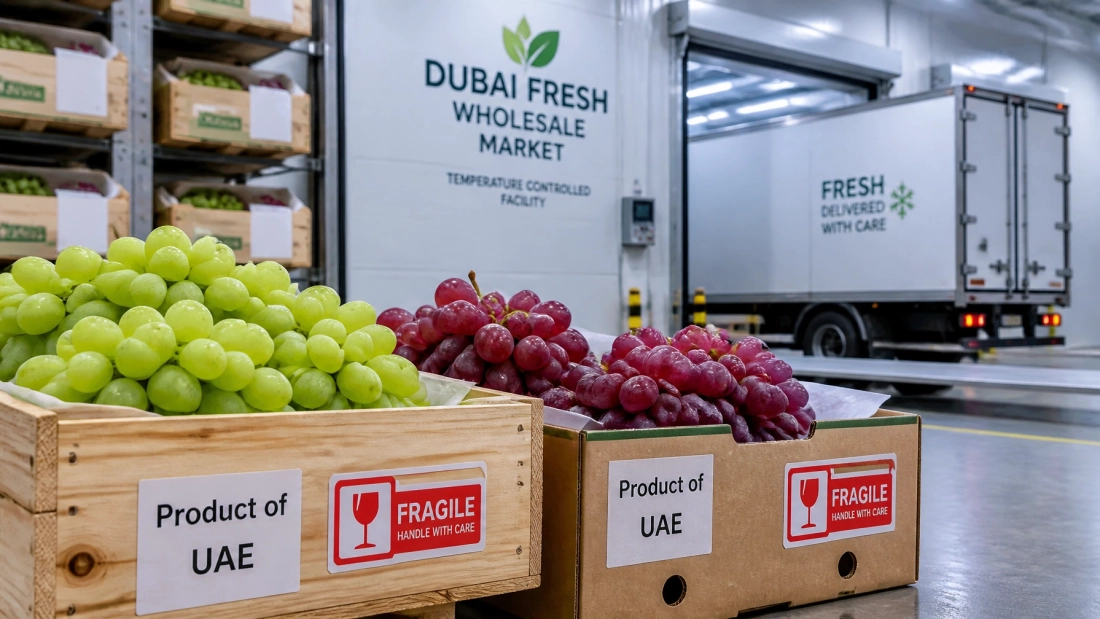
Exporting fresh grapes to the United Arab Emirates (UAE) is a high-reward venture, but the margin for error is razor-thin. As one of the world's most sophisticated food hubs, Dubai demands excellence in every crate. For international exporters, the challenge isn't just growing the fruit; it is navigating the logistical, regulatory, and financial complexities of the Middle Eastern market.
Looking for a Grapes Buyer in Dubai?
At Mayil Global, we specialize in bridging the gap between global growers and the UAE’s premium B2B buyers. Whether you are shipping from India, South Africa, Egypt, or Chile, understanding the local landscape is essential for securing a high Return on Investment (ROI).
Below are the seven most common mistakes exporters make when shipping grapes to the UAE, along with the operational fixes required to maximize profitability.
1. Compromising the Cold Chain (Temperature Abuse)
Grapes are highly perishable and physiologically active. A common mistake among exporters is failing to achieve the correct pulp temperature before loading or allowing fluctuations during transit. Temperature "spikes" lead to stem desiccation, berry softening, and increased susceptibility to fungal pathogens like Botrytis cinerea.
The Fix: Rigorous Temperature Management
- Pre-cooling: Ensure grapes are pre-cooled to 0°C to 1°C within hours of harvest.
- Reefer Settings: Maintain a consistent set-point of -1°C to 0°C with high humidity (90-95%).
- Monitoring: Utilize real-time GPS-enabled temperature loggers in every container.
Ensuring a seamless cold chain from your packhouse to our facility in Dubai is the primary way to prevent "shrink" and cargo rejections.

2. Inadequate Packaging for Long-Haul Transit
Many exporters use standard cartons that lack the structural integrity required for high-stacking in sea freight containers. Weak packaging leads to carton collapse, which physically crushes the grapes and creates "berry shatter." Furthermore, insufficient ventilation prevents the even distribution of cold air, creating "hot spots" within the pallet.
The Fix: Export-Grade Structural Standards
- Ventilation: Use cartons with optimized air-hole patterns (minimum 5% of surface area).
- Liner Bags: Implement perforated sulfur dioxide (SO2) pads and plastic liners to regulate moisture and prevent decay.
- Palletization: Secure pallets with high-quality corner posts and strapping to withstand the vibrations of sea and land transport.
3. Documentation Discrepancies and Compliance Gaps
The UAE authorities, including the Dubai Municipality and the Abu Dhabi Agriculture and Food Safety Authority, have strict documentation requirements. Mistakes in the Commercial Invoice, Packing List, or Phytosanitary Certificate can lead to shipments being detained at Jebel Ali Port or Dubai World Central.
The Fix: Standardized Documentation Protocol
Ensure every shipment includes:
- Original Phytosanitary Certificate: Validating the fruit is pest-free.
- Certificate of Origin (COO): Attested by the relevant Chamber of Commerce.
- Health Certificate: Confirming the product is fit for human consumption.
- HS Code Accuracy: Use the correct HS Code (0806.10) for fresh table grapes.
Our team at Mayil Global provides comprehensive guidance on UAE import requirements to ensure your cargo clears customs without delay.
4. Overlooking Arabic Labeling and Regulatory Standards
While the UAE is a global market, local laws mandate specific labeling for retail-ready produce. A common mistake for exporters targeting supermarkets is failing to include Arabic text on the packaging, which is a legal requirement for consumer-facing goods.
The Fix: Localized Labeling Strategy
- Retail Packs: Ensure clamshells or punnets include the product name, country of origin, packer details, and production/expiry dates in both English and Arabic.
- Traceability: Include a scannable QR code or batch number that links to the farm and packing date, enhancing trust with premium buyers.

5. Failing to Monitor Brix and Variety Preferences
Dubai’s market is segmented. Five-star hotels and high-end retailers demand high-Brix (sweetness) and specific varieties like Sable, Crimson, or Cotton Candy. Conversely, wholesale markets may prioritize volume and size. Sending the "wrong" grape to the "right" buyer results in discounted prices.
The Fix: Market-Aligned Sourcing
- Quality Inspection: Conduct pre-shipment inspections to verify Brix levels (typically 16%+ for premium) and berry size.
- Variety Selection: Align your export schedule with the UAE’s seasonal demand. For instance, demand spikes during festive periods and Ramadan.
6. Falling Into the "Hidden Commission" Trap
The traditional distribution model in Dubai can be opaque. Many exporters work with middlemen who charge fluctuating commissions, hidden "handling fees," or "marketing costs," often eroding the exporter’s profit to unsustainable levels.
The Fix: Mayil Global’s 3% Commission Model
Transparency is the cornerstone of our operations. We offer a fixed 3% commission-based distribution model.
- Predictable Costs: You know exactly what you pay for our logistics and sales services.
- No Hidden Fees: We provide clear, itemized reporting on every sale.
- Direct Access: We act as your boots-on-the-ground, connecting you directly to high-volume buyers while we handle the wholesale supply chain.

7. Suffering from Liquidity Gaps (The Payment Delay)
In international trade, waiting 30, 60, or 90 days for payment can cripple an exporter’s cash flow. Many exporters struggle because their capital is tied up in containers currently at sea or sitting in a buyer’s warehouse.
The Fix: Immediate Cash & Carry Model
To solve the liquidity challenge, Mayil Global offers an Immediate Cash & Carry container purchase model.
- Instant Liquidity: We purchase full container loads of grapes directly, providing you with immediate payment.
- Reduced Risk: We take on the local market price volatility, allowing you to reinvest your capital into your next harvest immediately.
- Operational Efficiency: This model is ideal for large-scale exporters who prioritize fast turnover and capital security.

Partner with Mayil Global: Your Gateway to the UAE Market
Navigating the UAE’s fresh produce sector requires more than just a good product; it requires a reliable, transparent partner. By avoiding these seven mistakes and leveraging our specialized models, you can secure a stable and profitable presence in the Middle East.
Why Exporters Choose Mayil Global:
- Fixed 3% Commission: The most competitive and transparent rate in the industry.
- Cash & Carry Purchases: Immediate payment for your grape containers.
- B2B Network: Direct supply to UAE’s leading supermarkets, restaurants, and wholesalers.
- Operational Excellence: Expert handling of logistics, cold storage, and quality control.
Ready to maximize your grape export ROI?
Building long-term relationships is our priority. If you are an international exporter looking for a dependable buyer in Dubai, let’s discuss how our distribution network can work for you.
Contact Mayil Global today:
- Website: mayilglobal.com/contact-us
- Services: Food Distribution & Wholesale
- Specialty: Fresh Fruits, Vegetables, and Premium Spices.