

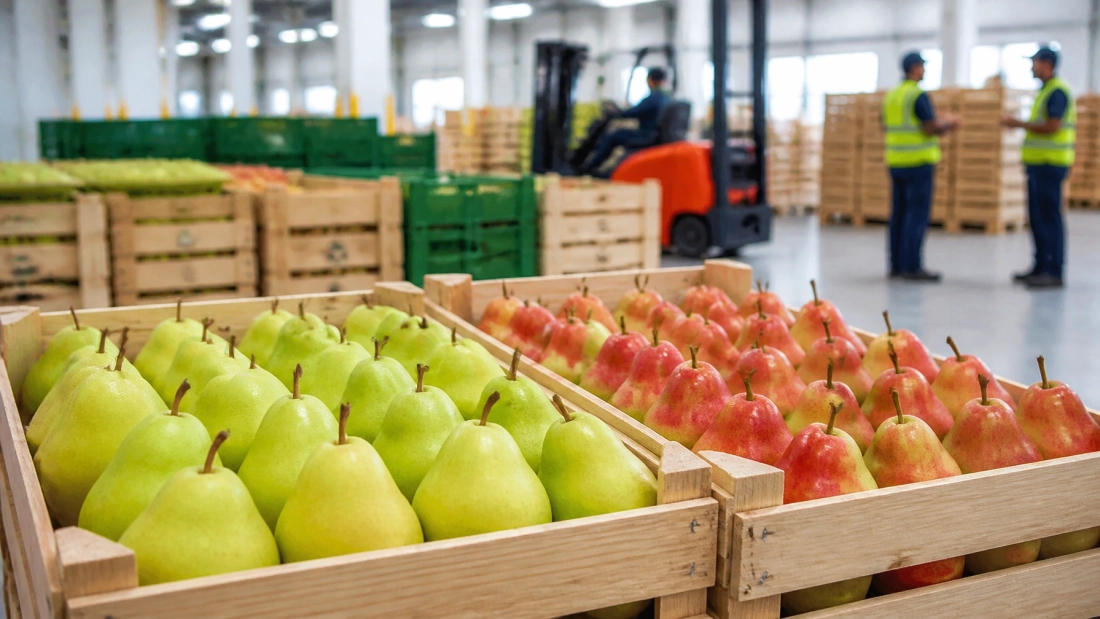
The Dubai market represents one of the most lucrative hubs for fresh produce globally. With its strategic position as a gateway to the broader Middle East and its high demand for premium fruit, it is a primary target for international pear exporters. However, many suppliers face significant losses due to preventable operational errors and opaque financial models.
If you are currently looking for a pear buyer in Dubai, understanding the nuances of local regulations and market dynamics is essential to securing your margins. At Mayil Global, we specialize in streamlining this process through our transparent 3% commission distribution model and immediate Cash & Carry options.
Below are the seven most common mistakes exporters make when shipping pears to Dubai: and the professional solutions required to fix them.
1. Non-Compliance with UAE Labeling and Regulatory Standards
One of the most frequent reasons for container rejection at Jebel Ali Port is the failure to meet the strict labeling requirements set by the Ministry of Climate Change and Environment (MOCCAE) and the Dubai Municipality.
Many exporters mistakenly believe that standard international labels are sufficient. In reality, the UAE requires specific data points on every carton. Missing production and expiry dates, or the absence of Arabic labeling, can lead to costly delays or complete rejections.
The Fix: Ensure all packaging includes mandatory Arabic stickers or printed labels. Every carton must clearly state the product name, country of origin, net weight, and: crucially: the production and expiry dates. Partnering with a distributor like Mayil Global ensures your documentation is vetted against strict quality control and safety standards before the shipment even arrives.

2. Inadequate Cold Chain Management
Pears are climacteric fruits, meaning they continue to ripen after harvest. They are exceptionally sensitive to temperature fluctuations. A minor breach in the cold chain during the long transit from South Africa, Europe, or Asia can result in internal browning or a mealy texture by the time the container reaches the Aweer Market.
The Fix: Maintain a rigorous cold chain from the moment of harvest. Pears generally require a storage temperature of -1°C to 0°C with high humidity to prevent moisture loss. Utilizing advanced logistics and proper storage handling is non-negotiable. At Mayil Global, we prioritize organized logistics and modern warehousing to ensure that your pears maintain their "farm-fresh" quality throughout the distribution phase.

3. Relying on Opaque, High-Commission Agents
The traditional brokerage model in Dubai often involves commission rates ranging from 5% to 10%, often accompanied by hidden "marketing fees" or "unforeseen expenses." For high-volume exporters, these percentages significantly erode the final Return on Investment (ROI).
The Fix: Switch to a transparent, flat-rate model. Mayil Global offers a 3% commission-based distribution model. This allows exporters to leverage our extensive B2B network: supplying supermarkets, restaurants, and retailers across the UAE: while retaining a higher percentage of the sales price. This transparency eliminates the guesswork and provides a clear, predictable cost structure for your export business.
4. Miscalculating Market Timing and Variety Demand
The Dubai market is highly seasonal and variety-specific. Shipping a large volume of Conference pears when the market is oversupplied with South African Packham’s or Forelle pears can trigger a rapid price collapse. Many exporters fail to research which variety is currently trending in the premium retail vs. the wholesale segment.
The Fix: Diverse pear varieties require targeted distribution strategies. Retailers often prefer the aesthetically pleasing Forelle or Vermont pears, while the hospitality sector may prioritize the versatility of the Williams (Bartlett) variety. Our global supply network provides real-time market data, allowing you to align your shipments with current Dubai demand.

5. Poor Liquidity and Slow Cash Cycles
In the traditional Aweer Market cycle, exporters often wait weeks or even months to receive full payment for their containers. This lack of immediate liquidity can cripple a supplier’s ability to fund the next harvest or manage operational overheads.
The Fix: Secure your cash flow with a Cash & Carry model. In addition to our commission-based services, Mayil Global engages in immediate cash-and-carry container purchases. This model provides exporters with instant liquidity, moving the risk of price volatility to the distributor and allowing the exporter to reinvest their capital immediately. Learn more about how Cash & Carry can transform your inventory management.
6. Overlooking Secondary Quality Factors (Bruising and Packaging)
While the fruit may be high quality at the source, improper cushioning or over-packing leads to "pressure bruising." In the UAE's premium supermarket segment, even minor external blemishes can result in significant price markdowns or "B-grade" classification.
The Fix: Use ventilated, telescopic cartons or trays that provide individual cell protection for the fruit. Proper palletization and secure strapping are essential for the long-haul sea freight typical of the pear trade. Our inspection teams at Mayil Global perform strict quality control at every stage, ensuring that only the finest produce reaches the end buyer, thus protecting your brand reputation.
7. Failing to Establish a Direct Professional Partnership
Many exporters act as "silent shippers," sending containers to various brokers without establishing a consistent presence or partnership in the market. This lack of a direct relationship makes it difficult to resolve quality disputes or negotiate better terms during market downturns.
The Fix: Build a long-term, B2B relationship with a reliable UAE partner. Success in the Dubai produce trade is built on trust and operational excellence. By working with an established entity like Mayil Global, you gain more than just a buyer; you gain a logistics partner dedicated to efficient distribution and hygienic handling.

Conclusion: Maximizing Your Pear Export Profits
Exporting pears to Dubai does not have to be a high-risk venture. By avoiding these seven common mistakes: specifically regarding labeling, cold chain integrity, and financial structures: you can secure a stable and profitable position in the UAE market.
At Mayil Global, we are committed to providing international exporters with a professional, transparent alternative to traditional brokerage. Whether you prefer our 3% commission model for maximum market exposure or our Cash & Carry model for immediate liquidity, our goal is to streamline your supply chain and maximize your returns.
Looking for a Pear Buyer in Dubai?
Contact us today to discuss your next shipment and experience the advantage of a farm-direct sourcing partner with a global reach.
Contact Mayil Global for Partnership Inquiries