

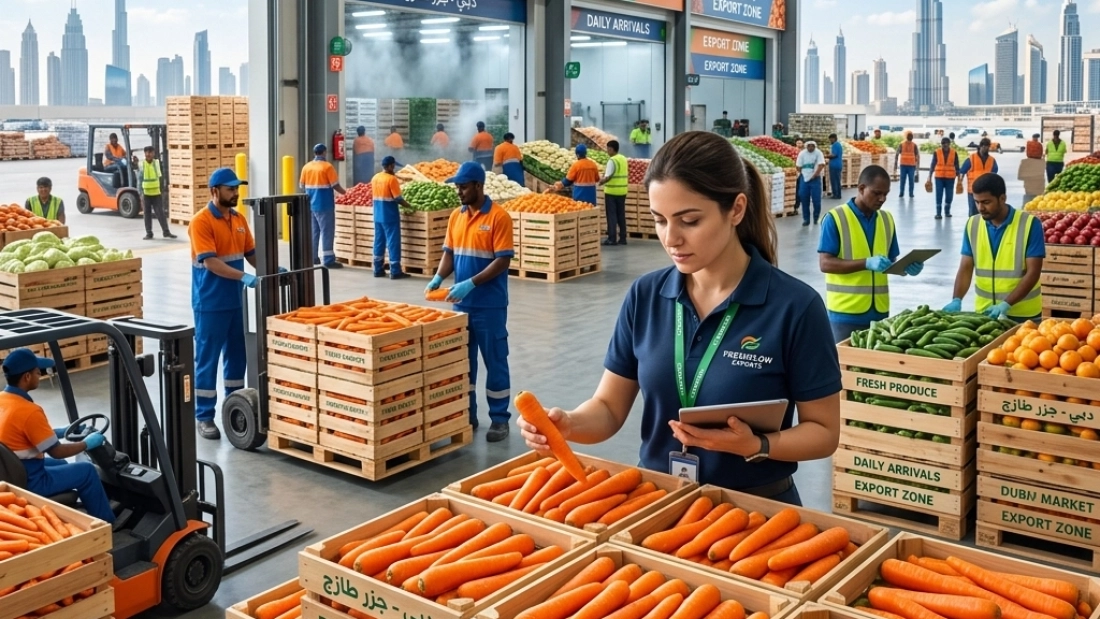
The Dubai market remains one of the most lucrative hubs for global agricultural trade, particularly for fresh produce like carrots. As a central node for the Middle East and North Africa (MENA) region, the demand for high-quality vegetables in the UAE is consistent and growing. However, many international exporters encounter significant hurdles that erode their profit margins. Navigating the complexities of the Aweer Market and the broader UAE food distribution landscape requires more than just a good crop; it requires strategic operational choices.
At Mayil Global, we specialize in bridging the gap between international farmers and the Dubai wholesale market. By identifying common pitfalls, we help our partners transition from struggling shippers to successful exporters. If you are currently looking for a carrot buyer in Dubai, understanding these seven mistakes: and how our 3% commission and Cash & Carry models can solve them: is the first step toward securing your business’s future.
1. Neglecting Standardization and Grading
One of the most frequent errors made by exporters is sending mixed-grade carrots in a single shipment. The Dubai market is highly segmented; luxury retail sectors require perfectly straight, uniform, and washed carrots, while the catering and processing sectors may accept different specifications.
Failing to adhere to strict grading standards often leads to "re-sorting" costs upon arrival at the port or wholesale market. This not only incurs extra labor fees but also delays the sale, affecting the freshness of the product. When carrots are not uniform in size or color, buyers in the Aweer Market will inevitably bid lower, citing quality inconsistencies.
The Fix: Implement rigorous quality control at the source. Ensure your carrots are graded by diameter and length according to international standards. Providing a consistent product allows Mayil Global to position your shipment for the highest possible price point.
2. Compromising on Cold Chain Integrity
Carrots are highly perishable and sensitive to temperature fluctuations. A common mistake is failing to maintain a consistent temperature of 0°C to 1°C during the entire journey. Even a slight increase in temperature can lead to "blackening" of the root or the development of mold, rendering the entire container unsaleable.
Furthermore, humidity control is vital. Carrots require high humidity (95%+) to prevent dehydration and wilting. Many exporters overlook the importance of specialized refrigerated containers or fail to monitor the data loggers during transit.
The Fix: Invest in reliable logistics partners who specialize in fresh produce. Our sourcing and logistics team emphasizes the "first-mile to last-mile" cold chain, ensuring that the carrots arriving at our warehouse maintain the same crispness they had when they were harvested.

3. Paying Excessive Commission Fees
In the traditional fruit and vegetable trade in Dubai, it is common for intermediaries to charge commissions ranging from 10% to 15%. For a high-volume, low-margin commodity like carrots, these fees can consume a significant portion of the exporter's potential profit. Many exporters accept these high rates as the "cost of doing business," unaware that more transparent models exist.
The Fix: The 3% Commission Model.
Mayil Global has disrupted the standard market practice by offering a flat 3% commission on distribution. By lowering the middleman's cut, we return more value to the exporter. This transparent fee structure is designed to foster long-term partnerships rather than one-off transactions. You can learn more about how we apply this strategy to other products, such as in our ginger buyer guide.
4. Enduring Long Credit Cycles
Liquidity is the lifeblood of any export business. A major mistake exporters make is working with buyers who demand 30, 60, or even 90-day credit terms. For a farmer or aggregator, having capital tied up for months prevents the purchase of new seeds, fertilizers, or the fulfillment of the next shipment. This "liquidity gap" is a primary reason why many export businesses fail within their first two years.
The Fix: The Cash & Carry Model.
Mayil Global offers a Cash & Carry solution for eligible containers. Instead of waiting for the product to be sold bit-by-bit to local retailers, we can purchase the entire container upfront. This provides immediate liquidity, allowing you to reinvest in your operations instantly. This model is particularly effective for staple crops; we’ve seen it transform the way bulk rice and other commodities are traded in the region.
5. Failing to Monitor Real-Time Market Prices
The Dubai wholesale market is dynamic. Prices for carrots can fluctuate daily based on the volume of containers arriving from competing regions like Australia, China, or Egypt. Exporters who do not have "boots on the ground" often rely on outdated information, leading them to ship produce when the market is oversupplied, resulting in "distress sales."
The Fix: Transparency is a core value at Mayil Global. we provide our partners with real-time market data from the Aweer Market. Knowing the exact daily price allows you to make informed decisions about when to harvest and when to hold back. Our goal is to ensure you never ship a container blindly into a saturated market.

6. Improper Packaging for the Desert Climate
Carrots intended for Dubai must withstand high external temperatures during the unloading process. Using substandard packaging: such as thin plastic bags without proper ventilation: leads to condensation buildup inside the bag. This condensation accelerates rot and creates a breeding ground for bacteria.
Exporters often make the mistake of using packaging that looks good in the packhouse but fails in the 40°C heat of a Dubai afternoon. If the bags tear easily or the crates are not stackable, the physical damage to the carrots during handling further reduces their value.
The Fix: Use perforated poly-bags or high-quality plastic crates that allow for airflow while maintaining moisture. Proper labeling is also essential; ensure all packages comply with UAE municipality regulations regarding country of origin, weight, and expiry dates. Following these steps is crucial, much like the process we've outlined for lemon exporters.
7. Lacking a Reliable Local Representative
Many exporters attempt to manage their Dubai sales remotely or through multiple small-scale agents. This lack of a central, reliable representative leads to communication breakdowns, disputed quality claims, and a lack of accountability. Without a trusted partner on-site to inspect the arrival of the container, the exporter is at the mercy of whatever report the buyer provides.
The Fix: Partner with a structured food distribution company like Mayil Global. We act as your eyes and ears in the UAE. Our about us page highlights our commitment to professional standards and corporate reliability. We provide documented inspection reports upon arrival, ensuring that you have a factual basis for all transactions.

Why Mayil Global is the Right Choice for Carrot Exporters
Succeeding in the Dubai market requires more than just a high-quality product; it requires a business model that prioritizes the exporter's profitability and liquidity. At Mayil Global, we have built our reputation on two pillars: the 3% Commission Strategy and the Cash & Carry Model.
Maximize Your Margins
By choosing our 3% commission model, you are effectively increasing your take-home pay by 7-12% compared to traditional agents. This difference can be the deciding factor in whether an export season is profitable or a loss. We apply this rigorous cost-saving measure across our entire product range, ensuring that every partner benefits from our operational efficiency.
Secure Daily Liquidity
The Cash & Carry model is designed for the serious exporter who wants to scale. By selling your container directly to us, you eliminate the risk of market fluctuations that might occur during the week it takes to sell a container via traditional retail distribution. This approach provides the stability needed to plan long-term production cycles.
Conclusion: Partnering for Sustainable Growth
Exporting carrots to Dubai doesn't have to be a gamble. By avoiding these seven common mistakes and leveraging a partner that offers transparency and immediate liquidity, you can build a sustainable and profitable export business. Whether you are dealing with onions, tomatoes, or carrots, the principles of successful trade remain the same: quality, transparency, and financial efficiency.
If you are a carrot exporter ready to take the next step in the UAE market, we invite you to contact us today. Let us show you how our professional approach to food distribution can secure your margins and simplify your logistics. At Mayil Global, we don't just buy your produce; we invest in your success.