

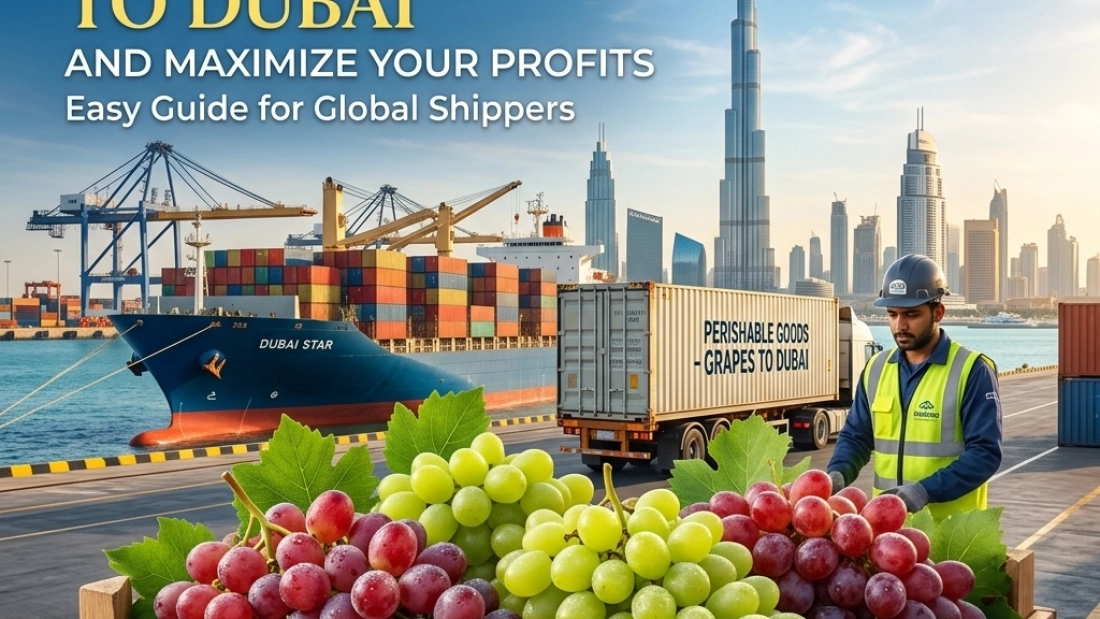
The United Arab Emirates, and Dubai in particular, represents one of the most lucrative hubs for fresh produce globally. As a premier gateway to the Middle East, Dubai's demand for high-quality table grapes remains consistent year-round. However, for many international exporters, the challenge isn't just growing the fruit: it is navigating the complex logistics, regulatory hurdles, and often opaque commission structures of the Al Aweer Central Fruit and Vegetable Market.
At Mayil Global, we specialize in streamlining this process. We understand that for an exporter, profit is a direct result of transparency and efficiency. By offering a market-disrupting 3% commission model and a robust Cash & Carry system, we ensure that global shippers retain the maximum possible share of their shipment's value.
If you are a grape grower or exporter looking to penetrate the UAE market, this guide outlines the five essential steps to successful execution and profit maximization.
Looking for a Grapes Buyer in Dubai? Why Partnering with Mayil Global is Your First Step
Searching for a reliable "Grapes buyer in Dubai" can often lead to a maze of middlemen and high-commission agents. Traditional agents in the Al Aweer market typically charge anywhere from 8% to 12% in commission fees, significantly eating into your hard-earned margins.
Mayil Global operates differently. We function as your strategic partner on the ground, offering a transparent 3% commission model. This model is designed specifically to support exporters who are looking for long-term sustainability rather than one-off trades. When you work with us, you aren't just finding a buyer; you are accessing a distribution network that prioritizes your liquidity and market presence.

Step 1: Understand Variety and Quality Standards for the UAE Market
Success in the Dubai market begins in the vineyard. The UAE is a multicultural hub with a diverse consumer base, ranging from high-end hospitality sectors to massive retail supermarket chains. Understanding which varieties perform best is critical.
Preferred Grape Varieties
While global demand often focuses on standard green seedless varieties, the Dubai market has specific preferences:
- Thompson Seedless: The gold standard for green grapes, prized for its sweetness and firm texture.
- Sharad Seedless: A popular black variety known for its deep color and high brix levels.
- Sonaka and 2-A Clone: Elongated varieties that are highly sought after for their premium appearance.
- Tas-e-Ganesh: Another high-quality green variety that performs exceptionally well in the Middle Eastern heat.
Quality and Grading
The UAE enforces strict quality standards. Grapes must be uniform in size, free from pests, and show no signs of dehydration or "shattering" (berries falling off the stem). Utilizing professional sourcing and logistics expertise ensures that only fruit meeting these criteria is packed for export, reducing the risk of rejection upon arrival.
Step 2: Manage Pre-Cooling and Cold Chain Logistics
Grapes are highly perishable. The journey from the farm to the shelves of a Dubai supermarket involves thousands of kilometers, making the cold chain the most critical part of your operational strategy.
The Pre-Cooling Process
Immediately after harvest, grapes must undergo pre-cooling to remove field heat. This process usually involves chilling the fruit to between 0°C and 4.5°C within 6 to 8 hours of picking. This slows down the respiration rate of the fruit, preserving its turgidity and shelf life.
Containerization and Shipping
For sea freight, the industry standard is the 40-foot refrigerated (reefer) container.
- Capacity: A standard 40-foot container typically carries 20 pallets, totaling approximately 14.5 to 15 metric tons of grapes.
- Temperature Control: Maintaining a consistent temperature of 0°C throughout the voyage is non-negotiable.
- Palletization: Proper airflow between pallets is essential to prevent "hot spots" within the container that could lead to spoilage.
Delivering consistent quality is a hallmark of Mayil Global’s about-us philosophy. We emphasize rigorous standards because we know that a single temperature fluctuation can result in a total loss of profit for the exporter.

Step 3: Navigating Documentation and Regulatory Compliance
Exporting food products to the UAE requires meticulous attention to paperwork. The Ministry of Climate Change & Environment (MOCCAE) and Dubai Municipality oversee all food imports to ensure public safety and phytosanitary health.
Essential Documentation
To ensure your shipment clears customs without delay, you must provide:
- Phytosanitary Certificate: Issued by the agricultural authority in the country of origin.
- Certificate of Origin: Legalized by the relevant Chamber of Commerce.
- Commercial Invoice and Packing List: Detailing the weight, variety, and value.
- Health Certificate: Confirming the produce is fit for human consumption.
- Labelling: All crates must be labeled in both English and Arabic, clearly stating the product name, country of origin, production/expiry dates, and net weight.
Failure to provide these documents can lead to expensive demurrage charges at the port. By partnering with an established distributor like Mayil Global, you gain access to our expertise in navigating these regulatory requirements, ensuring your containers move swiftly from the port to the market.
Step 4: Optimizing the Cost Structure for Maximum Margins
To maximize your profits, you must have a granular understanding of your cost of goods sold (COGS). Many exporters fail because they do not account for the "hidden" costs of international trade.
Typical Cost Breakdown (Per 40ft Container)
Based on industry averages for a 15 MT shipment of grapes:
- Procurement/Production: The cost of the fruit itself.
- Pre-cooling & Cold Storage: Essential for shelf-life extension.
- Packing Material: High-quality punnets and cartons to prevent bruising.
- Inland Transport: Moving the container from the packhouse to the port.
- Ocean Freight: Variable based on global shipping rates.
- Terminal Handling & Customs: Charges at both origin and destination ports.
The Mayil Global Advantage: 3% Commission
The single biggest variable in your profit calculation is the commission paid to your Dubai distributor. If your container sells for AED 100,000:
- Traditional Agent (10%): You pay AED 10,000.
- Mayil Global (3%): You pay AED 3,000.
By switching to our model, you immediately retain an extra 7% of your gross sales. In the low-margin world of fresh produce, this 7% often represents the difference between a loss and a significant profit. This strategy is further explained in our post on how Aweer Market exporters can secure daily liquidity.
Step 5: Choosing the Right Distribution Model: 3% Commission vs. Cash & Carry
At Mayil Global, we offer two distinct pathways for grape exporters to realize their profits, depending on their risk appetite and liquidity needs.
1. The 3% Commission Model (Consignment Basis)
This is ideal for exporters who want to benefit from the actual market price in Dubai. We sell your grapes at the highest possible market rate in Al Aweer and take only a 3% service fee for our distribution, warehousing, and sales efforts. This model offers complete transparency; you see exactly what your fruit sold for. You can read more about why this distributor model is changing the way people export.
2. The Cash & Carry Model (Direct Purchase)
For shippers who require immediate liquidity to fund their next harvest or shipment, we offer a Cash & Carry model. Under this arrangement, Mayil Global purchases your entire container at a pre-agreed price upon arrival and inspection. This eliminates the wait time associated with market sales and provides you with instant cash flow.

How Mayil Global Solves the Liquidity Gap for Grape Exporters
Exporting grapes is a capital-intensive business. Between the time you pay your farmers and the time you receive payment from a buyer in Dubai, weeks or even months can pass. This liquidity gap is the primary reason many export businesses fail to scale.
Mayil Global addresses this by prioritizing speed. Whether through our low-commission distribution or our bulk purchase options, we ensure that your capital is returned to you as quickly as possible. Our presence in the Al Aweer market allows us to move volume rapidly to our network of sub-wholesalers, retailers, and hospitality clients.
If you have previously struggled with high fees or slow payments when exporting other products, such as onions or lemons, you will find our grape export program to be a refreshing change focused on your bottom line.
Final Thoughts for Global Shippers
Exporting grapes to Dubai is a high-reward venture if executed with precision. By focusing on the right varieties, maintaining a flawless cold chain, ensuring regulatory compliance, and: most importantly: partnering with a distributor that values your margins as much as you do, you can build a sustainable and highly profitable export business.
Mayil Global is committed to bringing transparency back to the food distribution industry. Our 3% commission model isn't just a number; it’s a commitment to the growth of our partners.
Ready to maximize your grape export profits?
- Explore our Products
- Learn about our Sourcing & Logistics
- Contact us today to discuss your next shipment.