

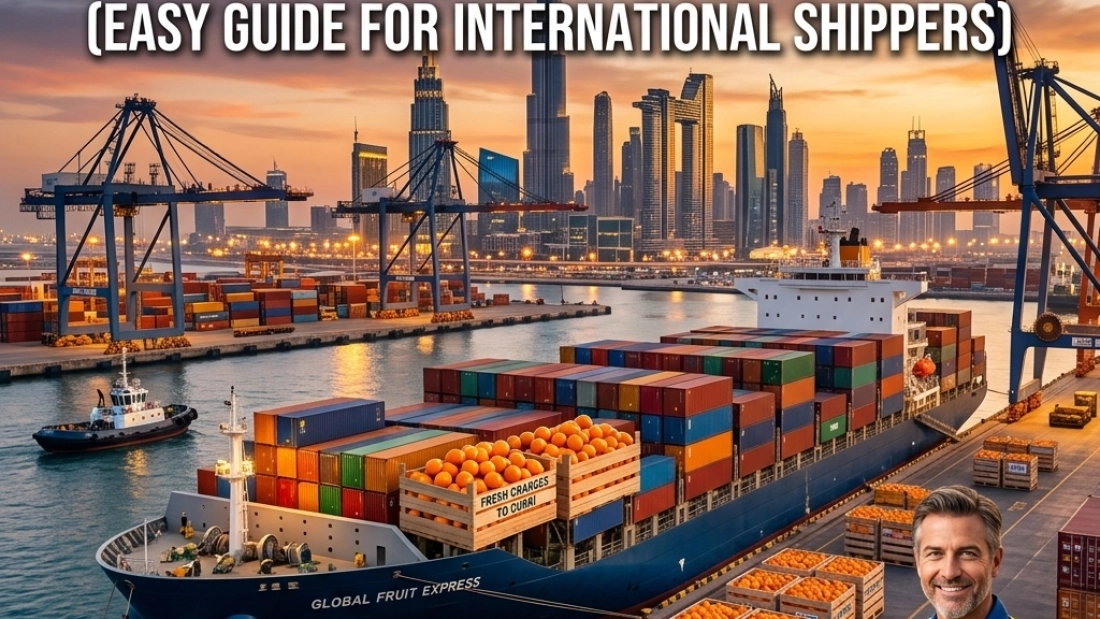
The United Arab Emirates, with Dubai at its commercial center, serves as the premier gateway for food distribution in the Middle East. As a desert nation with limited arable land, the UAE relies on international imports for over 80% of its food requirements. Oranges, ranging from Valencia and Navel varieties to Khasi Mandarins, remain one of the most consistently demanded commodities in the Al Aweer Fruit and Vegetable Market.
For international shippers, the challenge is not just reaching the shore, but navigating the complexities of the supply chain while maintaining high profit margins. Many exporters lose significant percentages of their revenue to high brokerage fees, hidden costs, and delayed payment cycles. Mayil Global addresses these inefficiencies through a transparent 3% commission model and a robust Cash & Carry system designed to provide immediate liquidity.
Looking for an Orange Buyer in Dubai?
If you are currently searching for a reliable partner to handle your citrus shipments, understanding the regulatory and operational landscape is essential. Navigating the Dubai market requires a blend of legal compliance, stringent quality control, and strategic distribution.
Step 1: Legal Compliance and Business Registration
The foundation of a successful export operation begins with a rigorous adherence to legal frameworks. Before shipping a single container of oranges, exporters must ensure their business is registered and recognized by both their home country’s trade departments and the UAE’s import authorities.
Essential requirements include:
- Import Export Code (IEC): This is a mandatory registration for any entity looking to move goods internationally.
- AD Code Registration: Authorized Dealer codes must be registered with customs to facilitate the legal transfer of foreign exchange.
- Trade License: Ensuring your company is licensed for agricultural trade.
- UAE Import Requirements: Importers in Dubai must be registered with Dubai Municipality and the FIRS (Food Import and Re-export System).

Establishing this legal groundwork prevents costly delays at Port Rashid or Jebel Ali. Utilizing a professional distributor like Mayil Global ensures that your documentation aligns with the latest UAE customs protocols, reducing the risk of administrative bottlenecks.
Step 2: Adhering to Quality Standards and Phytosanitary Requirements
Dubai maintains some of the world's strictest food safety standards. To export oranges successfully, shippers must comply with the requirements set by the Ministry of Climate Change and Environment (MOCCAE).
Maintaining export-grade quality involves:
- Phytosanitary Certification: A mandatory document issued by the exporting country’s department of agriculture, certifying that the oranges are free from pests and diseases.
- HACCP and ISO Compliance: Adhering to international safety standards like Hazard Analysis and Critical Control Points (HACCP) is highly recommended to build trust with B2B buyers.
- Labeling Requirements: All packaging must feature labels in both English and Arabic. These labels must clearly state the product name, country of origin, weight, production date, and expiration date.
- Grading and Sorting: The Dubai market favors consistent sizing and blemish-free rinds. Proper grading ensures your product competes effectively in the wholesale environment.
Failure to meet these standards often results in the rejection of entire containers. For shippers seeking to understand how these standards apply to other products, our guide on exporting lemons to Dubai provides additional context on citrus-specific regulations.
Step 3: Optimizing Cold Chain Logistics
Oranges are perishable assets. The profitability of a shipment is directly tied to the efficiency of the cold chain. Any break in temperature control can lead to physiological disorders like chilling injury or the rapid spread of mold, such as Blue or Green Mold.
Ensuring Temperature Consistency
For orange exports, maintaining a temperature range between 3°C and 7°C (depending on the variety and duration of the voyage) is critical. Humidity levels should be kept at approximately 85-90% to prevent the fruit from drying out.
Choosing the Right Freight Forwarding
While air cargo is faster and often used for premium varieties like Mandarins, sea freight remains the most cost-effective method for bulk orange exports. Utilizing refrigerated containers (Reefers) with atmosphere control is the industry standard.

Efficient logistics management reduces "shrinkage": the industry term for lost inventory due to spoilage. At Mayil Global, we emphasize the importance of speed-to-market. By streamlining the transition from the port to our distribution centers, we minimize the time your fruit spends in transit. For more on logistical efficiency, read about how our Cash & Carry model solves liquidity problems.
Step 4: Navigating the Distribution Landscape in Dubai
Once your oranges arrive in Dubai, the focus shifts to distribution. The Al Aweer market is the heart of the region's produce trade. However, the traditional distribution model is often opaque, with multiple intermediaries taking a cut of the profits.
The Mayil Global 3% Commission Model
Most food distribution companies in the UAE charge high commissions, ranging from 10% to 15%, or they purchase your goods at a low "fixed price" and resell them at a significant markup.
Mayil Global operates on a 3% commission-based distribution model. This transparent approach means that as an exporter, you retain 97% of the market value of your goods. We act as your boots-on-the-ground partner, ensuring your containers are sold at the best possible daily market price while charging only a minimal service fee. This model is a cornerstone of our operations, and you can find a deeper dive into the 3% commission strategy here.
Step 5: Maximizing Profits through Immediate Liquidity
Profitability is not just about the sale price; it is about the "speed of money." In the traditional export model, shippers often wait 30 to 60 days to receive payment after their container arrives. This delay creates a liquidity gap that prevents exporters from sending their next shipment.
Cash & Carry for International Shippers
Mayil Global offers a Cash & Carry model designed for the modern B2B environment. For eligible containers, we provide immediate liquidity, allowing you to reinvest your capital into your next harvest or shipment without waiting for lengthy retail payment cycles. This model is particularly beneficial for high-volume commodities like oranges, where market prices can fluctuate daily.

By combining the 3% commission structure with Cash & Carry options, exporters can:
- Secure higher net margins.
- Increase the frequency of their shipments.
- Gain full transparency into the final sale price of their goods.
- Avoid the 7 common mistakes made with food distribution companies in the UAE.
Building a Sustainable Export Business in the UAE
Success in the Dubai orange market is a marathon, not a sprint. Consistency in quality and reliability in supply are the two factors that build long-term relationships with local B2B buyers, including supermarket chains, hotels, and juice processing plants.
Mayil Global is committed to transforming the way food distribution works in the UAE. By prioritizing the exporter’s profit through our low-commission structure, we ensure a healthier, more sustainable supply chain. Whether you are exporting ginger, tomatoes, or oranges, the principles of transparency and efficiency remain the same.

Summary of the Mayil Global Advantage:
- 3% Transparent Commission: No hidden fees; you keep the vast majority of your revenue.
- Cash & Carry Model: Immediate payments to help you maintain a healthy cash flow.
- Expert Market Navigation: Deep knowledge of the Al Aweer market and UAE customs.
- Quality Assurance: Rigorous standards to ensure your product reaches the buyer in peak condition.
For international shippers looking to maximize their profits in the UAE, the path is clear. By following these five steps and partnering with a distributor that prioritizes your margins, you can turn the Dubai orange market into your most profitable export destination.
To explore our full range of products and how we handle various commodities, visit our products page or learn more about our wholesale vegetable operations. Mayil Global is here to ensure your export journey is efficient, transparent, and, above all, profitable.