Daily B2B Market Briefing : Wednesday, September 2, 2026 | Week 35
Market reference: Al Aweer trading data dated August 27, 2026
This briefing uses the latest accessible Al Aweer market report dated August 27, 2026. The figures below are indicative market movements, not quotations. Actual traded prices vary according to origin, grade, size, pack format, condition, quantity, arrival timing, negotiation, and buyer specification.
The August 27 market profile shows strong volatility in grapes, onions, Valery yellow, melons, capsicum, zucchini, and eggplant. UAE supermarkets, restaurants, retailers, and wholesale distributors should respond through tighter product specifications, documented quality control, verified supply channels, and complete landed-cost calculations.
August 27 Al Aweer Market Movers
The strongest accessible movements were as follows:
Top Gainers
| Product | Indicative movement |
|---|---|
| Black grapes | +50.1% |
| Egyptian red seedless grapes | +37.5% |
| Turkish red seedless grapes | +35.7% |
| Red Onion (Tabrezi) | +35.5% |
| UAE Valery yellow | +33.3% |
| Indian new-crop onion | +28.8% |
Top Declines
| Product | Indicative movement |
|---|---|
| Iranian cantaloupe | −42.8% |
| Long rock melon | −42.3% |
| Iranian green capsicum | −33.2% |
| UAE zucchini | −22.2% |
| Iranian eggplant | −20.0% |
The accessible Al Aweer summary lists two red seedless grape lines with separate movements. This briefing identifies them as Egyptian and Turkish lines for origin comparison. Exporters and buyers must confirm the detailed origin, specification, and listing identity before making a commercial commitment.
Review the Al Aweer August 27 market report for the live market source. Al Aweer trading figures should be used for planning and comparison only.

Procurement Controls for UAE Buyers
1. Grapes: Protecting Quality During Volatility
Black grapes increased by 50.1%, while Egyptian red seedless grapes increased by 37.5% and Turkish red seedless grapes by 35.7%. These movements indicate a requirement for disciplined buying rather than spot purchasing based only on price.
Supermarkets and retailers should confirm:
- Variety and country of origin.
- Berry size, colour, firmness, and uniformity.
- Sugar level or Brix requirement where applicable.
- Stem freshness and signs of dehydration.
- Punnet, carton, or clamshell pack format.
- Net weight and carton count.
- Remaining shelf life at arrival.
- Temperature requirements during transport and storage.
- Tolerance for cracked, leaking, mouldy, or soft berries.
- Pre-dispatch inspection photographs and loading records.
Restaurants may require smaller, faster-moving packs and consistent weekly availability. Retailers may require stronger presentation, longer shelf life, and retail-ready packaging. A single grape specification should not be used across every customer segment.
2. Onions: Comparing Origin and Commercial Use
Red Onion (Tabrezi) increased by 35.5%, while Indian new-crop onion increased by 28.8%. Earlier planning benchmarks placed Indian new-crop onions near AED 2.00 per kilogram, Egyptian onions near AED 1.30 per kilogram, and Yemeni onions near AED 1.60 per kilogram. These are indicative planning levels, not quotations.
The lowest origin price does not automatically produce the lowest landed cost. Buyers should compare:
- Product price at origin.
- Variety, size, colour, and crop status.
- Grading and packing costs.
- Inland transport to the port.
- Ocean, road, or reefer freight.
- Insurance, documentation, and clearance.
- Port handling and storage.
- Delivery to Al Aweer or the customer’s facility.
- Expected wastage, rejection, and shrinkage.
- Distribution commission and payment exposure.
Indian new-crop onions may justify a premium where the buyer requires a specific size, firmness, dry skin, shelf life, or established supply programme. Egyptian onions may remain competitive for price-sensitive wholesale channels. Yemeni origin should be assessed according to route, documentation, availability, and arrival condition.
Onion Receiving Checklist
Before approval, the buyer should document:
- Country of origin and supplier identity.
- Variety and crop declaration.
- Size range and grade tolerance.
- Net weight, bag type, and pallet configuration.
- Dryness, firmness, sprouting, bruising, and rot tolerance.
- Expected shelf life under UAE storage conditions.
- Certificate of origin and phytosanitary documentation.
- Commercial invoice and packing list.
- Loading photographs, seal number, and inspection report.
- Arrival inspection and claims procedure.
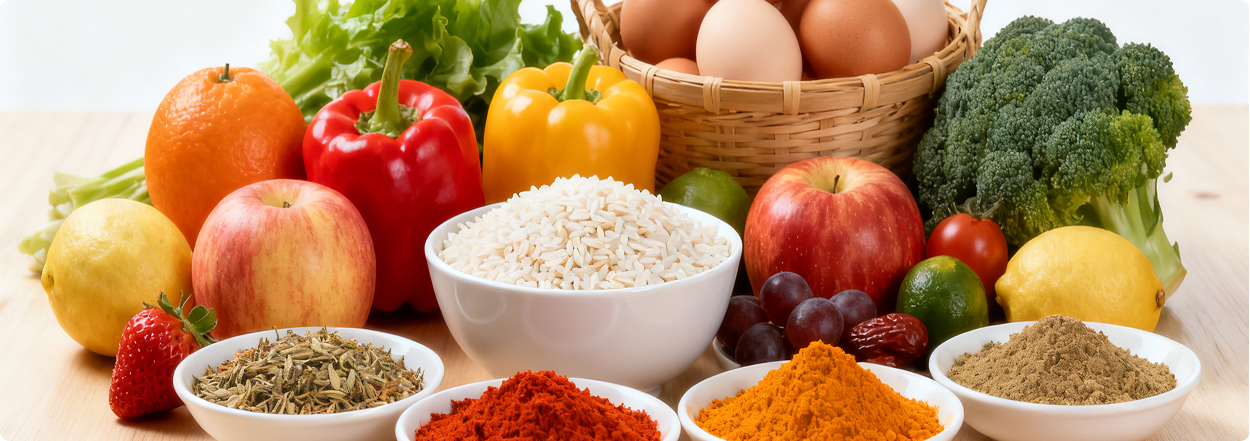
The Mayil Global products page provides access to the company’s fresh fruits, vegetables, premium spices, premium rice, and farm-fresh eggs supply categories.
Valery Yellow: Managing a 33.3% Increase
UAE Valery yellow increased by 33.3%. Buyers should distinguish between a market movement and a confirmed supply price. Procurement teams should verify whether the line is intended for retail display, restaurant kitchens, processing, or wholesale resale.
The required checks include:
- Potato or vegetable variety and intended use.
- Origin and harvest timing.
- Size and grading.
- Skin condition, firmness, and visual defects.
- Soil, moisture, sprouting, and decay levels.
- Bag or carton specification.
- Storage temperature and ventilation.
- Delivery frequency and replenishment quantity.
- Expected wastage during the sales cycle.
A supermarket may require uniform retail presentation, while a restaurant may prioritize yield and consistent cooking performance. The buyer specification must control the purchasing decision.
Declining Lines: Do Not Confuse Lower Prices with Executable Supply
Iranian cantaloupe declined by 42.8%, and long rock melon declined by 42.3%. Iranian green capsicum declined by 33.2%, UAE zucchini by 22.2%, and Iranian eggplant by 20.0%.
These declines may create apparent buying opportunities. However, the Iranian listings must not be treated as executable supply. Regulatory and trade eligibility must be formally confirmed before any order, payment, shipment, or distribution decision.
For Iranian-origin products, buyers and exporters must verify:
- Current origin eligibility.
- Import and shipment authorization.
- Payment and banking compliance.
- Applicable trade restrictions or suspensions.
- Food-safety and phytosanitary requirements.
- Carrier acceptance and route availability.
- Customs clearance feasibility.
- Written confirmation from the relevant authorities and service providers.
Alternative origins should be evaluated when Iranian supply cannot be formally cleared. Market indications do not override regulatory requirements.
For UAE zucchini, green capsicum, and other fresh vegetables, buyers should compare domestic and imported supply based on freshness, shelf life, handling, price, and delivery reliability. Lower market levels are useful only when the product can be received, stored, and sold within its usable life.
Freight, Shelf Life, and Landed-Cost Controls
Short-shelf-life products require a complete cost review before dispatch. The calculation should include:
- Product price.
- Packing and grading.
- Inland transport.
- Ocean, road, or air freight.
- Reefer charges and carrier surcharges.
- Insurance.
- Customs and port handling.
- Clearance and inspection.
- Storage and temperature-controlled transport.
- Distribution commission.
- Expected wastage and rejection.
- Final delivery to the UAE buyer.
Exporters should obtain written carrier and forwarder confirmation. Indicative market data cannot replace a freight quotation.
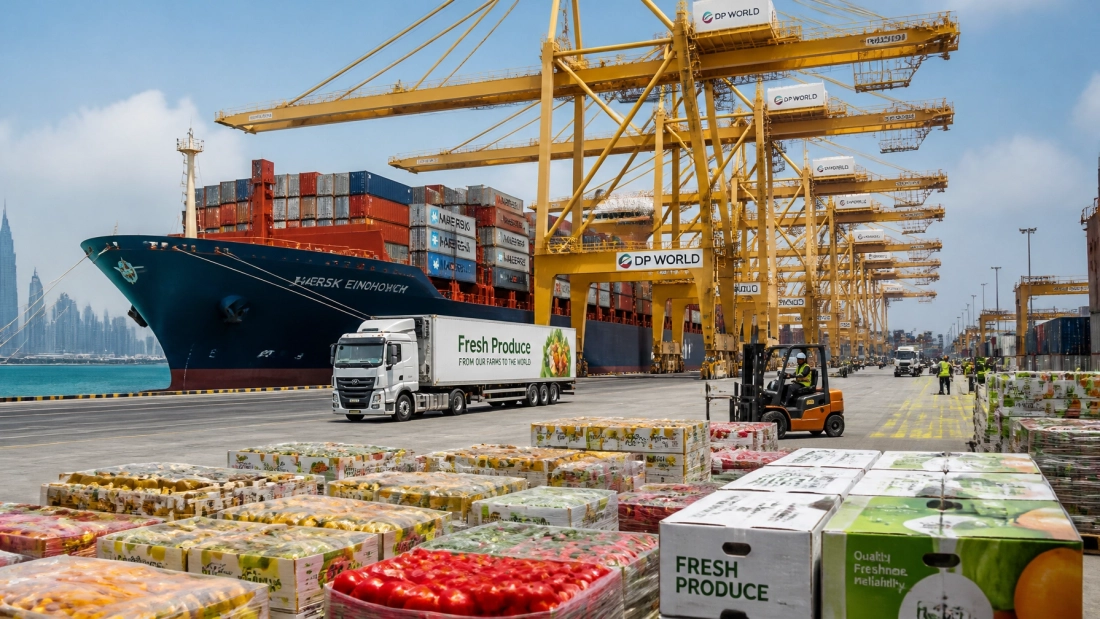
Mayil Global supports sourcing and logistics coordination through farm-direct sourcing, global supplier relationships, inspection at every stage, hygienic handling, proper storage, secure packaging, and organized logistics across the UAE.
How to Export Food to Dubai: A Controlled Sequence
Businesses researching how to export food to dubai should follow a product-specific process.
Eight-Step Export Checklist
-
Define the product
Confirm product name, variety, origin, grade, size, pack format, quantity, and intended customer segment. -
Confirm shelf-life requirements
Establish loading condition, transit time, arrival condition, storage temperature, and expected remaining shelf life. -
Verify the buyer
Confirm the buyer’s company identity, product requirement, receiving location, import capability, and payment terms. -
Confirm regulatory eligibility
Check import approvals, labelling, phytosanitary requirements, health documentation, and origin restrictions. -
Calculate the landed cost
Include all logistics, handling, compliance, storage, distribution, commission, and wastage costs. -
Inspect before loading
Record product condition, weights, packaging, photographs, seal numbers, and documents. -
Coordinate arrival
Manage freight, customs, port handling, inspection, delivery, and storage without avoidable delay. -
Review performance
Measure buyer acceptance, wastage, realized price, delivery timing, claims, and repeat-order potential.
Mayil Global’s Transparent 3% Commission Distribution Model
Mayil Global provides a transparent 3 percent commission distributor uae model for international and local exporters requiring structured UAE market access.
The model is designed around:
- Product-specific buyer coordination.
- Access to supermarkets, restaurants, retailers, and wholesale distributors.
- Farm-direct and global supplier sourcing.
- Inspection at every stage.
- Hygienic handling and packaging.
- Organized logistics and delivery planning.
- Proper storage from receipt through distribution.
- Clear commission and settlement terms.
The 3% commission distribution model is a core Mayil Global USP. It gives exporters a defined distribution cost while supporting dependable market access, consistent quality, and long-term commercial relationships.
The agreement should identify the product, origin, shipment value, commission basis, inspection responsibilities, claims process, delivery obligations, and settlement schedule.
Immediate Cash & Carry Container Purchases
Mayil Global also evaluates Immediate Cash & Carry container purchases for suitable products and verified exporters. This structure can reduce extended receivables, improve working-capital recovery, and support faster shipment rotation.
Every purchase remains subject to:
- Exporter and product verification.
- Regulatory and origin eligibility.
- Quality inspection.
- Complete commercial and shipping documentation.
- Confirmed arrival and delivery feasibility.
- Agreed purchase, acceptance, and settlement terms.
Cash & Carry purchasing is not a substitute for compliance or quality control. It is a defined commercial route for eligible shipments.
Finding a Verified Buyer for the Exact Product
Exporters searching for a verified buyer for exporters uae should avoid presenting a generic offer. The commercial requirement is to identify a verified buyer of that particular product.
An exporter should provide:
- Exact product and variety.
- Country of origin.
- Grade, size, and tolerance.
- Pack format and net weight.
- Available quantity.
- Loading date.
- Expected arrival date.
- Shelf-life expectation.
- Temperature and handling requirements.
- Required certificates.
- Target price and settlement preference.
A buyer suitable for Indian onions may not be suitable for Egyptian grapes, Turkish grapes, Valery yellow, premium spices, rice, eggs, or fresh vegetables. Product-to-buyer matching reduces unsuitable offers, delayed movement, quality disputes, and settlement risk.
Mayil Global supplies wholesale fresh fruits and vegetables, premium spices, premium rice, and farm-fresh eggs to UAE businesses. To discuss a product-specific buyer requirement, wholesale supply, the 3% commission model, or Cash & Carry container purchases, contact Mayil Global.
Conclusion: Procurement Discipline Remains Essential
The August 27 Al Aweer market profile shows significant movement in grapes, onions, Valery yellow, melons, capsicum, zucchini, and eggplant. Buyers should not rely on percentage changes alone. Product specification, quality control, hygiene, shelf life, documentation, freight, regulatory eligibility, and landed cost determine the commercial outcome.
Mayil Global combines farm-direct sourcing, global supplier access, inspection at every stage, proper storage, hygienic handling, and organized distribution. Its transparent 3% commission distribution model and Immediate Cash & Carry container purchases provide structured options for exporters. Its wholesale operation supports UAE supermarkets, restaurants, retailers, and distributors requiring dependable supply and consistent quality.
Disclaimer
This article is an operational planning briefing, not a quotation, investment recommendation, legal opinion, customs ruling, or regulatory approval. All Al Aweer figures are indicative movements based on the latest accessible report dated August 27, 2026. Actual prices vary by quality, quantity, origin, negotiation, pack format, arrival timing, and market conditions. Iranian listings are not presented as executable supply. Regulatory, trade, payment, shipment, and origin eligibility must be formally confirmed before any transaction.