

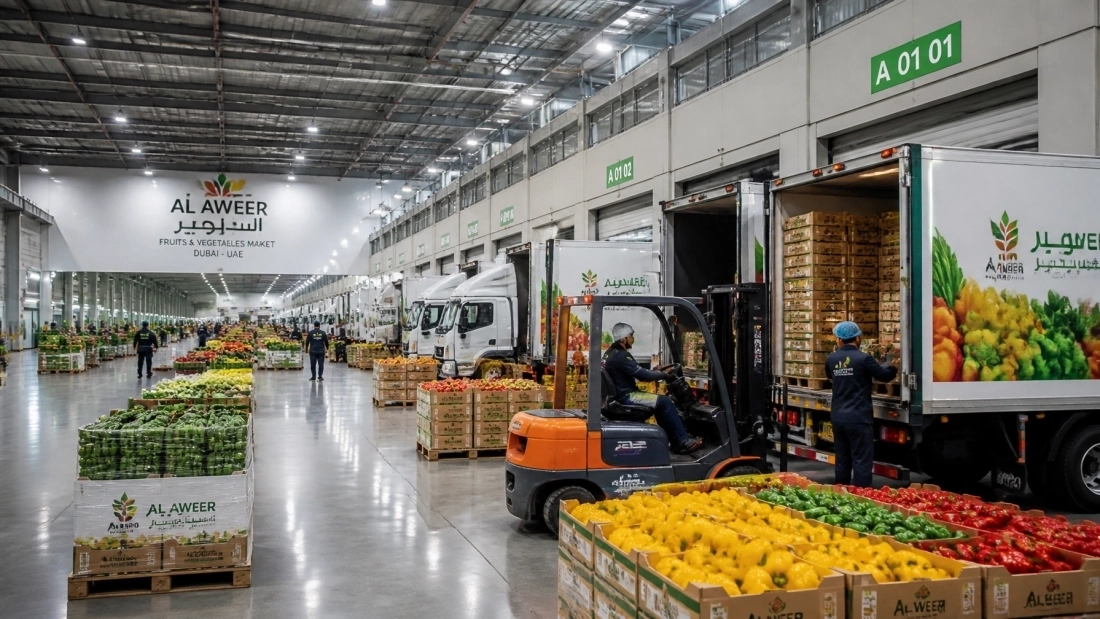
Daily UAE export and wholesale market briefing: Tuesday, September 22, 2026
The UAE food trade continues to expand, but exporters are operating in a market where supply chain protection, regulatory compliance, logistics resilience, and accurate wholesale pricing are increasingly important.
Today’s briefing covers the latest UAE export news, Al Aweer market updates, regulatory requirements, food manufacturing developments, and opportunities for international exporters seeking a verified buyer for exporters UAE. It also explains how Mayil Global’s 3 percent commission distributor UAE model and immediate cash-and-carry container purchases can support compliant market entry.
1. UAE Export News: Supply Chain Protection and Food Security
Protecting global food and fertilizer flows
The UAE has called for stronger protection of global supply chains and international maritime routes to safeguard food security. The warning is particularly relevant to food-importing countries that depend on stable access to fertilizer, seeds, animal feed, energy, and agricultural inputs.
As reported in UAE coverage on September 21, persistent disruption to international trade routes can affect:
- Fertilizer availability and agricultural production.
- Freight, insurance, and handling costs.
- Food prices in import-dependent markets.
- Delivery schedules for perishable products.
- International economic and political stability.
The UAE’s position is that freedom of navigation and uninterrupted trade flows are essential to food security. Disruptions through strategic maritime corridors can create consequences far beyond the original point of conflict.
For exporters shipping fresh produce, rice, spices, eggs, and other food products, the practical lesson is clear: supply chain planning must include alternative routing, reliable documentation, flexible inventory planning, and a UAE distribution partner capable of managing arrival requirements.
Global Food Week 2026 expands its commercial model
Global Food Week 2026 is introducing a broader model that combines its established B2B trade, policymaking, and investment platform with consumer-facing activity.
The new model includes a direct business-to-consumer dimension, including the “Shop at the Show” concept. This structure creates additional exposure for food manufacturers, agricultural suppliers, ingredient companies, retailers, and technology providers.
The event’s specialised focus areas include:
- Food trade and procurement.
- Supply chain resilience.
- AgriTech and agricultural innovation.
- Sustainable food systems.
- Alternative proteins and future foods.
- Agricultural investment and finance.
- Animal feed.
- Honey and related value-chain activities.
The combined B2B and B2C approach reflects the UAE’s broader objective of connecting food production, market access, consumer awareness, and investment. It also creates opportunities for international exporters that can demonstrate consistent quality, documented sourcing, compliant labelling, and dependable delivery.
Dubai food manufacturing moves toward 2028 targets
Dubai is positioning itself as a major centre for next-generation food manufacturing ahead of Gulfood Manufacturing 2026, scheduled for November 3–5, 2026.
The national direction includes a target of AED 40 billion in food trade by 2028, alongside increased local production, food processing, automation, packaging, and supply chain capability.
Recent industry developments include:
- Investindustrial-backed Nexture agreeing to acquire Dubai-based food ingredients manufacturer La Crema.
- Increased attention on advanced food processing and ingredient manufacturing.
- Circus SE launching commercial autonomous AI robotics food production in the UAE with Royal Prestige Catering.
- Continued investment in automation, food safety, packaging, and production efficiency.
These developments support the UAE’s transition from a food-import and distribution hub into a more integrated food manufacturing and re-export platform. For exporters, this creates demand not only for raw produce but also for ingredients, spices, rice, eggs, semi-processed foods, and private-label supply.
Sharjah–Oman logistics corridor records strong early performance
The Sharjah–Oman logistics corridor has handled approximately US$463 million in cargo during its first three months. The corridor strengthens connections between UAE logistics infrastructure, Omani ports, inland distribution, and regional trade routes.
The development is relevant to food exporters because it may provide:
- Additional routing options for regional cargo.
- Better integration between ports and inland distribution.
- More flexible movement of food inputs and finished products.
- Greater resilience when maritime routes face disruption.
The Sharjah–Oman logistics development reinforces the importance of route diversification and professional logistics coordination.

2. Al Aweer Market Updates: September 22 Wholesale Benchmarks
The following figures are indicative wholesale benchmarks for Al Aweer market planning on September 22, 2026.
| Product | Indicative wholesale benchmark |
|---|---|
| Onions | AED 2.20–2.25/kg |
| Tomatoes | AED 1.44–4.00/kg, depending on variety and grade |
| White potatoes | AED 1.43/kg |
| Garlic | AED 7.58/kg |
| Ginger | AED 6.29/kg |
These prices are not fixed offers. Al Aweer wholesale prices move daily according to quality, origin, grade, packaging, arrival timing, available volume, and negotiation.
Market direction
The current market direction indicates:
- The gourd complex is rallying.
- Cucumber prices are soft.
- Leafy vegetables are also soft.
- Garlic and ginger remain firm relative to several other vegetable categories.
- Tomato pricing continues to show a wide range by variety, origin, and presentation.
- Onion values require origin-specific analysis before shipment planning.
Exporters should verify live rates before loading or dispatching a container. A price that appears attractive at origin may not remain viable after freight, clearance, handling, inspection, storage, commission, and market-level negotiation.
Mayil Global supports market assessment through local wholesale distribution, product inspection, organized logistics, and direct B2B access. This approach helps exporters align product grade and shipment timing with actual UAE demand.
3. Regulatory Updates: FIRS, ZAD, Labelling, and Certificates
Registration before Dubai Customs clearance
Food exporters must complete the required registration and import procedures before cargo reaches Dubai Customs clearance. For Dubai-bound shipments, FIRS registration and per-shipment import permits are key operational requirements.
Exporters should also confirm alignment with the federal ZAD platform and the relevant emirate-level food safety systems. Requirements can vary by product category, origin, packaging format, and whether the shipment includes animal-derived products.
Core documentation typically includes:
- Commercial invoice and packing list.
- Bill of lading or airway bill.
- Certificate of origin.
- Health certificate.
- Phytosanitary certificate for applicable plant products.
- Certificate of analysis, or CoA.
- Certificate of conformity where required.
- Product registration records.
- Import permit.
- Approved Arabic-English label artwork.
- Halal documentation for applicable products.
Arabic-English labels and document consistency
Labels must accurately state the product name, ingredients, allergens, country of origin, dates, net weight, storage conditions, and other mandatory information in Arabic and English where required.
The physical packaging, approved label, invoice, product registration, and certificates must match. Inconsistencies can result in inspection delays, clearance issues, relabelling costs, or rejection.
The reported return of more than 200 containers of Iranian agricultural products is a clear reminder that compliance risk can create substantial commercial losses. Exporters should complete a pre-shipment review with their UAE importer and verify current requirements through the relevant authorities. The MOCCAE food safety guidance provides an important reference point.
4. Market Insights for International Exporters
Why shipment timing matters
Al Aweer is a high-volume wholesale market, but it is not a uniform pricing environment. Buyers assess product condition, origin, pack size, shelf life, grade, and expected turnover.
Before shipping, exporters should confirm:
- The target buyer and sales channel.
- The required grade and pack format.
- The current wholesale price range.
- The expected transit and clearance schedule.
- The applicable registration and permit requirements.
- The financial structure for the shipment.
Fresh produce requires especially precise coordination. Delays can reduce shelf life, affect grade, and increase handling costs. Premium products require strong documentation and careful temperature and hygiene controls from farm to market.
5. How to Export Food to Dubai Through a Verified Buyer
Understanding how to export food to Dubai begins with selecting the correct local importer or distribution partner.
A practical process includes:
Step 1: Confirm the product opportunity
Share the product specification, origin, grade, pack size, available volume, harvest or production schedule, and expected shipment frequency.
Step 2: Review compliance requirements
Check FIRS, ZAD, import permits, label requirements, CoA, certificates of conformity, phytosanitary documentation, halal certification, and shelf-life requirements.
Step 3: Match the shipment with market demand
Compare the product with current Al Aweer market benchmarks. The correct shipment plan depends on quality, origin, arrival date, and the intended buyer segment.
Step 4: Complete pre-shipment inspection
Quality control should cover appearance, weight, packaging, contamination risk, temperature, damage, and conformity with the approved specification.
Step 5: Agree commercial terms
Exporters may use a conventional wholesale arrangement, Mayil Global’s 3 percent commission distributor UAE model, or an immediate cash-and-carry container purchase for approved products.
6. Mayil Global: Verified Buyer for UAE Exporters
Mayil Global is a verified buyer for exporters UAE, supporting qualifying international suppliers with local wholesale distribution across the UAE.
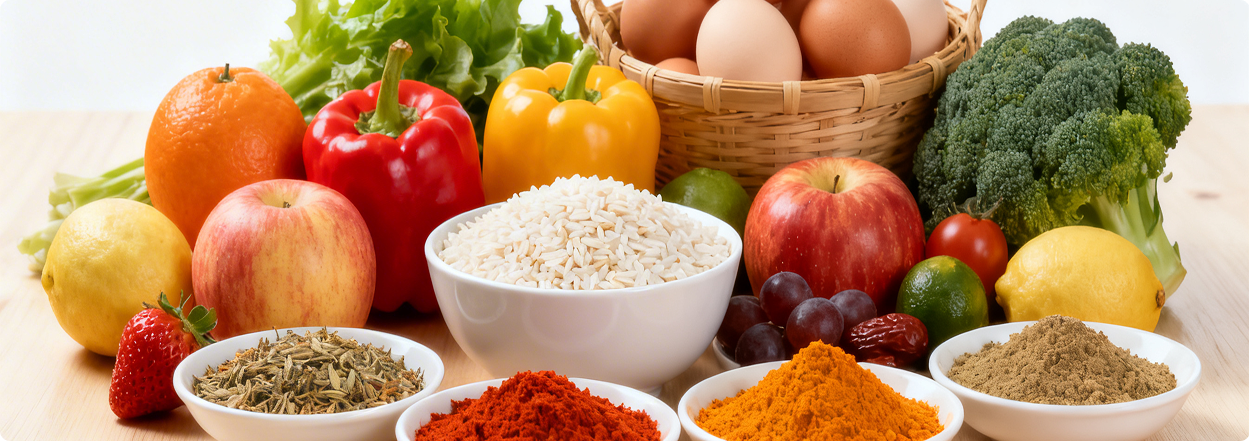
The company supplies supermarkets, restaurants, retailers, and wholesale distributors with:
- Fresh fruits and vegetables.
- Premium spices.
- Premium rice.
- Farm fresh eggs.
- Other approved food products.
Mayil Global operates through farm-direct sourcing, trusted global suppliers, inspection at every stage, hygienic handling, proper storage, and organized logistics. These controls are designed to deliver dependable supply and consistent quality to UAE B2B customers.
For international exporters, the 3 percent commission distributor UAE model provides a transparent alternative to higher-margin brokerage structures. Approved exporters can also discuss immediate cash-and-carry container purchases, subject to product specifications, compliance approval, inspection, and agreed commercial terms.
The model is designed to improve liquidity, reduce receivables exposure, and provide practical access to UAE wholesale distribution.
Mayil Global’s sourcing and logistics system supports reliable movement from supplier to market. Exporters can also review the product range and the broader verified buyer and export model.
Closing: Discuss Your Next UAE Food Shipment
UAE export opportunities remain strong, but success depends on compliance, accurate market intelligence, quality control, and dependable distribution.
International suppliers of fruits, vegetables, spices, rice, eggs, honey, ingredients, and other food products can contact Mayil Global to discuss:
- UAE wholesale demand.
- Al Aweer market opportunities.
- FIRS and ZAD preparation.
- Arabic-English labelling.
- CoA and certificate requirements.
- The 3 percent commission distributor UAE model.
- Immediate cash-and-carry container purchases.
Contact Mayil Global to present your product, confirm buyer requirements, and plan your next compliant shipment to the UAE.