

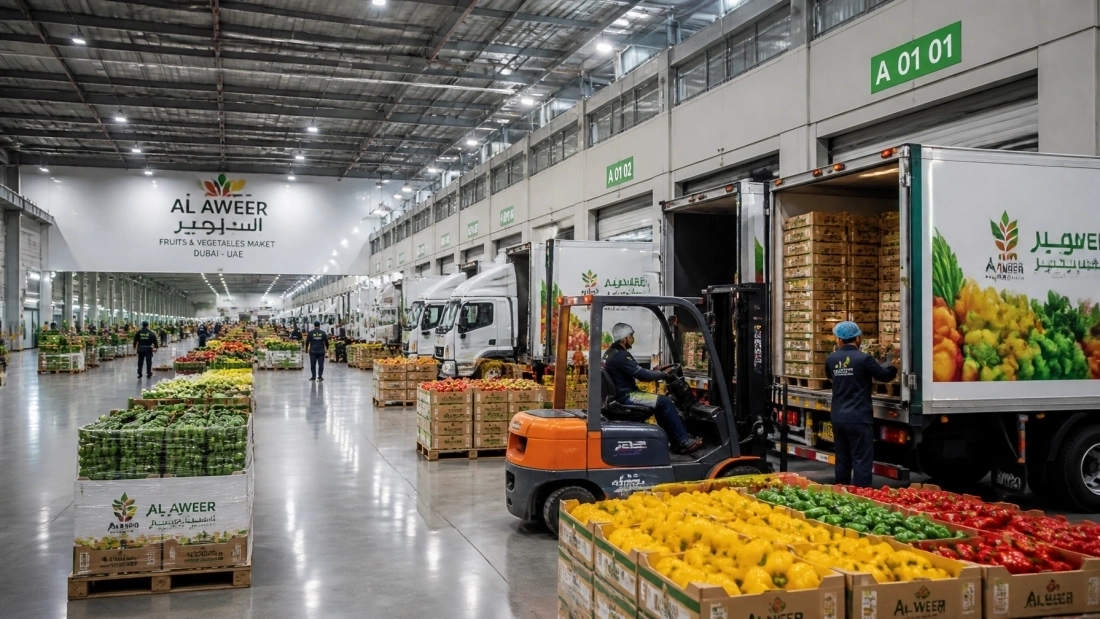
Daily entry dated 22 September 2026. Latest Al Aweer pricing reference: 19 September 2026.
1. Al Aweer Market Updates: Rebound Momentum Returns
Tracking the 19 September Al Aweer board shows a broad rebound following the 17 September correction. Green capsicum increased 336.7%, cucumber increased 144.0%, cabbage increased 130.8%, lettuce increased 125.0%, and iceberg increased 108.5%.
The cucumber reference was AED 2.44/kg for an Iran sea 9 kg carton. This is a market reference only. Iran-origin lines remain non-executable under the UAE suspension effective 19 August 2026 and must not be used for procurement, shipment planning, container budgeting, or negotiations.
| Product | 19 September reference | Movement |
|---|---|---|
| Green capsicum | Board reference | +336.7% |
| Cucumber, Iran sea 9 kg carton* | AED 2.44/kg | +144.0% |
| Cabbage | AED 3.00/kg | +130.8% |
| Lettuce | AED 5.40/kg | +125.0% |
| Iceberg | AED 4.17/kg | +108.5% |
| Ground tomato | AED 2.78/kg | +93.1% |
| Onion, pink Sudan approximately 50 mm | AED 3.35/kg | +21.8% |
| Onion, Egypt 20 kg PPE bag | AED 2.10/kg | −4.5% |
Iran-origin pricing is shown only as historical board intelligence and is not an executable trade indication.
Monitoring the full board also shows strong gains in red and yellow capsicum, chilli peppers, eggplant, greenhouse tomato, white onion, zucchini, French beans, kiwi, beetroot, carrot, and green papaya. Selected lines softened, including green chilli G4 at AED 3.68/kg, garlic from India at AED 6.67/kg, strawberry at AED 20.00/kg, and Egypt onion at AED 2.10/kg.
Specification continues to determine value. China garlic normal was AED 5.00/kg, while pure white garlic was AED 7.14/kg. Hass avocado ranged from AED 12.50/kg for Kenya air to AED 25.00/kg for Mexico air. These differences confirm that origin, grade, packaging, and arrival condition must be evaluated together.
2. Importing Onions Dubai: Origin Substitution Economics
Comparing onion origins is essential for exporters and UAE B2B buyers managing the September–October supply window.
| Origin and specification | Reference price |
|---|---|
| India new crop, 18 kg | AED 3.75/kg |
| Egypt, 20 kg PPE bag | AED 2.10/kg |
| Sudan pink, approximately 50 mm | AED 3.35/kg |
| Turkey red onion | AED 2.55/kg |
| Yemen onion | AED 2.55/kg |
India’s Maharashtra crop is reportedly delayed by one to one-and-a-half months. Remaining Garwa pink stock is limited, and only a small share is suitable for export. Nashik farmgate prices have reached approximately USD 42–52 per quintal, with an upside scenario of USD 84–94 per quintal if Diwali demand exceeds available supply.
The sharpest potential price window is 25 September to 30 October 2026. There is currently no Indian onion export ban, minimum export price, or export duty. Exporters must continue monitoring DGFT notifications before committing cargo.
Usable landed-cost example
Calculating saleable cost prevents exporters from comparing origin prices without accounting for shrinkage.
- Shipment quantity: 20,000 kg
- India product cost: 20,000 kg × AED 3.75 = AED 75,000
- Assumed freight, port, documentation, and handling: AED 15,000
- Base landed cost: AED 90,000
- Assumed shrinkage: 5%
- Saleable quantity: 19,000 kg
- Usable landed cost: AED 90,000 ÷ 19,000 kg = AED 4.74/kg
If a 5% customs duty applies to the product value, the additional AED 3,750 produces an adjusted cost of approximately AED 4.93/kg before VAT, commission, and separately agreed charges. Qualifying Indian goods may receive zero-duty treatment under the India–UAE CEPA, subject to classification and documentation.
This example is not a quotation. Actual cost depends on freight, inspection, duty treatment, packaging, storage, shrinkage, and settlement terms.

3. UAE Export News: Supply-Chain Resilience Becomes Commercial Priority
Monitoring UAE export news shows that food supply-chain resilience is now directly connected to national and international stability.
At an Arria Formula meeting on the sidelines of the 81st UN General Assembly on 17 September, UAE Minister of State Khalifa Al Marar warned that global supply-chain threats could push up to 45 million people into acute food insecurity. He identified secure supply chains, trade routes, energy flows, and fertiliser availability as essential priorities.
WFP leadership has also warned that maritime chokepoint disruption could push millions toward hunger. UAE authorities are reportedly prioritising food supplies in vessel berthing and clearance processes. Exporters should therefore build buffer time into transit schedules, inspection planning, and shelf-life calculations.
The UAE’s food-security strategy is moving beyond reserve-building toward:
- Diversified import origins.
- Strategic reserves.
- High-technology local production.
- Documented and compliant supply networks.
For exporters, multi-origin offers and complete documentation provide a stronger commercial position than single-origin dependency.
4. Global Food Week 2026 and Exporter Verification
Preparing for Global Food Week 2026 means using the event for buyer verification rather than collecting unqualified leads. The event runs from 6–8 October 2026 at ADNEC Centre Abu Dhabi and connects international F&B companies, distributors, retailers, agricultural producers, investors, and food-security stakeholders.
Exporters should use the event to verify:
- The buyer’s UAE trade license and food-trading activity.
- Product categories and approved import routes.
- Warehouse and cold-chain capability.
- Purchase volume and payment terms.
- FIRS, ZAD, labelling, and import-permit readiness.
- Actual distribution coverage across supermarkets, restaurants, and retailers.
The APEDA–Gulfood 2027 cooperation also supports Indian agricultural and processed-food exporters through buyer connectivity and the India–UAE CEPA framework. Exporters should monitor APEDA participation notices for Gulfood 2027.
5. How to Export Food to Dubai: Compliance Sequence
Executing how to export food to Dubai requires regulatory preparation before dispatch.
- Confirm the importer. The UAE importer must hold a valid trade license with food-trading activity.
- Register every food product. Complete federal ZAD registration and Dubai Municipality FIRS registration for every applicable SKU before arrival.
- Approve labels. Use accurate Arabic-English labelling. Packaged categories subject to the requirement must carry the Nutri-Mark A-to-E nutrition grade.
- Secure certificates. Prepare phytosanitary certificates for fresh produce, health certificates, and halal certification for animal-derived products from a MOCCAE-recognised body.
- Obtain permits. Secure electronic MOCCAE import permits before dispatch.
- Align documents. Keep HS codes, commercial invoice, packing list, certificate of origin, bill of lading or airway bill, product specifications, and labels consistent.
- Protect shelf life. Products generally require at least 50% remaining shelf life at arrival. Products with total shelf life of three months or less may require two-thirds remaining shelf life. Planning for 50–70% remaining shelf life provides stronger operational protection.
- Allow inspection time. Risk-based inspection and sampling at Jebel Ali typically requires approximately two to five working days.
Dubai Municipality provides services for food-item registration and imported-food release. Requirements may vary by product, origin, emirate, and import route.

6. Mayil Global: Verified Buyer and 3% Commission Distributor UAE
Delivering dependable wholesale fruits and vegetables Dubai buyers requires farm-direct sourcing, inspection at every stage, hygienic handling, proper storage, and organised distribution.
Mayil Global operates as a verified buyer for exporters UAE, not as an unqualified buyer-search listing. Qualifying exporters can choose between:
- A 3% commission on agreed realised sale value.
- An immediate cash-and-carry container purchase, subject to approval.
For an AED 100,000 realised sale value:
- Gross realised sale value: AED 100,000
- 3% commission: AED 3,000
- Balance to exporter: AED 97,000
This balance is before separately agreed costs. The model provides a transparent alternative to a publicly advertised 5% commission structure and supports faster liquidity.
Six-stage approval process
- Offer and specification review.
- Technical and compliance review.
- Buyer and market validation.
- Pre-shipment inspection.
- Commercial approval.
- Container acceptance and settlement.
Exporters should submit origin, variety, grade, pack size, quantity, harvest date, shelf life, certifications, photos, HS code, target price, shipment schedule, and preferred settlement route.
UAE buyers should provide business license details, product requirements, weekly volume, delivery locations, packaging specifications, quality tolerances, and payment terms.
7. Wholesale Supply for UAE B2B Buyers
Supplying supermarkets, restaurants, retailers, and wholesale distributors, Mayil Global handles fresh fruits, vegetables, premium spices, premium rice, and farm-fresh eggs through a controlled supply chain.
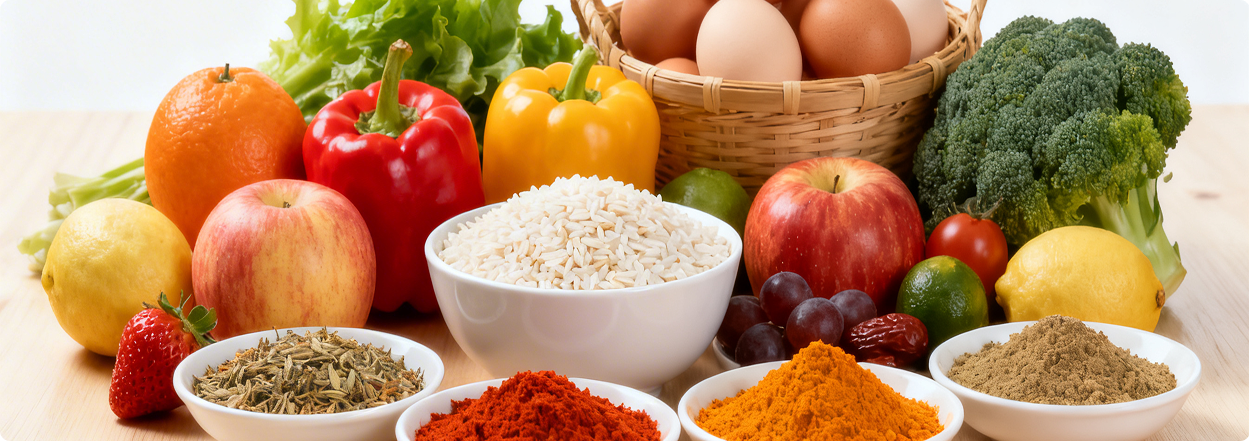
Building long-term relationships depends on consistent quality, dependable replenishment, hygiene, and documented logistics. Buyers can review the Mayil Global product range and sourcing and logistics process.
Exporters can review the 3% commission distribution model or contact Mayil Global through the official contact page.
Data note and disclaimer
Al Aweer prices are indicative references from the 19 September 2026 board. Actual prices vary by origin, grade, packaging, volume, timing, quality, and negotiation. Iran-origin references are non-executable and must not be used for procurement or shipment planning. The onion landed-cost example is an illustrative planning calculation, not a quotation, purchase commitment, or guaranteed market return. Regulatory requirements must be confirmed with the UAE importer and relevant authorities before dispatch.