

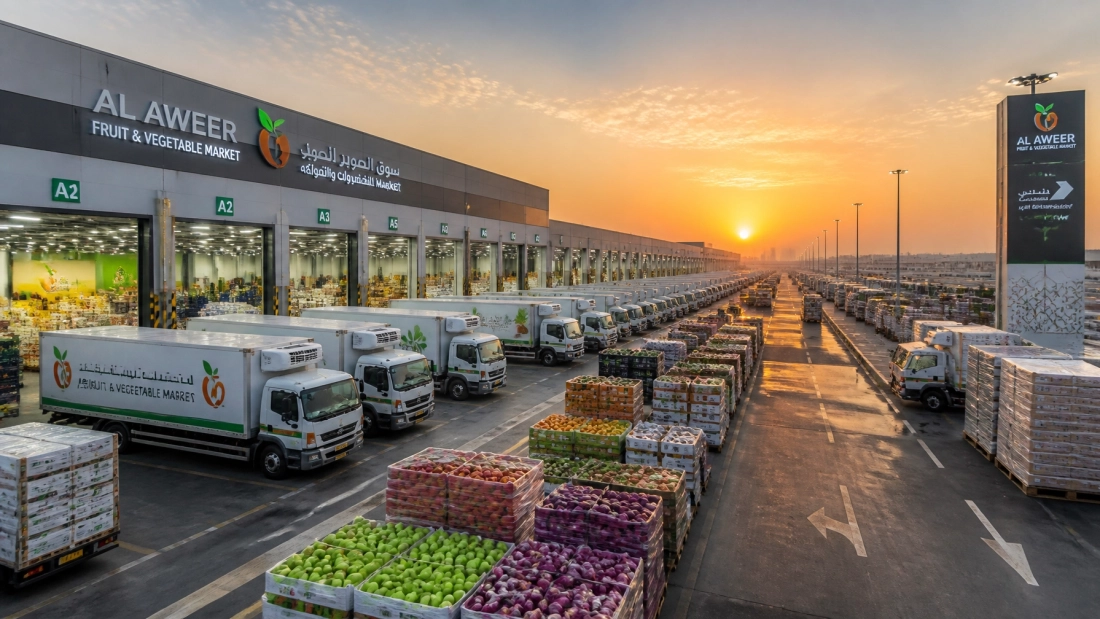
Navigating the complexities of the UAE food trade requires more than just a general understanding of global markets. For exporters targeting the Middle East, the Al Aweer Fruit and Vegetable Market in Dubai stands as the primary barometer for regional demand, price fluctuations, and supply chain health. However, many international suppliers fall into predictable traps when interpreting UAE export news, leading to missed opportunities and diminished margins.
Understanding the operational landscape of Al Aweer is essential for any business aiming to establish a foothold in the UAE. As a major re-export hub, Dubai does not merely consume what it imports; it redistributes nearly 1 million tons of fresh produce annually to neighboring Gulf and African nations. Consequently, misreading the signals from this market can be a costly error.
This guide identifies the seven most critical mistakes exporters make when tracking UAE export news and provides a strategic framework for monitoring Al Aweer price shifts with precision.
1. Relying on Lagging Macroeconomic Data
The most common mistake is monitoring high-level macroeconomic reports while ignoring granular, daily Al Aweer market updates. While national export statistics provide a historical perspective, they often lag behind the ground reality by weeks or months.
In the fast-paced world of perishable goods, a 48-hour delay in information can be the difference between a profitable shipment and a loss. Al Aweer operates on a daily cycle. Prices for staples like onions, tomatoes, and citrus can shift overnight based on the arrival of a single vessel or a change in regional weather patterns. To stay ahead, exporters must move beyond "UAE export news" as a broad category and focus on real-time wholesale price dissemination.
2. Overlooking MOCCAE Regulatory Refinements
The Ministry of Climate Change and Environment (MOCCAE) frequently updates its food safety and documentation frameworks. A significant mistake is assuming that once a product is registered, the compliance process is static.
By 2026, the UAE has intensified its focus on sourcing and logistics standards, particularly regarding Certificate of Analysis (CoA) and labeling requirements. Failing to track these regulatory shifts in the news can result in shipments being detained at the port. Professional exporters understand that regulatory news is just as important as price news. Ensuring your documentation matches current GSO standards is a non-negotiable pillar of the export process.

3. Miscalculating the Logistics-to-Market-Price Ratio
Many exporters see a price spike in Al Aweer and immediately initiate a shipment without factoring in the current state of regional logistics. UAE export news often highlights "record-high prices" for premium fruits, such as dragon fruit or avocados. However, if these spikes are driven by high air-freight costs or shipping disruptions in the Red Sea, the increased market price may already be offset by logistics expenses.
Successful exporters analyze price shifts in the context of landed costs. If the wholesale price in Dubai rises by 10% but shipping costs have risen by 15%, the "good news" in the market report is actually a warning sign. At Mayil Global, we emphasize the importance of efficient distribution and organized logistics to maintain margins even during volatile periods.
4. Ignoring the UAE’s Role as a Re-export Hub
A frequent error is analyzing Al Aweer price shifts solely based on UAE local consumption. Because Dubai re-exports significant volumes of apples, onions, and garlic to Saudi Arabia, Oman, and Kuwait, a sudden price increase in Al Aweer might be triggered by a supply shortage in a neighboring country rather than a local change.
If you are only following news related to UAE domestic demand, you are missing half the picture. Exporters should monitor regional trade agreements and cross-border logistics news within the GCC. When regional demand surges, Al Aweer acts as the vacuum that pulls in global supply, and prices react accordingly.
5. Working with Unverified Intermediaries
The UAE market is highly competitive, and the presence of numerous "brokers" can lead to misinformation. A mistake many global suppliers make is relying on unverified third parties for market intelligence. These intermediaries may provide skewed data to encourage shipments that benefit their commission rather than the exporter’s bottom line.
To avoid this, it is critical to partner with a verified buyer for exporters in the UAE. A verified partner like Mayil Global provides transparent market insights and handles premium food products with strict quality control. This direct relationship eliminates the "noise" created by middle-men and ensures that the news you receive is actionable and accurate.

6. Misunderstanding the 3% Commission Distribution Model
In the UAE wholesale sector, the traditional "trading" model often involves hidden costs and fluctuating margins. Many exporters fail to realize that there is a more transparent alternative: the 3 percent commission distributor UAE model.
Mistakenly sticking to traditional buy-sell arrangements can limit your profit potential. Under the 3% commission strategy, the distributor acts as your service partner in the market. You retain better control over the final sale price in Al Aweer, while the distributor manages the logistics, storage, and sales for a fixed, transparent fee. This model is specifically designed for high-volume exporters of spices, rice, and fresh produce who want to maximize their returns in the Dubai market.
7. Failing to Diversify Shipments Based on Seasonal Supply
UAE export news frequently covers the arrival of "Indian Onions" or "Pakistani Mangoes." A mistake is failing to recognize the cyclical nature of these arrivals. When India has a bumper crop of onions, the Al Aweer market is flooded, and prices drop. If you ship the same commodity at that time without a unique value proposition (like superior packaging or pre-arranged B2B contracts), your shipment will face stiff price competition.
Catching Al Aweer price shifts requires an understanding of the "origin calendar." By tracking the harvest seasons in India, Pakistan, and Egypt, you can predict when supply will be high and when "windows of opportunity" will open for alternative origins.
How to Catch Al Aweer Price Shifts Before They Happen
To master the Al Aweer market, you must move from reactive to proactive monitoring. Follow these three steps:
- Monitor Daily Social Media Updates: Many leading trading firms and the market authorities themselves now post daily price sheets on social media and video platforms. These are the most accurate sources for "real-time" AED pricing.
- Analyze Port Arrival Data: Track the volume of containers arriving at Jebel Ali Port. A cluster of arrivals for a specific commodity usually precedes a price softening in Al Aweer 3–5 days later.
- Engage with a Verified Buyer: Establish a direct line with a UAE-based distributor. A verified buyer can provide "floor-level" feedback on which items are moving fast and which are stagnating.

The Mayil Global Advantage: Your Partner in Dubai
At Mayil Global, we bridge the gap between global exporters and the UAE wholesale market. We operate as a verified buyer for exporters in the UAE, providing a reliable and professional gateway for your products.
Our core value proposition is built on transparency and operational excellence:
- 3% Commission Model: We offer a transparent 3% commission distribution service, allowing exporters to capitalize on Al Aweer price shifts while keeping overheads low.
- Cash-and-Carry Options: For exporters seeking immediate liquidity, we provide direct container purchase options on a cash-and-carry basis.
- B2B Supply Network: We supply directly to supermarkets, restaurants, and wholesale distributors, ensuring your products reach the right end-users efficiently.
- Quality Assurance: With strict inspection at every stage and hygienic handling in our dedicated storage facilities, we maintain the integrity of your brand in the UAE.
Conclusion
Following UAE export news is a necessity, but following it correctly is a skill. By avoiding the common mistakes of relying on outdated data, ignoring regulatory shifts, and working with unverified intermediaries, you can position your export business for long-term success.
The Al Aweer market is dynamic and demanding. To thrive, you need more than just news: you need a partner who understands the mechanics of the market. Whether you are exporting fresh fruits, bulk rice, or premium spices, Mayil Global provides the stability, transparency, and distribution power you need to conquer the UAE market.
For exporters ready to leverage our 3 percent commission distributor UAE model or explore our verified buyer services, contact Mayil Global today.