

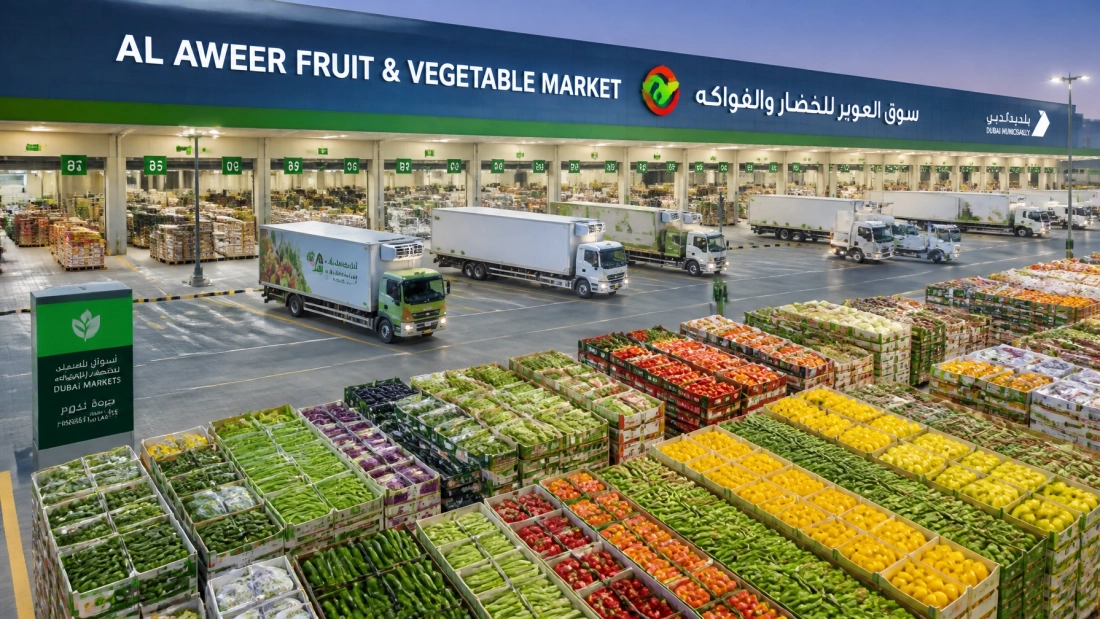
The United Arab Emirates stands as one of the most sophisticated food trade hubs globally, with the Al Aweer Fruit and Vegetable Market in Dubai serving as its central nervous system. For international exporters and local distributors, this market represents both immense opportunity and significant risk. Navigating the complexities of UAE export news and real-time market shifts requires more than just high-quality produce; it demands operational precision and a deep understanding of local regulatory frameworks.
Many exporters enter the UAE market with high expectations, only to see their margins eroded by avoidable errors in documentation, logistics, and financial modeling. Understanding the current Al Aweer market updates is not merely a task for procurement officers: it is a strategic necessity for any business aiming for long-term profitability in the region.
The Cost of Market Blindness: Tracking Al Aweer Price Trends
In the fast-moving world of perishable goods, information is as valuable as the inventory itself. As of June 2026, the Al Aweer market continues to see moderate upward pressure on specific produce lines, including broccoli, cucumbers, and grapes, while staples like onions and potatoes remain relatively stable. Failing to monitor these daily fluctuations is a primary mistake that leads to mispriced consignments and missed profit windows.

Exporters who rely on outdated price data often find their products arriving at a time of oversupply or, conversely, priced too low during a shortage. To maximize returns, businesses must leverage real-time Al Aweer market updates. Reliable data allows for agile decision-making, such as shifting shipment volumes or prioritizing specific commodities that are currently yielding higher wholesale rates. At Mayil Global, we prioritize transparency in these trends, ensuring our partners are always informed of the latest price stability factors in Dubai.
Common Export Mistakes: Beyond the Product
Success in the UAE food sector is predicated on compliance. Even the highest-grade produce will be rejected at the border if it fails to meet the stringent standards set by the Ministry of Climate Change and Environment (MOCCAE) and the Ministry of Industry and Advanced Technology (MoIAT).
1. Documentation and Labeling Failures
One of the most frequent mistakes is the neglect of Arabic labeling and product registration. UAE law mandates that labels must include specific information in Arabic, including the product name, list of ingredients, country of origin, and production/expiry dates. Shipping a container before completing the product registration process often results in costly delays at the port or total shipment rejection.
2. Ignoring Halal and Ingredient Compliance
For products containing animal-derived ingredients, Halal certification from a UAE-approved body is non-negotiable. Many exporters assume their domestic certifications are sufficient, only to find they do not meet the GSO (Gulf Standardization Organization) standards required for entry into the UAE market.

3. Inadequate Cold Chain Management
The UAE climate, particularly during the summer months of June and July, presents extreme logistical challenges. A common mistake is underestimating the necessity of a seamless cold chain. Any break in temperature control from the point of origin to the Al Aweer distribution centers can lead to rapid spoilage. Utilizing high-standard refrigerated storage and logistics is the only way to protect the integrity of the produce.
The 3% Commission Advantage: Securing Your Margins
In a market where standard commission rates for distributors often range between 5% and 10%, finding a partner that offers a competitive edge is vital. Mayil Global operates as a 3 percent commission distributor in the UAE, a model specifically designed to maximize the exporter's profit.
By reducing the commission overhead, we allow exporters to retain more of their revenue, which can be reinvested into scaling their operations. This 3% commission strategy is particularly beneficial for high-volume commodities like onions, potatoes, and bulk rice, where even a 2% difference in fees can represent thousands of dollars in additional profit per container.

Furthermore, we position ourselves as a verified buyer for exporters in the UAE. This means we offer immediate cash-and-carry container purchases, providing the liquidity that exporters need to maintain their supply chains without the stress of delayed payments. For those exporting onions to Dubai or other staples, this immediate payment model is a game-changer for cash flow management.
Navigating Regulatory Compliance in 2026
The regulatory landscape in the UAE is evolving toward greater transparency and safety. The MoIAT has introduced technical regulations such as the "Nutri-Mark" system for front-of-pack labeling and stricter limits on pesticide residues and heavy metals.
To avoid being caught off guard by these updates, exporters must ensure:
- HS Code Accuracy: Using the correct Harmonized System code is essential for determining the right duties and avoiding customs holds.
- Certificate of Analysis: Providing a comprehensive analysis for each batch, especially for high-risk products, ensures a smoother clearance process.
- MoCCAE Coordination: Working with a partner who has a direct line to the Ministry of Climate Change and Environment facilitates the prompt issuance of release permits upon arrival.
Why a Verified Buyer is Your Best Asset
For many exporters, the Al Aweer market can be an intimidating environment characterized by complex trade relationships and fluctuating demand. Partnering with a verified buyer like Mayil Global mitigates these risks. We provide the infrastructure: from sourcing and logistics to hygienic handling: that ensures your products reach their destination in peak condition.

Our focus is on building long-term, B2B relationships with supermarkets, restaurants, and wholesale distributors within the UAE. When you export through Mayil Global, you aren't just selling to a middleman; you are integrating into a robust distribution network that values quality and reliability above all else.
Conclusion: Profiting from Professionalism
The UAE market is too competitive for a trial-and-error approach. By avoiding common export mistakes: such as ignoring Al Aweer market updates, failing to meet labeling standards, or accepting high commission rates: you position your business for sustained growth.
Leveraging a 3 percent commission distributor in the UAE like Mayil Global provides the financial breathing room needed to compete. Whether you are looking for a ginger buyer in Dubai or a partner for bulk rice supply, our commitment to 3% commissions and cash-and-carry purchases ensures your export business remains profitable and liquid.
Stay ahead of the curve. Monitor the UAE export news, respect the regulations, and partner with a verified buyer who understands the value of your produce.