

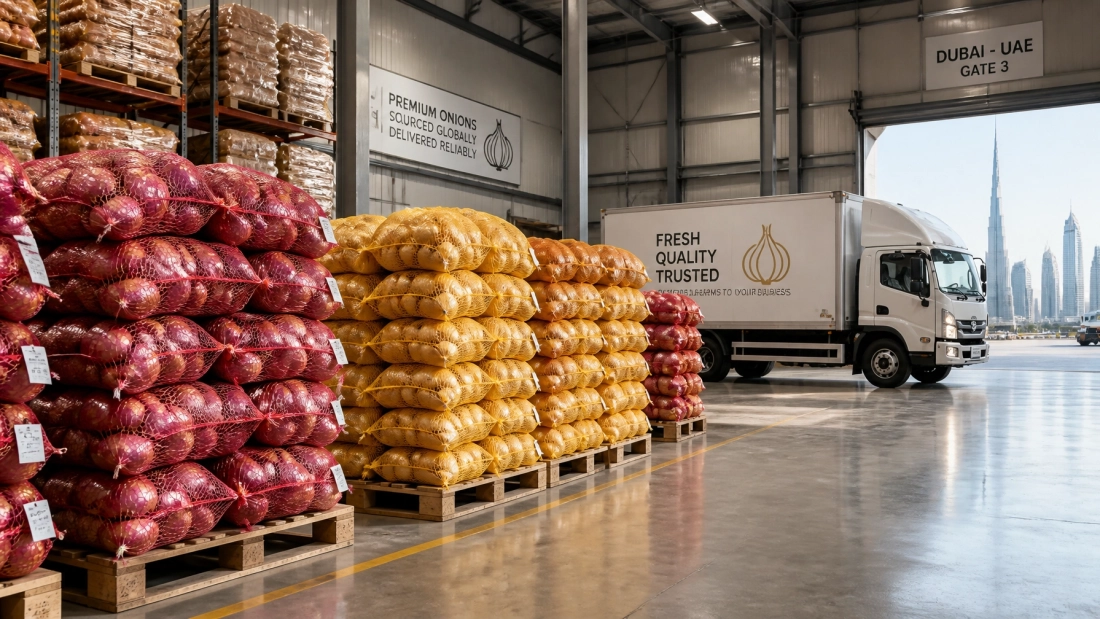
The United Arab Emirates, specifically Dubai, serves as one of the world’s most dynamic hubs for the fresh produce trade. The Al Aweer Fruit and Vegetable Market is the heartbeat of this sector, moving thousands of tons of onions daily to supply supermarkets, restaurants, and regional re-exporters. However, for many global exporters from India, Egypt, and Pakistan, the Dubai market remains a high-risk landscape where profit margins are often eroded by preventable errors.
Importing onions to Dubai requires more than just a surplus of crop; it demands a sophisticated understanding of logistics, regulatory compliance, and market-specific financial models. At Mayil Global, we see firsthand how seasoned exporters lose significant capital by failing to navigate the nuances of the UAE supply chain.
To ensure your cargo results in a profitable transaction, you must avoid these seven critical mistakes and align with a verified buyer who offers a transparent, cost-efficient distribution model.
1. Documentation Mismatch and Compliance Failures
One of the most frequent causes of container detention at Jebel Ali Port or Al Awir is incorrect documentation. The UAE authorities maintain rigorous standards for food safety and traceability. A single discrepancy between your Commercial Invoice, Packing List, and the Phytosanitary Certificate can lead to weeks of delays, resulting in heavy demurrage charges and spoilage.
Common documentation errors include:
- HS Code Misclassification: Using the wrong Harmonized System code for onion varieties.
- Phytosanitary Discrepancies: Ensure the certificate specifically meets MoCCAE (Ministry of Climate Change and Environment) requirements, including the correct scientific names and absence of prohibited pests.
- Certificate of Origin (COO) Errors: The COO must be attested and match the details on the bill of lading exactly.
Failure to pre-clear documents through a reliable local partner often results in "hidden" costs that can exceed the value of the onions themselves.

2. The "Gross Price" Illusion: Ignoring Landing Costs
New exporters often make the mistake of looking at the daily wholesale prices at Al Aweer and calculating their profit based on that figure. This is a fundamental error. The price you see at the market is the Gross Selling Price.
To calculate your true return, you must account for "Landing Costs," which include:
- Port handling and terminal charges.
- Customs duties and VAT (where applicable).
- Inland transportation from the port to the Al Aweer market.
- Market labor, unloading fees, and storage.
When working with traditional distributors, these costs are often opaque. At Mayil Global, we prioritize financial transparency, providing a line-item breakdown so you know exactly what your net return will be before the first bag is sold.
3. Ignoring Seasonal Price Volatility in Al Aweer
The Dubai onion market is highly sensitive to global supply cycles. For instance, following the removal of the 20% export duty on Indian onions in early 2025, the market saw a surge in supply that temporarily depressed prices.
Exporters who ship without analyzing current inventory levels in Dubai often arrive during a "market glut." Success in wholesale fruits and vegetables in Dubai requires timing. You must understand the windows when local production or major exporting nations (like the Netherlands or India) are off-cycle. Shipping during peak demand: such as the weeks leading up to Ramadan: requires even more precise logistics to ensure your product arrives at the optimal freshness.
4. Packaging and Grading Negligence
Dubai’s B2B buyers, particularly premium supermarkets and high-end restaurants, have strict grading requirements. A common mistake is shipping "mixed grades" in the same container.
- Sizing: Onions must be graded by diameter (e.g., 45mm+, 55mm+).
- Packaging: Using low-quality mesh bags that tear during transit or jute bags that lack proper ventilation will lead to high moisture retention and rot.
- Curing: Onions that are not properly cured (dried) before shipping will sprout or decay during the sea voyage, leading to total rejection by UAE food inspectors.
Adhering to international quality control standards is a non-negotiable pillar of the Mayil Global procurement process. We inspect every container to ensure it meets the rigorous expectations of the UAE market.

5. The High Commission Trap (The 5-8% Standard)
In the Al Aweer market, the most common business model is the "Commission Basis." Traditionally, local distributors charge between 5% and 10% commission to sell your produce. When combined with landing costs and logistics, this leaves the exporter with razor-thin margins.
Mayil Global has disrupted this traditional model. We offer a 3% Commission Strategy, designed specifically to attract high-volume exporters. By reducing the commission fee, we allow exporters to retain more capital, which can be reinvested into expanding their production capacity.
This 3% commission model is not just a discount; it is a strategic partnership. We leverage our global supply network to move your volume faster and at better price points, ensuring that your "net" profit is significantly higher than with traditional 5% agents.

6. Liquidity Gaps and Payment Delays
For many exporters, the biggest hurdle is not the sale itself, but the time it takes to get paid. Traditional market sales can take 30 to 60 days to settle, creating a massive liquidity gap that prevents you from buying the next crop.
To solve this, we offer two distinct models for our partners:
- 3% Commission Distribution: Ideal for those who want to benefit from market price peaks with professional, low-cost handling.
- Cash & Carry Purchase: For exporters who need immediate liquidity, Mayil Global acts as a direct buyer. We offer Cash & Carry container purchases, providing immediate payment upon inspection and acceptance. This ensures you can keep your supply chain moving without waiting for retail collections.
7. Lack of Local "Eyes on the Ground"
Attempting to manage an onion export business to Dubai from 3,000 miles away is a recipe for failure. Without a verified buyer who handles the ground-level logistics, you are vulnerable to "market reports" that may not reflect reality.
Successful exporters need a partner who manages:
- Organized Logistics: Ensuring the container moves seamlessly from Jebel Ali to the warehouse.
- Hygienic Handling: Proper storage to maintain the shelf life of the onions.
- B2B Relationship Management: Connecting your product with the right buyer, whether it's a bulk wholesaler or a premium retailer.

How to Secure a Verified Buyer in Dubai
Securing a verified buyer means finding a partner that balances competitive pricing with operational excellence. At Mayil Global, we have positioned ourselves as the premier wholesale supplier of fresh produce in the UAE by focusing on B2B reliability.
Whether you are looking to export onions to Dubai for the first time or looking to switch from a high-commission agent, our process is designed to maximize your efficiency. We provide:
- Direct Sourcing Advice: We help you align your crop with Dubai's seasonal demand.
- Strict Quality Control: Every shipment is inspected to protect your brand and our reputation.
- The 3% Advantage: A commission structure that favors the exporter.
Step-by-Step: Exporting with Mayil Global
- Consultation: Contact our team with your variety, volume, and expected harvest dates.
- Documentation Review: Our experts review your paperwork before the ship leaves the port.
- Logistics Coordination: We handle the arrival and transport to our facilities.
- Sales & Settlement: Choose between our 3% commission model or immediate Cash & Carry purchase.
Conclusion
The Dubai onion market offers immense opportunities for exporters who prioritize quality and professional partnerships. By avoiding documentation errors, understanding the true landing costs, and choosing a partner that offers a competitive 3% commission or cash-and-carry model, you can secure your margins and build a sustainable export business.
Stop losing money to high commissions and opaque logistics. Partner with a verified UAE buyer today.
Contact Mayil Global
For bulk inquiries and exporter partnerships:
- Website: mayilglobal.com/contact-us
- Location: Dubai, UAE | Wholesale Supply & Distribution